清华 Launches AgentSociety²: A Silicon-Based Social Lab
In the Three-Body Problem-style sci-fi imagination, civilizations can be observed from afar, societies recorded dispassionately — human behavior becomes a complex, simulatable system.
From Simulation to Executable Social Science
As AI Scientists advance into scientific domains, a pivotal question emerges: What if we could build a runnable, intervenable, and reproducible “society” inside a computer? Would social science finally gain a true experimental paradigm?
In 2025, Tsinghua University’s pioneering AgentSociety laid the groundwork — a large-scale social simulator built on LLM agents and first-principles modeling. It integrated language-model-driven agents, realistic social environments, and high-fidelity simulation engines to generate 10,000+ autonomous agents, simulating millions of agent–agent and agent–environment interactions. Use cases spanned opinion polarization, information diffusion, universal basic income, hurricane impact modeling, and urban sustainability.
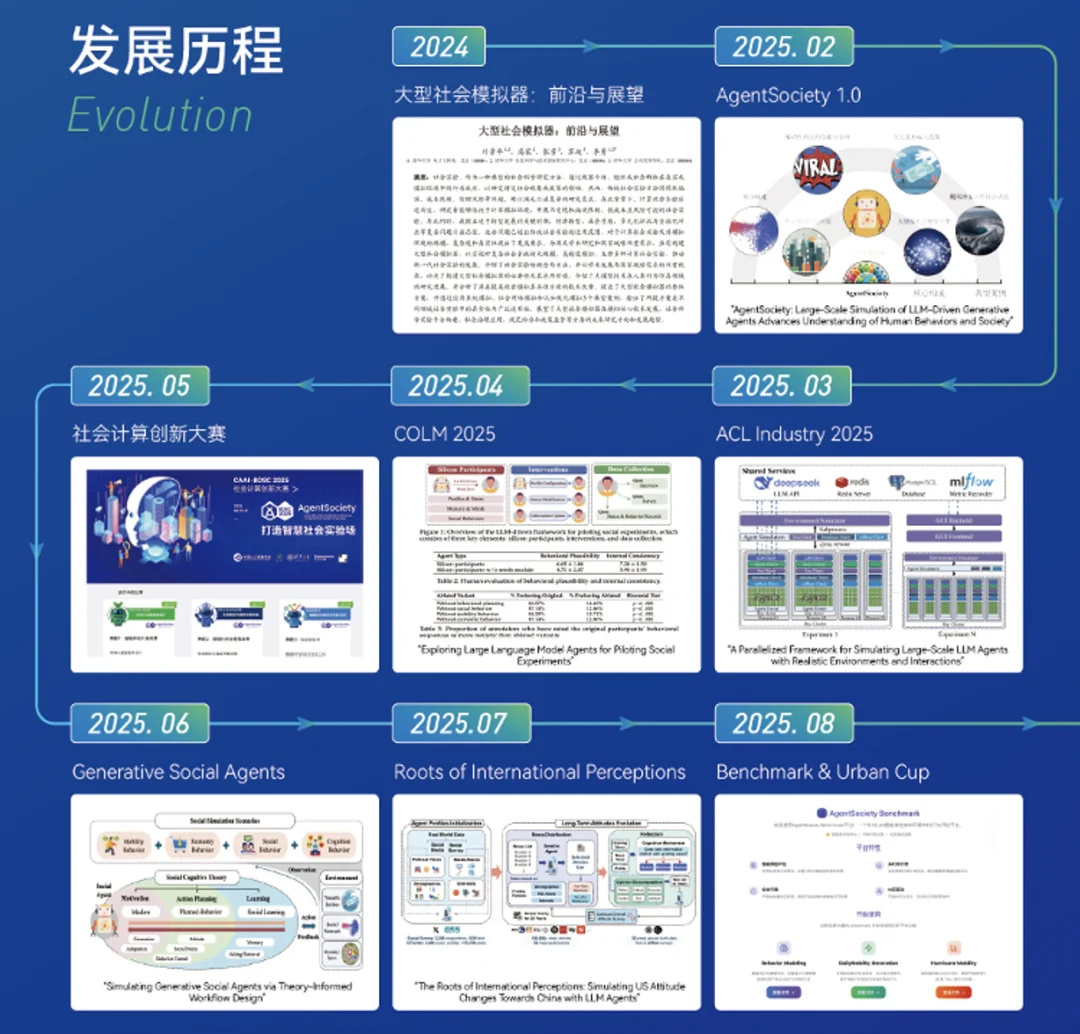
Figure 1. Large-scale social simulator AgentSociety-1 development timeline
Its breakthrough? For the first time, AI agents entered social simulation at scale — enabling researchers to observe how collective behavior and group dynamics emerge from individual interactions.
AgentSociety²: An Integrated Research Environment for Executable Social Science
Now, the team unveils AgentSociety²: An Integrated Research Environment for Executable Social Science.
This is not merely an upgrade — it’s a paradigm shift.
Where AgentSociety-1 asked “How do we compose a society from AI agents?”, AgentSociety² answers: “How do we turn that AI society into a fully functional, research-grade laboratory?”
Figure 2. AgentSociety² integrates four classical research paradigms into an “Agentic Integration Framework”.
🔑 Core Innovation: Dual-Role Agentic Ecosystem
AgentSociety² introduces two co-executing agent classes within one auditable runtime environment:
- AI Social Scientists: Assist researchers in literature review, hypothesis generation, experiment design, analysis, and paper drafting.
- Silicon Participants: Simulated human subjects acting, interacting, responding to interventions, and generating behavioral data — all within configurable social environments.
This dual-role architecture marks its most profound academic contribution: AI enters both sides of the research process — as researcher and subject.
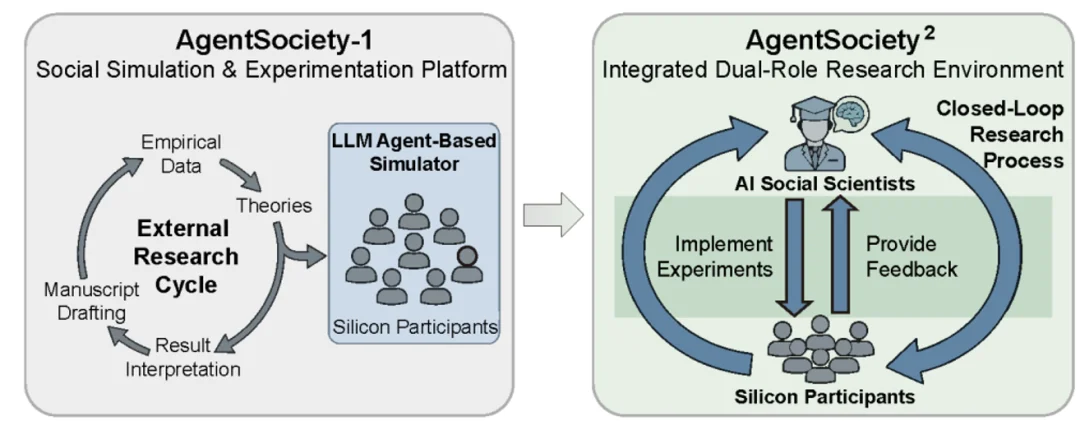
Figure 3. AgentSociety²: From simulation-centric silicon participants to a dual-role research ecosystem.
Architectural Breakthroughs
🧠 AI Social Scientist Workflow
AgentSociety² implements a modular, stage-aware research pipeline:
- Research topic scoping → Literature search → Hypothesis formulation → Mechanism modeling → Experiment configuration → Simulation execution → Result interpretation → Report generation
Crucially, humans retain control at key decision points — revising hypotheses, tuning parameters, optimizing interventions, and interpreting findings.
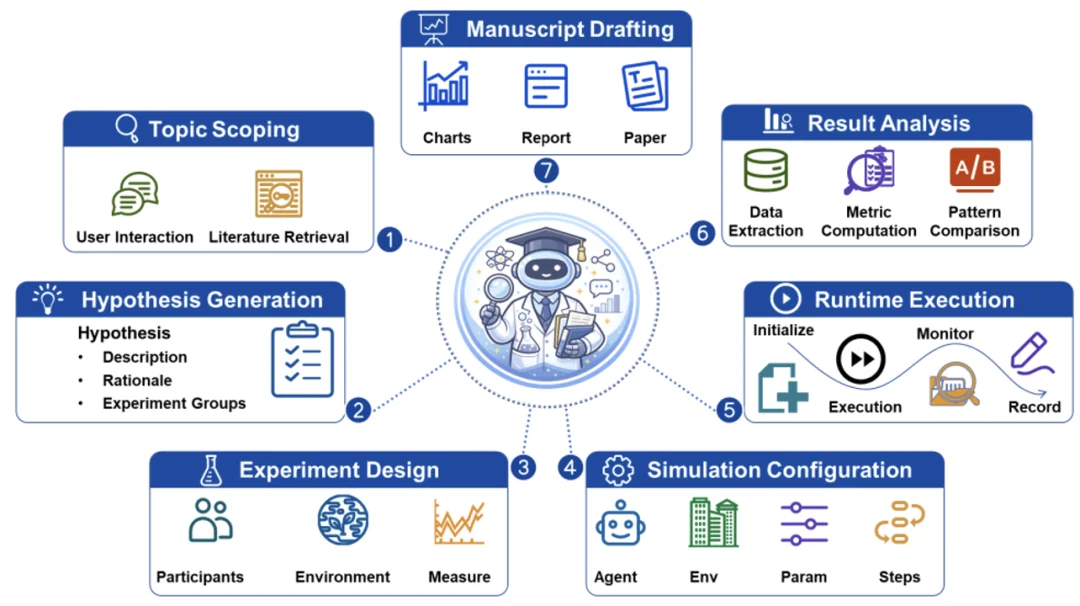
Figure 4. Silicon-based social scientists support full research lifecycle — from topic scoping to reporting.
🌐 Agentic Environments: Composable, Programmable Social Worlds
AgentSociety² treats social context as first-class, callable modules, including:
- Public goods games
- Prisoner’s dilemma & trust games
- Psychological task environments
- Social media spaces (with recommendation logic)
- Event-driven spatial environments (e.g., disaster zones, cities)
- Economic and mobility spaces
It introduces CodeGenRouter, converting natural-language research intent into verified, executable environment operations — eliminating low-level coding while preserving fidelity and auditability.
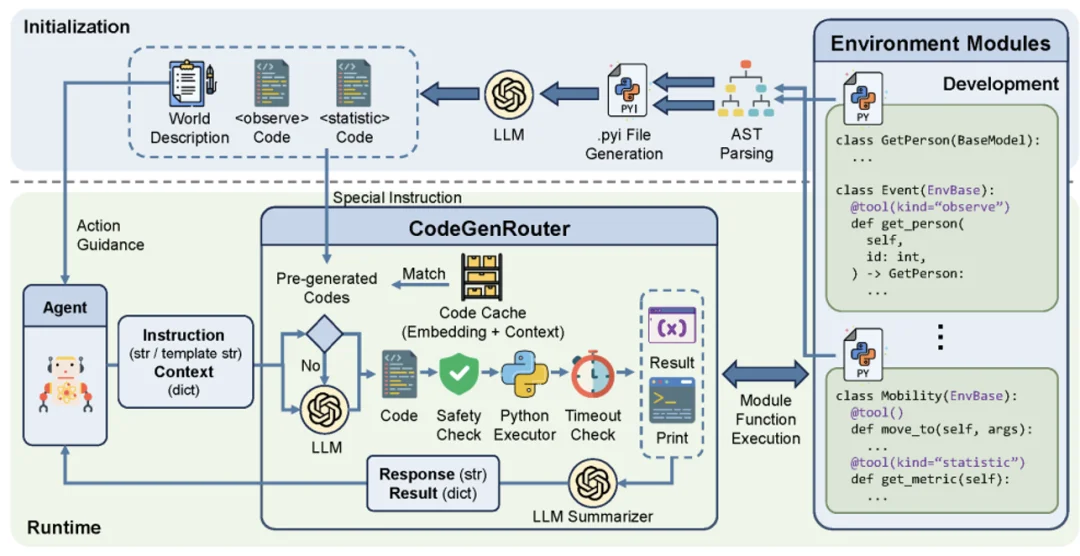
Figure 5. Agentic environments use unified interfaces, AST parsing, CodeGenRouter, code caching, and secure execution.
⚙️ Skill-Based Agent Architecture
Moving beyond monolithic prompts or fixed workflows, AgentSociety² adopts a modular skill architecture:
- Observation, cognition, planning, memory, and domain-specific decision rules are decoupled into reusable components.
- Each agent operates in its own isolated workspace — storing profile, state, memory, logs, and checkpoints.
- Enables long-horizon, traceable, resumable, and reproducible social experiments.
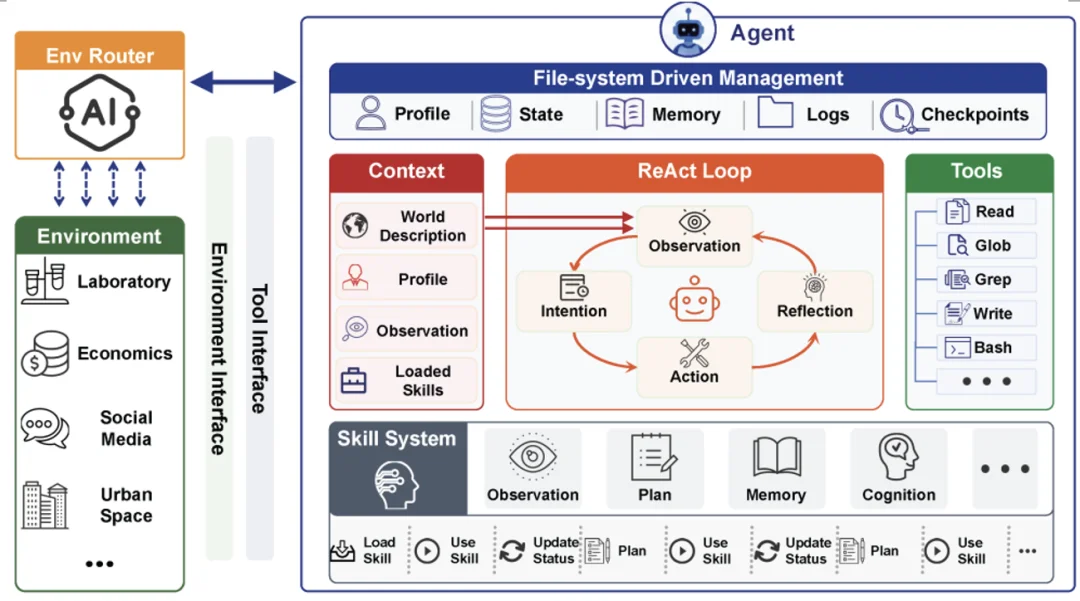
Figure 6. Generalized silicon participants maintain state, memory, and behavior traces via ReAct loops and modular skills.
Seven-Scale Experimental Validation
To demonstrate generality, the team designed seven multi-scale experiments, covering:
| Scale | Focus | Examples |
|---|---|---|
| Micro | Individual behavior | Social norm emergence, public goods cooperation, psychological surveys |
| Meso | Network dynamics | Information cocoons, opinion polarization (via tunable recommendation rules) |
| Macro | Urban systems | Crowd mobility, disaster response, city-scale sustainability modeling |
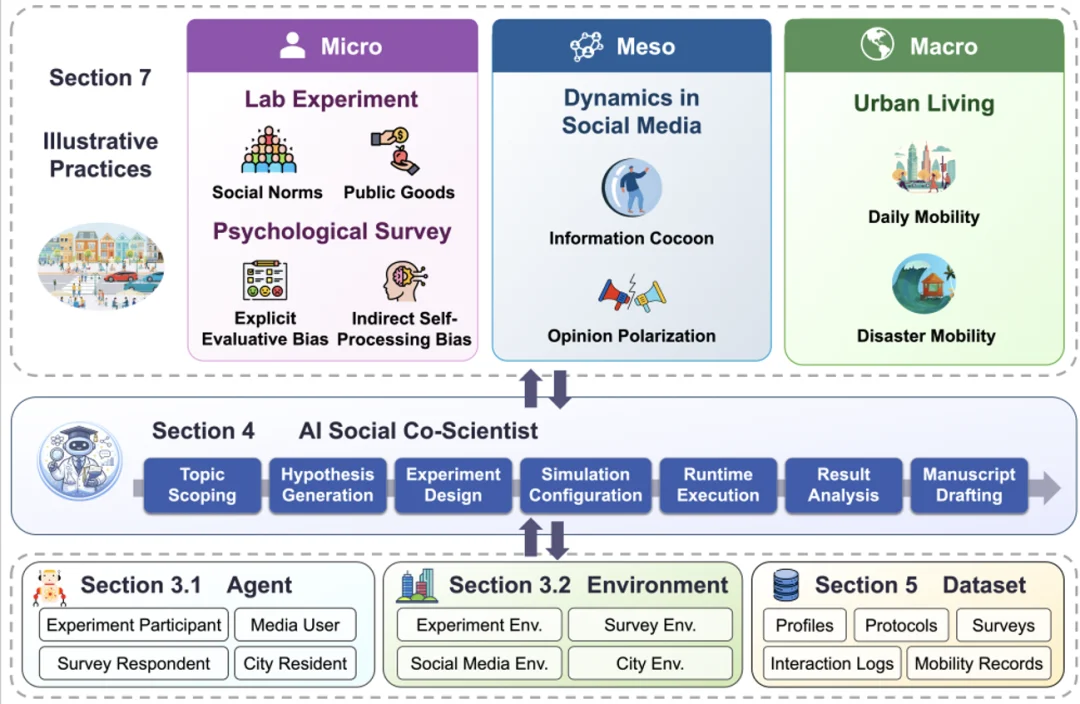
Figure 7. AgentSociety² experimental case showcase
These are not toy demos — they integrate psychological theory, platform economics, urban planning, and policy design, proving AgentSociety² serves as computational infrastructure for real-world social inquiry.
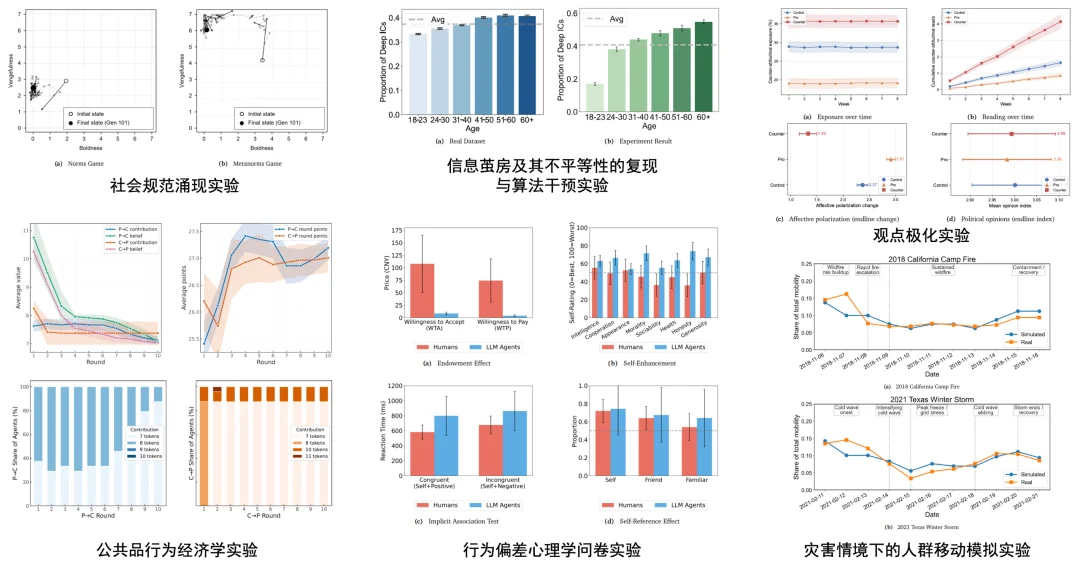
Figure 8. AgentSociety² experimental results
Toward Human-in-the-Loop Social Infrastructure
AgentSociety² does not aim to replace social scientists — rather, it amplifies their capacity:
- 🤖 AI Social Scientists expand the space of testable mechanisms, reduce engineering overhead, and accelerate experimental organization.
- 👩🔬 Human researchers define goals, impose theoretical constraints, interpret meaning, and judge validity.
This synergy enables a critical evolution: from descriptive (“What happened?”) → explanatory (“Why did it happen?”) → interventional (“What if we change X?”).
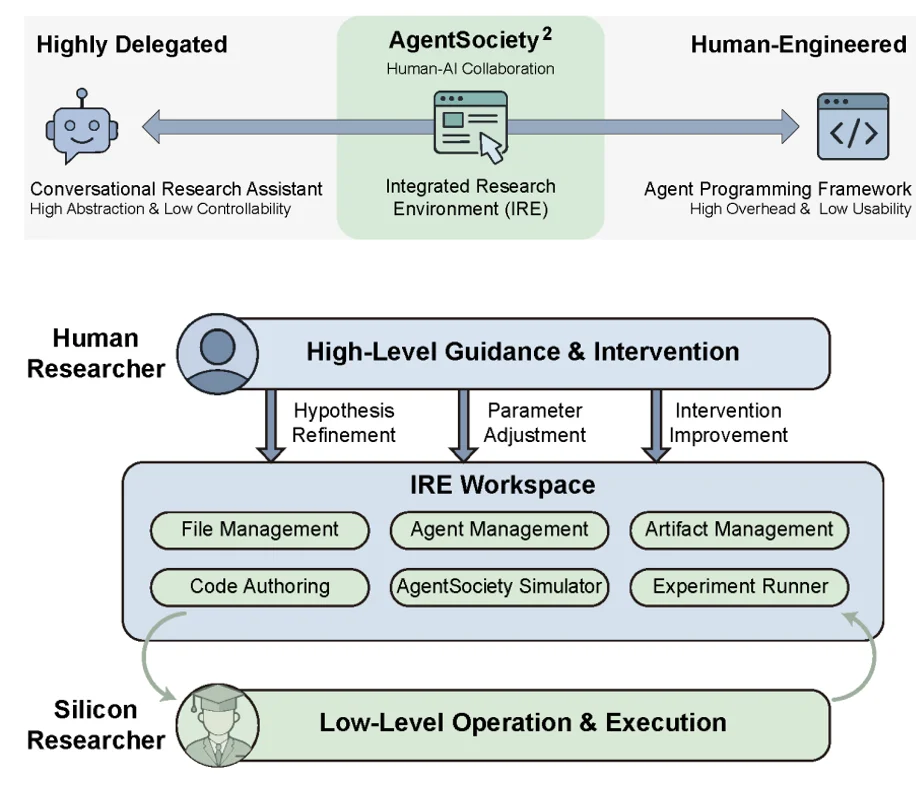
Figure 9. AgentSociety²: A human–AI collaborative, integrated research environment.
The Bigger Picture
While AI Scientists have transformed fields like biology and chemistry, social science poses unique challenges: its object is people-in-context — shaped by relationships, institutions, space, and information.
AgentSociety² provides the answer:
✅ Not just an AI writing assistant — but a unified, agentic research environment.
✅ Not just simulated individuals — but silicon participants embedded in rich, composable social worlds.
✅ Not just post-hoc analysis — but executable, testable, reproducible social hypotheses.
Its vision is clear: AI doesn’t just enter society — AI helps us study society.
Future applications span:
– Platform governance & algorithmic accountability
– Public policy prototyping
– Urban resilience planning
– Crisis response simulation
– Collective decision-making analysis
– Social psychology experimentation
– AI safety & alignment testing
AgentSociety² isn’t replacing reality — it’s opening a new, larger, more controllable, and rigorously reproducible laboratory alongside it.
🔗 Resources
✨ Submit your research proposal on the platform — top submissions receive a $100 usage voucher to run your idea.
Article adapted from “Ji Qi Zhi Xin” (Machine Heart).