Token Economics Shift: From OpenClaw to Local Agent Evolution
A pivotal transition in AI infrastructure — from unchecked token consumption to cost-aware, hybrid agent architectures.
🌐 The End of Token Maxing
In late 2025, Silicon Valley embraced “Token Maxing” — a high-stakes race where startups and engineers proudly shared multi-hundred-dollar daily API bills as proof of AI commitment. But by mid-2026, the bubble burst: Uber burned through its entire annual AI budget in just four months, Meta imposed hard token quotas, and internal alerts warned teams — “Opus 4.8 is expensive; try alternatives first.”
This marks a decisive inflection point: efficiency over extravagance, and architecture over API calls.
🧠 Guest Insight: Huang Dongxu’s Pivot
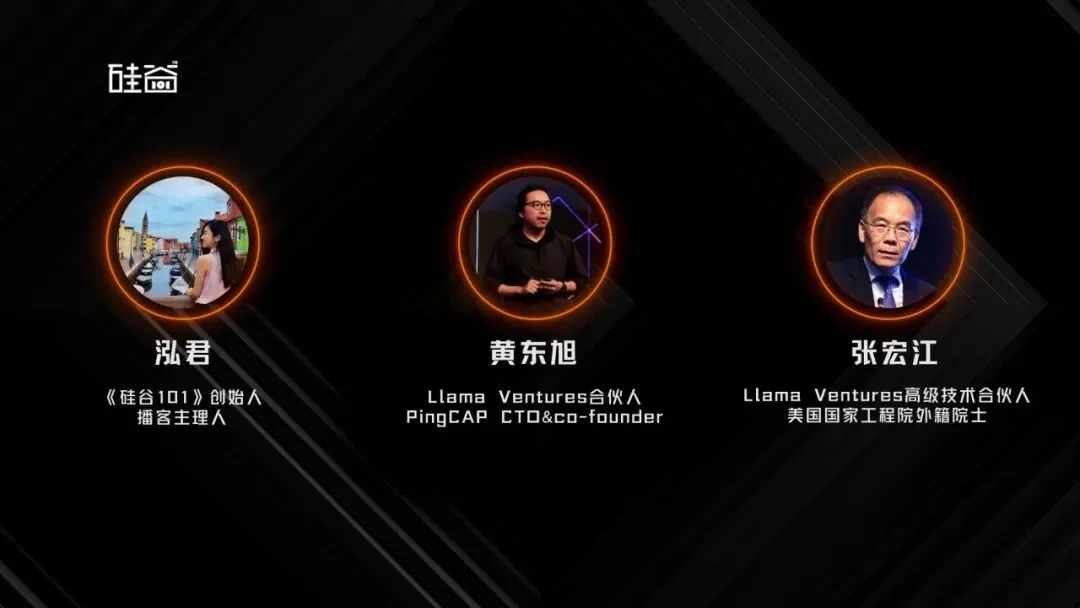
Huang Dongxu (CTO & Co-founder, PingCAP; Partner at Llama Ventures) candidly recounts his evolution:
-
Phase 1 (Token Maxing): Used Claude Opus exclusively — $400–$500/day building
db9, a cloud-native distributed database. ROI justified it: $10M+ annual revenue uplift from delivering in 3 months what would’ve taken a team years. -
Phase 2 (Hybrid Intelligence): Shifted to a local + frontier model stack:
- ✅ DeepSeek V4 Flash runs locally on Mac Studio (~30 tokens/sec, ~$25/month electricity).
- ✅ Handles routine tasks: summarizing CVPR papers, code reviews, email triage.
- ✅ Offloads only high-stakes reasoning to cloud models (e.g., Fable 5 for final validation).
💡 “It’s not that frontier models are unaffordable — it’s that local open models unlock tasks we previously deemed too costly. Now my monthly bill is $200–$300 — sustainable, controllable, and strategic.”
🚀 Agent Evolution Timeline
| Era | Project | Core Innovation | Limitation |
|---|---|---|---|
| Early 2026 | OpenClaw | First widely adopted open-source local-first agent; bridged CLI + real-world tooling | Low stability; no memory system; “Vibe Coding” architecture |
| Mid 2026 | Hermes | Skill-based reflection loop; production-grade UX; Web3-native monetization via token channel partnerships | Still relies heavily on cloud inference; limited offline capability |
| Late 2026 | Slock (Raft) | Multi-agent “swarm dynamics”: agents collaborate in isolated contexts, surfacing insights via emergent consensus | 10× token cost vs. single-agent; requires robust harnessing & observability |
Source: OpenClaw

Source: Hermes
⚙️ The Hybrid Stack: Why It Wins
🔹 Local Foundation Models
- DeepSeek V4, GLM-5.2, Fable 5: Run natively on consumer hardware.
- Enable “burn only electricity, not tokens” for repetitive, high-volume tasks (e.g., log parsing, document QA, internal search).
🔹 Frontier Models (Cloud)
- Reserved for non-decomposable reasoning: architecture design, edge-case validation, legal/compliance checks.
🔹 Emergent Infrastructure
- Agent Harnessing: Frameworks like
DB-GPTandMetaGPTorchestrate multi-step, multi-model workflows. - Observability Tools: Critical for tracing where tokens go — e.g., identifying wasteful loops or redundant tool calls.
- Agent-Native Cloud: Platforms like
InsForgeoffer sandboxed, serverless runtime environments optimized for agent concurrency — not human developers.
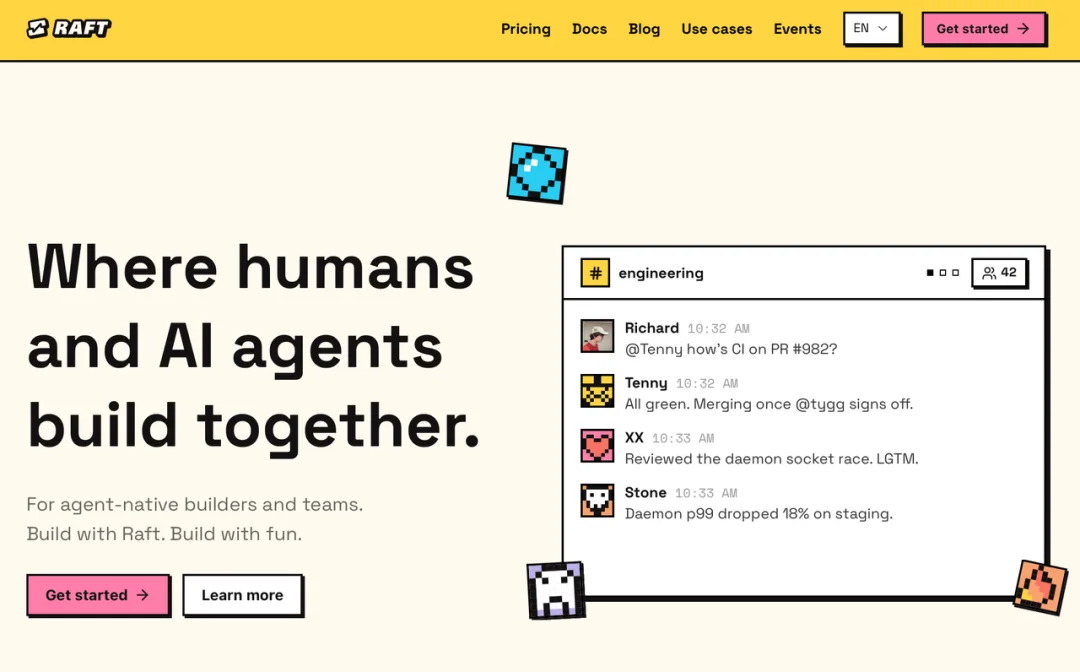
Source: Raft
📈 Economic Reality: Jevons Paradox in Action
Zhang Hongjiang (Academician, US National Academy of Engineering) frames the paradox:
“As token costs fall ~10× annually — faster than Moore’s Law — usage surges exponentially. Efficiency gains don’t reduce total consumption; they enable larger, more complex systems: Agent-to-Agent networks, recursive self-improving loops, and autonomous infrastructure.
- ✅ Short term: Local models cut per-task costs.
- ✅ Long term: Token demand grows — but shifts from chatbot-scale to orchestration-scale.
🎯 Strategic Takeaways for Builders
✅ Invest in Infrastructure, Not Just Apps
- Focus areas: context management, memory abstraction, sandboxed execution, agent observability.
- Avoid “app-layer” Agent products vulnerable to model upgrades — build the rails, not the train.
✅ Go Agent-Native — Not AI-Enhanced
- Test: Remove the agent — does your product collapse? If yes, you’re native.
- Mindset: Start every design with “How would an agent solve this?” — not “How do I instruct an agent?”
✅ Embrace Distributed Intelligence
- As Zhang notes: “Three ‘average’ agents can outperform one ‘genius’ — if their interaction rules are sound.”
- Resilience > centralization. Emergence > optimization.

🌟 Final Thought: Dawn, Not Peak
Huang reflects:
“We’re not at the end — we’re before dawn. Today’s ‘strong’ models will soon be baseline. The real opportunity isn’t in maximizing tokens… but in designing systems that thrive when intelligence becomes abundant, local, and autonomous.”