Shanghai-Based Sudo Tech Emerges as $2B Valuation Unicorn
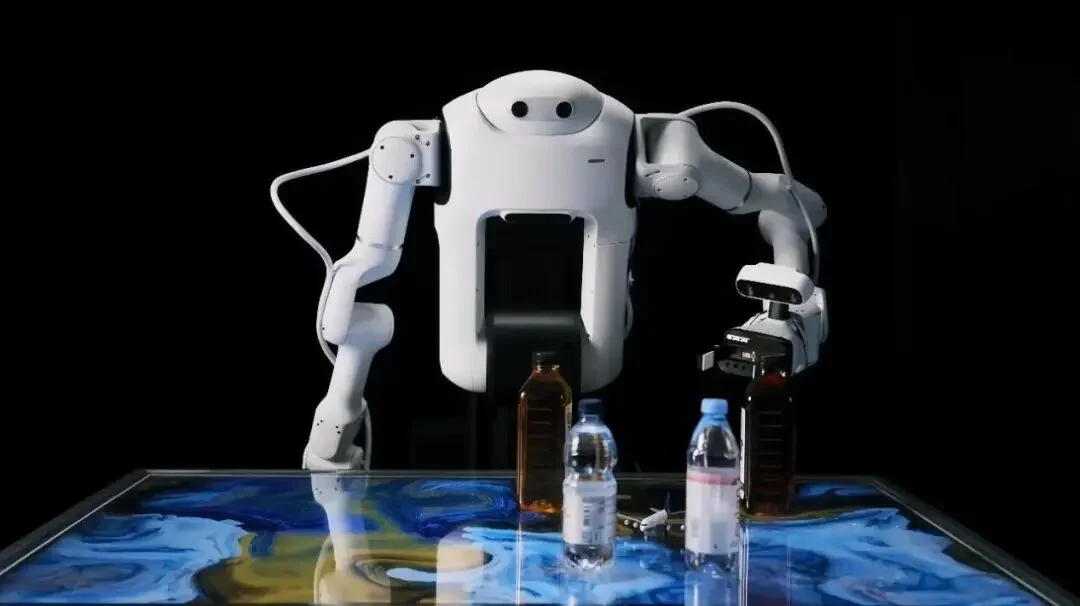
Founded less than one year ago, Shanghai Sudo Technology Co., Ltd. (“Sudo Tech”) has rapidly ascended into the elite “$2 billion valuation club” — marking one of the fastest valuations achieved by a Chinese embodied AI startup.
Breakthrough Funding & Strategic Backing
The company recently closed a new financing round, securing a post-money valuation exceeding $2 billion USD. Its investor roster reads like a who’s-who of global tech and industry giants:
- Futeng Capital
- CATL Puquan Capital
- Alibaba Group
- Tencent Holdings
- Ant Group
Simultaneously, Sudo Tech officially launched #Sudo R1 — its first fully in-house developed, end-to-end robot system integrating hardware, 3D world modeling, and reinforcement learning.
World-Class Interdisciplinary Leadership
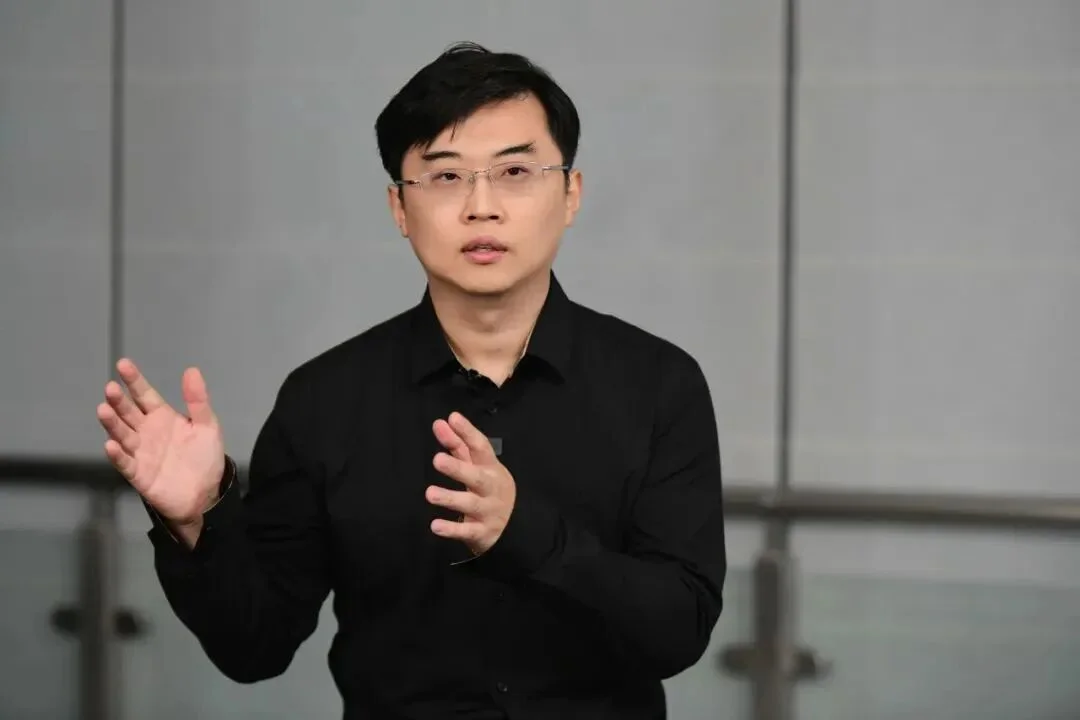
🧠 Chief Technical Advisor: Prof. Hao Su
- Fudan University Haoting Distinguished Professor & Director of the Institute for General Physical Intelligence
- Core architect of ImageNet, foundational dataset for modern computer vision
- Creator of ShapeNet and PointNet — landmark 3D vision datasets and architectures widely adopted in autonomous driving and robotics
- Pioneer of SAPIEN, a leading physics-based simulation platform for embodied interaction
- Developer of ManiSkill, a standardized benchmark suite, and TD-MPC, a widely used model-based RL algorithm for robotic control
🚀 CEO & Co-Founder: Zheng Han
- Serial entrepreneur with two successful exits:
- Co-founded ZEPP, China’s first smart hardware company and official Apple online partner (acquired by Huami)
- Founded Rocket Tech, an early video conferencing platform (acquired in 2020)
- This is his third venture — and arguably his most ambitious.
🔧 Core Team Highlights
| Role | Background | Key Credentials |
|---|---|---|
| CTO | Former Adobe Gen AI Lead | >11,000 Google Scholar citations |
| Hardware Head | Ex-Source Code Capital Investor | Led investment in Unitree Robotics |
| Strategy Head | ABB + Huawei + BlueRun Ventures | Multi-deal investor in embodied AI startups |
💡 The founding team originates from the core of the Hillbot project, combining deep academic rigor, industrial deployment experience, and strategic capital fluency — a rare trifecta in today’s embodied AI landscape.
#Sudo R1: A New Paradigm for Embodied Intelligence
Sudo R1 is not just another robot — it’s a foundation model for physical action, designed to shift embodied AI from “walking intelligence” toward true “perception + interaction intelligence.”
✅ Key Technical Innovations
- Zero-shot generalization: Achieves ~100% success rate on unseen objects (transparent, reflective, deformable, irregular) — without any real-world training data. All training occurs in high-fidelity simulation.
- Unified 3D world model + RL architecture: First system to fully validate that simulation-only pretraining can bridge reality gaps — breaking the “data bottleneck” that constrains most competitors.
- Real-time closed-loop control: Demonstrated in a continuous, unedited 60-minute test across varying lighting and backgrounds.
🆚 Competitive Differentiation
| Feature | Conventional Approaches (e.g., Pi, Generalist models) | #Sudo R1 |
|---|---|---|
| Data Dependency | Heavy reliance on expensive human-collected real-world data (teleoperation, UMI) | Simulation-first; real-world data used only for final alignment |
| Adaptation | Few-shot fine-tuning per task/environment → high marginal cost | True zero-shot transfer → “out-of-the-box” deployment |
| Scalability | Linear scaling of data collection effort limits growth | Data generation scales with compute — enabling exponential capability growth |

📌 Notably, Sudo Tech deliberately showcased only generic grasping — not flashy multi-task demos. This reflects a methodological discipline: validate one robust, scalable paradigm before expanding.
Solving Industry’s Twin Bottlenecks
Sudo R1 directly addresses two systemic challenges holding back embodied AI:
-
The Data Scale Ceiling
Real-world data acquisition remains costly, slow, and non-scalable. Sudo’s simulation-native pipeline decouples model advancement from physical data constraints. -
Incomplete Physics Modeling
Real-world data captures what happens — but rarely encodes why (i.e., underlying dynamics). High-fidelity simulators embed Newtonian laws natively — enabling models to learn transferable physical intuition.
This redefines the role of data: simulation provides scalable, physics-grounded foundations; real-world data serves as calibration — not fuel.
Commercial Traction & Industrial Impact
- Already engaged in co-development with CATL (Contemporary Amperex Technology Co. Limited) across battery manufacturing and logistics workflows.
- Deployed with top-tier industrial clients without requiring access to sensitive operational data — a critical advantage for security-conscious manufacturers.
- Building the first multi-station capable robot system, enabling seamless model migration across workcells and rapid product changeovers — moving beyond single-station optimization.
Looking Ahead: An Open Ecosystem Vision
Beyond hardware, Sudo Tech is launching global developer centers, open-sourcing core models and toolchains to foster an ecosystem mirroring the LLM era’s “foundation model + agent” stack — but now for physical intelligence.
Article originally published by Zhangtong She, author: Zhour Yu.