Sand.ai Secures Over $100M Funding: Video as the Critical Path to World Models
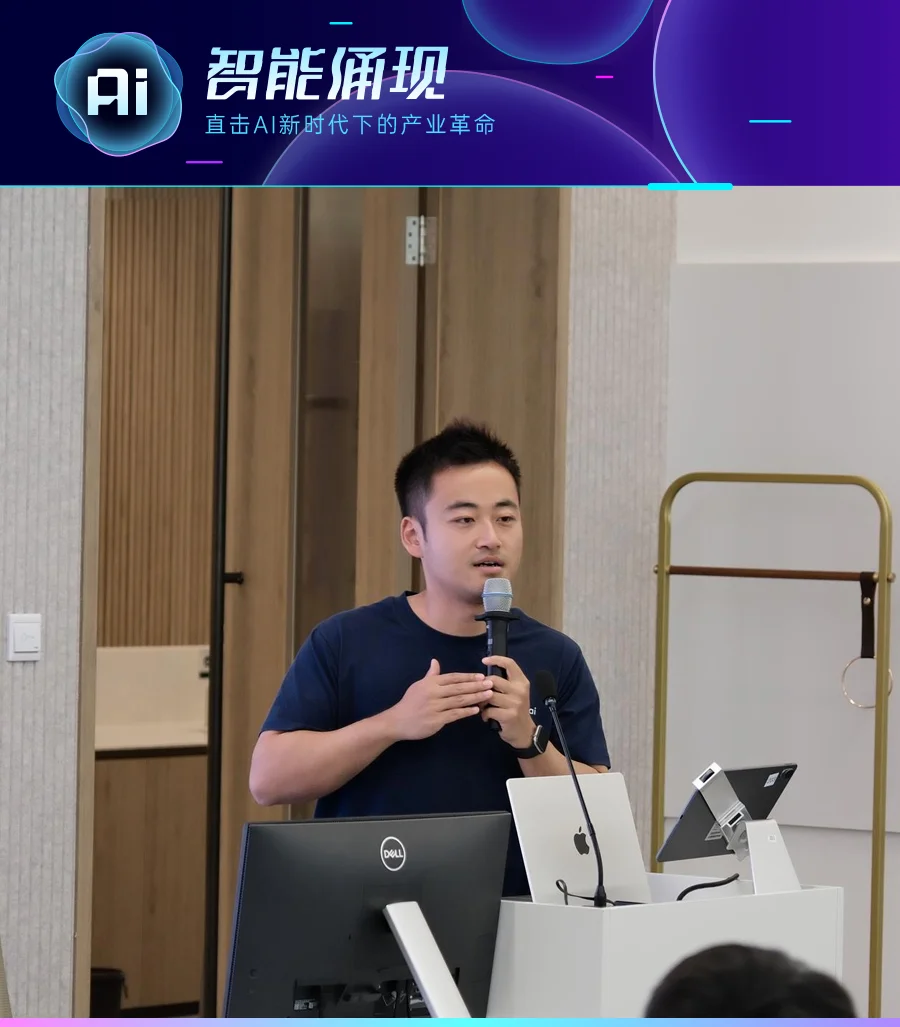
“Every generation of model, we bet on a non-consensus.”
Sand.ai — a video foundation model and product company founded in January 2024 by Cao Yue — has raised over $100 million across two rounds, backed by leading global and Chinese investors including Look Capital, Lollapalooza Capital (Wang Huiwen’s family office), Jiu Kun Ventures, Matrix Partners China, MSA Capital (He Yu Capital), Innovation Works, Xianghe Capital, Source Code Capital, CAS Star, Hongtai Fund, Today Capital, Huaye Tiancheng, Yunhui Capital, IDG Capital, and Baidu Venture.
Starlight Capital served as the financial advisor for this round.
A Series of Bold, Non-Consensus Bets
Cao Yue’s strategy centers on first-principles reasoning — not market consensus. Each technical pivot reflects a deep conviction about the physics and scalability of video intelligence:
✅ Autoregressive Architecture: Modeling Time as Causality
- While the industry overwhelmingly pursued diffusion-based video models, Sand.ai bet early on autoregressive modeling — treating video as a causal sequence where each frame predicts the next.
- Their flagship model Magi-1, released in early 2025, achieved #1 ranking on Google DeepMind’s Physics-IQ benchmark, outperforming Nvidia’s Cosmos3-Super and OpenAI’s Sora-2 — validating autoregression as superior for physical realism.
✅ Audio-Visual Co-Generation: Higher-Dimensional World Compression
- After Magi-1, the team realized “video without sound is incomplete.” They launched Gaga-1, one of the world’s earliest audio-visual co-generation models — second only to Google Veo-3.
- Sound and vision reinforce each other: even visual fidelity improves when audio is jointly modeled — because synchronized multimodal signals better approximate real-world observation.
✅ Mixture of Experts (MoE): Breaking the Video Tri-Constraint
- Dense architectures hit a hard ceiling: escalating costs for scaling speed and quality. Sand.ai identified the impossible triangle — cost vs. speed vs. quality — and chose MoE as the breakthrough.
- In late 2025, they pivoted fully to MoE — becoming among the first globally to train stable, large-scale video MoE models.
- Their novel MoE architecture addresses unique video challenges: ultra-long token sequences, high redundancy, and severe load imbalance — enabling efficient training at unprecedented scale.
The Next Milestone: Unified MoE Video Foundation Model (Q3 2026)
Scheduled for release this quarter, Sand.ai’s next-generation model unifies:
– Universal scene generation
– Audio-visual co-generation
– Multi-camera narrative control
– Multi-reference conditioning
All under a single MoE backbone — targeting state-of-the-art (SOTA) performance across every dimension, and planned for full open-source release.
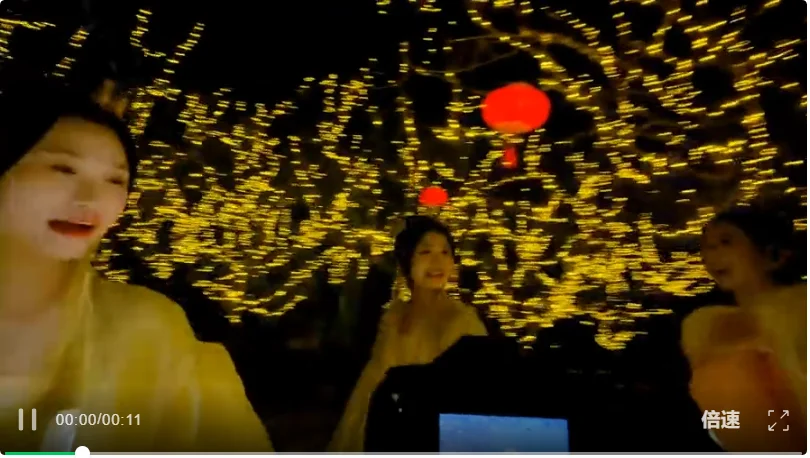
△ Camera-captured motion perfectly mirrored in generated video
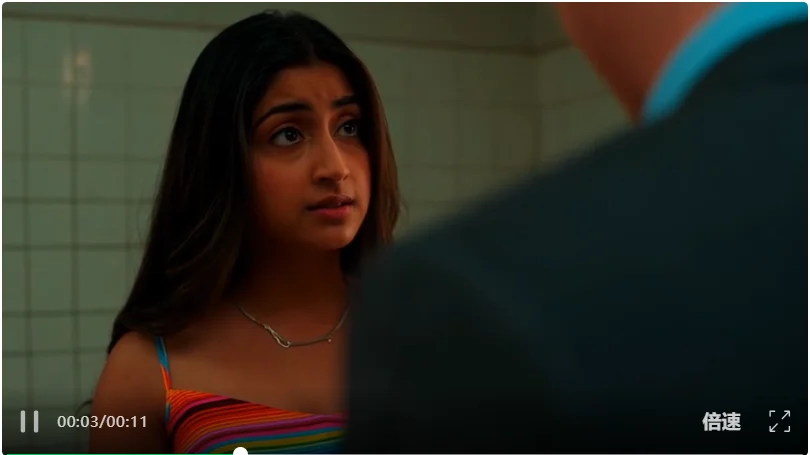
△ Video generated by Sand.ai’s next-gen model
Why Video Is the Most Critical Data Modality for World Models
Cao Yue argues that “world model” remains an ill-defined buzzword — still in its pre-GPT-1 era: undefined data, divergent architectures, no convergence on objectives.
Yet he asserts with clarity:
Video is the most essential stepping stone — not the end goal.
🌐 Video as Raw Observation Proxy
- Video is the largest, highest-fidelity, most structurally rich observable dataset we possess: it encodes spatiotemporal dynamics, physics, semantics, intention, and affect — all in raw pixels + waveforms.
- Unlike human-defined latent states (e.g., “object pose”, “scene graph”), raw video avoids premature abstraction — echoing The Bitter Lesson: scalable intelligence emerges from modeling raw sensory input, not engineered representations.
🧠 Evolutionary Analogy: From Still Photos → Physics → Interaction
Think of video model progress as a child learning the world:
– Static images → world as frozen snapshots
– Motion-only video → understanding time and continuity
– Audio-visual sync → grasping causality (e.g., impact sounds follow collisions)
– 3D-consistent multi-view → internalizing spatial geometry
– Predictive physics → inferring gravity, friction, inertia
– Interactive agents → closed-loop world manipulation
No textbook required — just richer, more complete observation.
Dual-Track Strategy: Models + Products
Sand.ai rejects the “model-only vs. product-only” dichotomy. Its approach is deliberately integrated:
- VidMuse, launched Jan 2026, is a music-aware video agent — achieving $10M ARR within three months, demonstrating rapid commercialization.
- Product feedback loops directly fuel model refinement: user preferences, failure modes, and interaction patterns feed into reinforcement tuning.
- Their open-source MagiAttention operator library is now adopted by nearly all major Chinese multimodal teams — and officially recommended by NVIDIA for multimodal training.
Market Outlook: A Poker Table, Not a Monopoly
- Competition window: ~2–3 months — tighter than LLMs, but not insurmountable.
- Market structure: “Three to five players will remain at the table” — not winner-takes-all. Differentiation lies in vertical integration, data flywheel velocity, and architectural innovation (e.g., MoE).
- Sora shutdown rationale: Strategic consolidation — shifting compute from long-horizon R&D (Sora) to near-term revenue engines (Codex), especially ahead of IPO.
- China’s edge in video AI: Near-simultaneous global starting point (post-Sora), plus unparalleled short-video ecosystem density accelerating real-world validation.
Final Word: First Principles Over Consensus
“I rarely think about consensus or non-consensus. I ask: what is fundamental? What is true?”
— Cao Yue
For Sand.ai, the path forward is clear: build ever-richer observational models, ship products that close the loop, and treat video not as a media format — but as humanity’s most abundant, structured, and physically grounded window into reality.
Article originally published by Intelligent Emergence; author: Deng Yongyi.