OpenClaw Roundtable: AI Leaders on Agent Ecosystem and Sustainable Inference
By AITNT — March 27, 2026
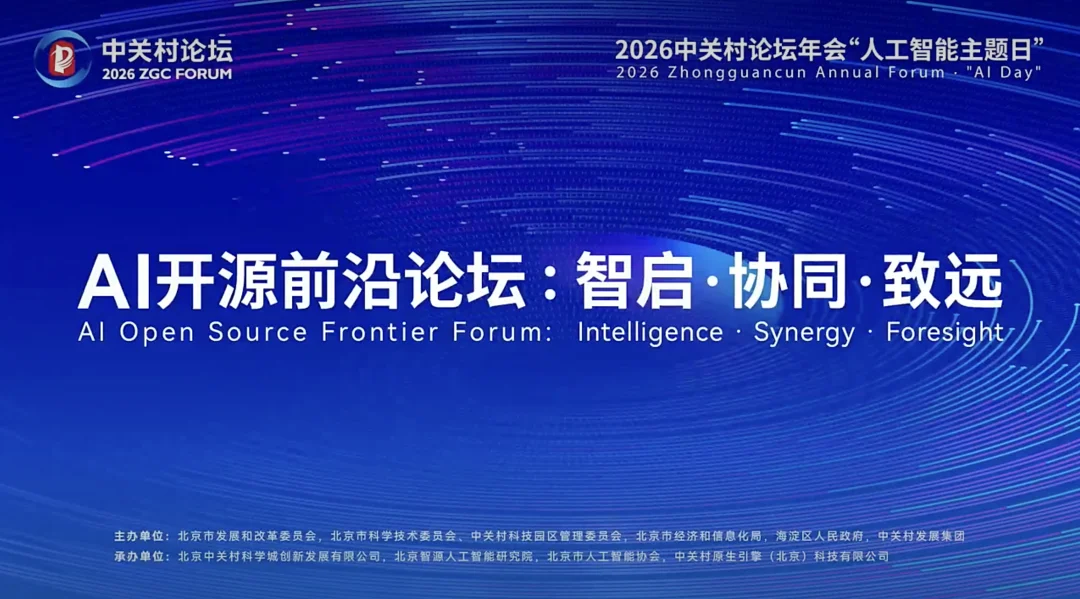
Today marked the AI Theme Day of the 2026 Zhongguancun Forum — a high-density, high-impact event featuring the launch of the Open Source Alliance, the Sovereign Large Model White Paper, and the Beijing AI Association. Among its packed agenda, the “Lobster & AI Open Source Roundtable” stood out as the most information-rich session.
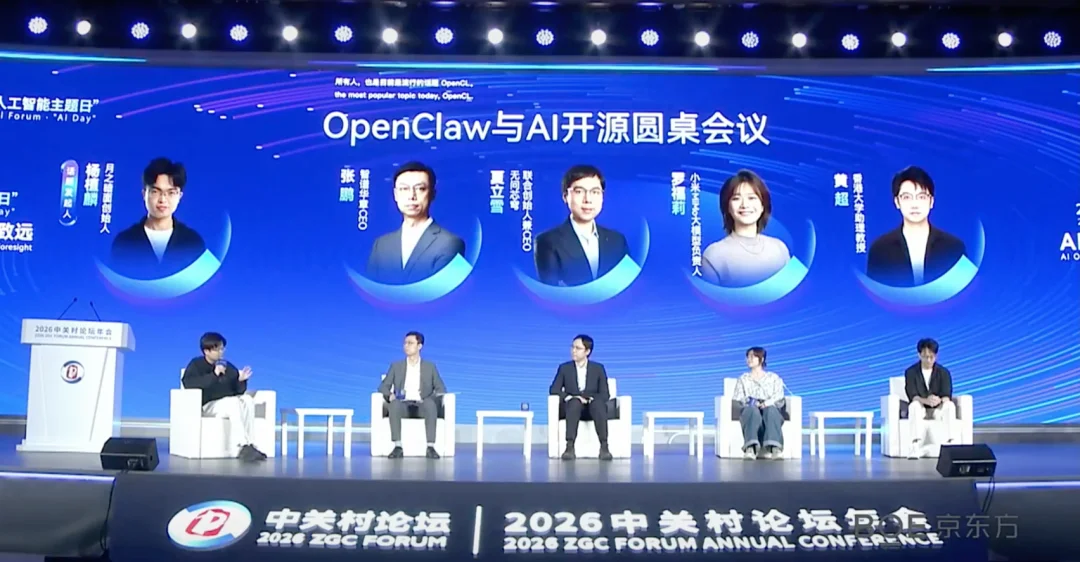
Hosted by Yang Zhilin, the roundtable brought together four leading voices across the AI stack:
- Zhang Peng, CTO of Zhipu AI (GLM5 Turbo);
- Xia Lixue, Co-founder of InfraX (Wuwen Xinqiong);
- Luo Fuli, Lead of Xiaomi’s MiMo Lab;
- Huang Chao, Professor at the University of Hong Kong and creator of NanoBot.
The discussion spanned model architecture, infrastructure scalability, agent design principles, and long-horizon trends — with zero PR fluff and maximum technical substance.
🔍 Key Insights by Speaker
🦞 Zhang Peng (Zhipu AI): From Chat to Work — Rethinking Token Economics
“GLM5 Turbo isn’t just smarter — it’s built to execute. Tasks like multi-step coding, debugging, and multimodal orchestration demand longer reasoning chains, higher context retention, and deeper tool integration.”
- Pricing rationale: GLM5 Turbo’s price increase reflects true cost — complex task execution consumes 10–100× more tokens than simple Q&A.
- Architectural shift: Optimized for autonomous, persistent loop-based workflows — not just conversational fluency.
- Commercial imperative: Sustainable pricing enables reinvestment in capability upgrades — breaking the race-to-the-bottom trap.
⚙️ Xia Lixue (InfraX): Building the Agentic Infrastructure
“Today’s cloud infra was built for engineers — not agents. We need an infrastructure that thinks, adapts, and deploys at AI-native speeds.”
- Token factory scaling: InfraX now sees 10× token growth since January, mirroring early 3G data explosion patterns.
- Hardware-software co-design: Unified abstraction layer across 10+ domestic chips — maximizing throughput per watt and per dollar.
- Beyond optimization: Next-gen Agentic Infra must support millisecond-level task initiation, self-healing, and cross-agent cache synchronization (e.g.,
cache-to-cachereplication). - Vision: Infrastructure itself becomes an intelligent agent — managed by Claude-class orchestrators, evolving autonomously.
🧠 Luo Fuli (Xiaomi MiMo): Long Context ≠ Just More Tokens
“Efficient long-context isn’t about memory size — it’s about information density, latency control, and adaptive compression. That’s where structural innovation unlocks new frontiers.”
- China’s structural edge: Constraints bred breakthroughs — e.g., DeepSeek v2/v3 MoE, hybrid sparse attention (DSA/NSA/KSA), and Xiaomi’s upcoming high-sparse architectures.
- Self-evolution enablers: Million- to billion-token contexts are prerequisites for model self-improvement — where context acts as implicit parameter evolution.
- Real-world impact: Teams report 10× research acceleration, especially in model architecture search (e.g., optimizing PPL under constraints).
🤖 Huang Chao (HKU): The Three Pillars of Agent Maturity
“Planning, Memory, and Tool Use aren’t features — they’re fault lines. Where they break, agents stall. Where they align, productivity explodes.”
| Dimension | Current Pain Point | Emerging Direction |
|---|---|---|
| Planning | Poor implicit knowledge in vertical domains; fails beyond ~500-step tasks | Skill-augmented planning + domain-knowledge distillation |
| Memory | Flat file systems (Markdown) fail under scale; poor recall fidelity | Hierarchical, modality-aware memory with dynamic indexing |
| Tool Use | Low-quality/malicious Skills undermine reliability; no runtime skill synthesis | Community-governed Skill DAOs + on-the-fly skill generation |
- Multi-Agent reality: “Agent Swarms” (e.g., teams of lobsters) multiply context pressure — demanding next-gen coordination protocols.
🌐 Final Word: One-Word Futures (Next 12 Months)
| Speaker | Keyword | Why It Matters |
|---|---|---|
| Huang Chao | Ecosystem |
Shift from isolated tools to Agent-Native software stacks — CLI > GUI, MCP > API-first design |
| Luo Fuli | Self-Evolution |
Agents running 2–3 day autonomous loops on well-defined goals (e.g., structure search); enabling exponential R&D acceleration |
| Xia Lixue | Sustainable-Token |
Token economics must scale globally — China’s energy + chip + infra advantage → AI Made in China as global token utility |
| Zhang Peng | Compute |
The bottleneck isn’t algorithms — it’s inference capacity. “No card, no feeling” has evolved into “No inference, no impact.” |
💡 Why This Matters
This roundtable crystallizes a pivotal industry inflection: We’ve moved past the era of models-as-oracles. The future belongs to models-as-workers, infra-as-coordinator, and agents-as-collaborators. OpenClaw is less a product and more a catalyst — proving that open, modular, and human-aligned agent frameworks can unlock unprecedented productivity — if the ecosystem invests wisely in sustainability, structure, and scale.
Source: Digitally Transcribed & Edited from Zhongguancun Forum 2026 — Original transcript courtesy of “Digital Life Kazek”.