OpenClaw Core Team on China’s Unique Adoption and Future Roadmap
Exclusive insights from ClawCon Shanghai — where open-source meets enterprise-scale AI deployment
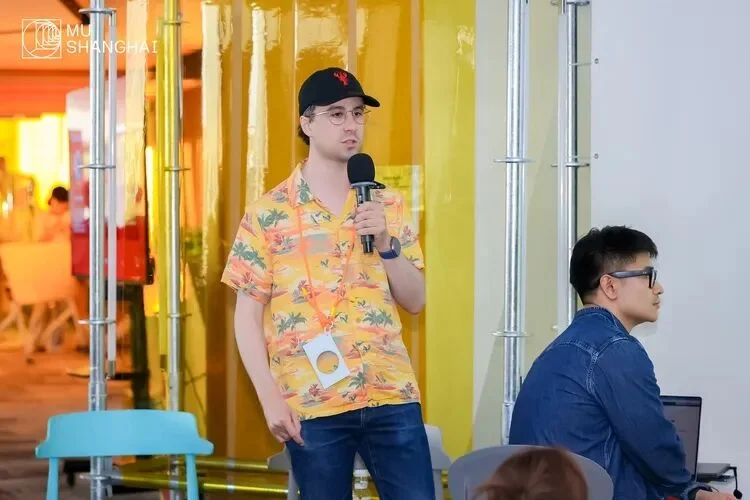
On May 11, during the ClawCon event organized by MU Shanghai at Alibaba’s Shanghai Center, OpenClaw’s core community members convened face-to-face with developers, founders, and end users from across China — marking a pivotal moment in the project’s global expansion.
We secured two exclusive interviews: with Josh, an early OpenClaw maintainer and long-time contributor (PR #39 & #40), and Vincent Koc, a founding member of the newly launched OpenClaw Foundation, responsible for technical governance and community strategy.
🔍 Key Highlights from the Dialogue
✅ 1. Origins & Philosophy: “Built for One User — Myself”
“It was never meant for the masses. It started as my personal solution — to run interesting software across my phone and laptop. I shared it online, and it grew beyond imagination.” — Josh
- Josh emphasized that OpenClaw’s design ethos is rooted in individual utility, not mass-market abstraction.
- He highlighted the paradox of scale: while CLI remains foundational, the team actively explores multi-modal interfaces — SMS, voice, home automation — prioritizing user context over uniformity.
- No roadmap lock-in: “We support everyone — but can’t optimize for everyone. The path beyond CLI is emergent, not prescriptive.”
🛡️ 2. Safety: Openness as a Shield
“Vulnerabilities are hard to hide when the code is public — and the global community watches closely.” — Vincent
- OpenClaw implements sandboxing, runtime integrity checks, and secure boot processes.
- Strategic partnerships with model providers (including Chinese LLM vendors) embed safety configurations by default — shielding non-technical users.
- Security is a shared stewardship: contributions from researchers, auditors, and developers worldwide continuously harden the stack.
💸 3. Token Efficiency: Beyond Cost — Toward Precision
“Your prompt is your most powerful lever. A lazy prompt costs more — and delivers less.” — Josh
- Josh candidly shared his own usage: billions of tokens consumed monthly, largely for code generation — revealing UX friction (e.g., manual account switching).
- Practical advice: Structured prompts with explicit context yield >40% token savings vs. vague instructions — validated across real-world workflows.
- Vincent confirmed engineering efforts focus on accuracy-first optimization: reducing redundant reprocessing, caching intermediate reasoning steps, and enabling adaptive token budgeting per task.
🌐 4. Model Agnosticism & Ecosystem Resilience
“We don’t bind to any model — we build the layer that lets every model shine.” — Vincent
- OpenClaw supports all major LLMs via pluggable adapters — empowering vendors to contribute native integrations.
- Critical challenge acknowledged: Skill portability across models remains unsolved — but active R&D targets cross-model skill translation layers.
- Long-term vision: decouple application logic from model-specific quirks — enabling true “model-swappable” agents.
🚀 5. The Next Evolution: Self-Evolving Agents
“Self-evolving isn’t sci-fi — it’s what happens when OpenClaw debugs, patches, and extends itself in real time.” — Vincent
- Defined as: Agents that autonomously improve their own behavior based on feedback, failure analysis, and environment interaction.
- Demonstrated today: OpenClaw maintains internal “shared memory” among its 8 core maintainers — tracking bugs, user complaints, and system degradation — then self-generates mitigation scripts.
🇨🇳 6. China’s Distinct Trajectory: Enterprise-First, Hyperlocal, & Community-Driven
“In the US, it’s personal bots. In China — it’s running business-critical workloads at scale. That’s rare. That’s remarkable.” — Josh
- Observed patterns:
- Enterprise adoption: Large Chinese corporations deploy OpenClaw directly in production — bypassing abstraction layers.
- Grassroots acceleration: Shenzhen municipal initiatives help seniors install OpenClaw; WeChat groups explode with user-built toolchains.
- Societal breadth: Usage spans retirees, students, factory managers — far wider than Silicon Valley’s tech-worker monoculture.
🛠️ 7. China-Specific Priorities: LTS, Unification & Formalization
- Long-Term Support (LTS) releases: To address enterprises’ need for stability amid rapid upstream changes.
- Centralized community hub: Replacing fragmented WeChat groups with a unified, multilingual platform — including real-time bilingual Discord bot integration.
- Foundation-led formalization: OpenClaw Foundation (launched 2 weeks prior) is recruiting full-time staff and building structured partnerships with cloud providers, labs, and government-backed AI consortia.
🌱 8. Lessons from 100K Users: Building Community at Warp Speed
“95% of people are kind. But chaos emerges without clarity — so state your values early, openly, and often.” — Josh
- From Discord’s 100K-user “influx”: transparency, consistent moderation, and human-first onboarding proved critical.
- Final wisdom: “Technology without community is just code. Community without purpose is noise. OpenClaw exists at their intersection.”
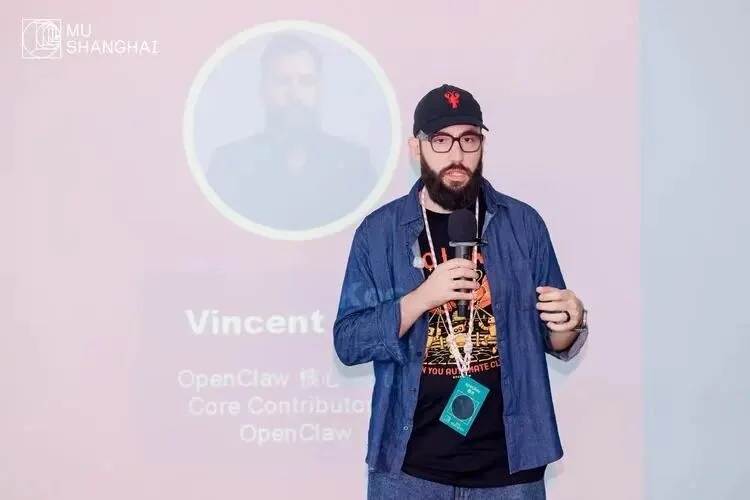
📌 Closing Insight
“We’re now using OpenClaw to maintain OpenClaw — observing its own failures, learning from them, and rewriting its tools. That’s not ambition. That’s iteration.”
This dialogue underscores a paradigm shift: OpenClaw is no longer just an open-source tool — it’s becoming an autonomous infrastructure layer, shaped equally by global contributors and uniquely accelerated by China’s blend of policy support, engineering velocity, and societal embrace.
Source: Exclusive interview conducted at ClawCon Shanghai — May 2026.