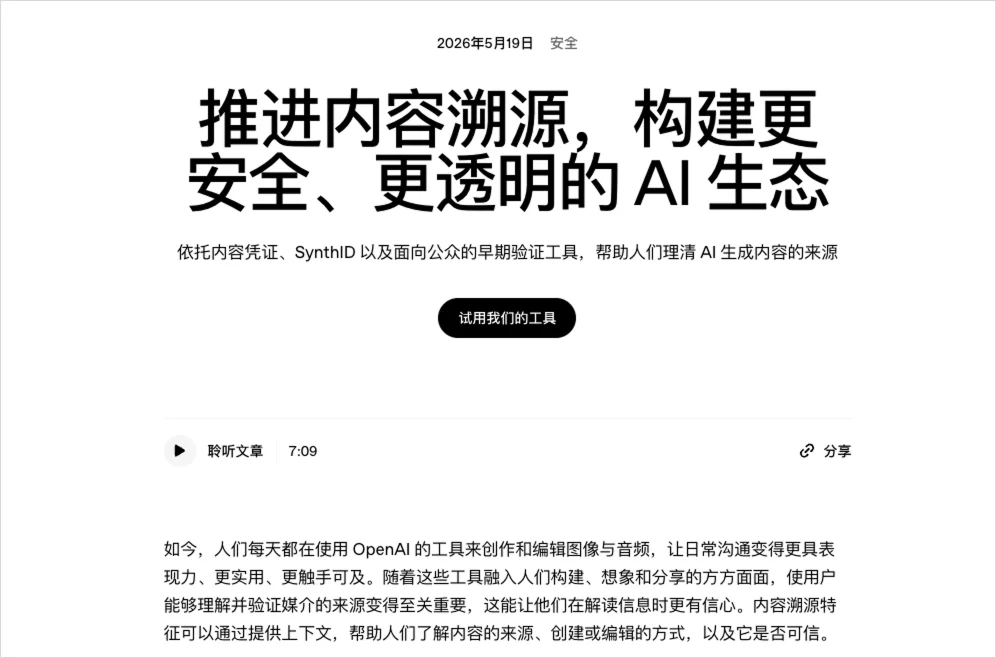
OpenAI and Google Partner to Detect AI-Generated Images
In a landmark move for digital authenticity, OpenAI has officially partnered with Google to integrate Google’s SynthID invisible watermarking technology into its image-generation pipeline — specifically for GPT-Image-2. This collaboration strengthens the end-to-end AI image detection chain and introduces a new, publicly accessible verification tool designed to enhance content provenance at minimal cost.
🔍 Tool Access: https://openai.com/zh-Hans-CN/research/verify/ — no login required.
Why This Matters: The “Dark Forest” Problem
As AI image generation becomes indistinguishable from reality, trust erodes rapidly. As noted in prior analyses:
“When造假 costs approach zero and no reliable detection exists, the cost of trust approaches infinity.”
Real-world abuse is already widespread — from AI-forged product defect images used to fraudulently claim “returnless refunds” on e-commerce platforms, to watermarked AI photos accidentally submitted as evidence (with visible Gemini or DALL·E watermarks left unedited).
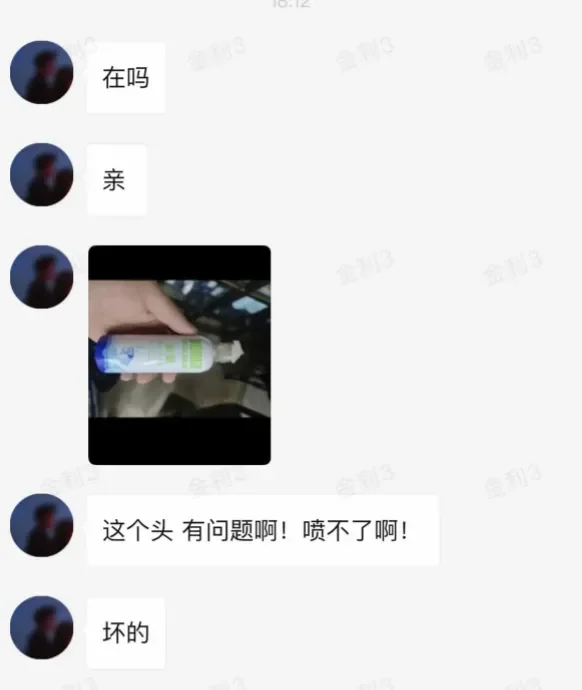
Even sophisticated outputs — like this hyperrealistic space photo — can mislead:
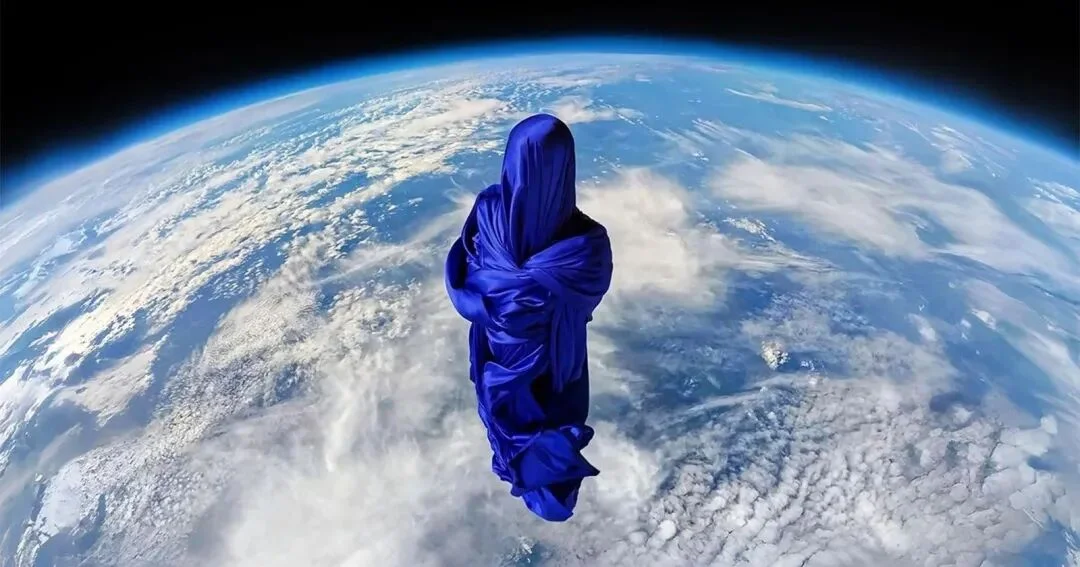
This is not AI-generated. It’s a real high-altitude balloon shot by The Dorothy Project — yet appears convincingly synthetic. Detection tools must avoid false positives while catching true fakes.
Dual-Layer Verification Architecture
OpenAI’s new system combines two complementary, industry-standard technologies:
✅ C2PA Metadata (Content Provenance Standard)
- Full name: Coalition for Content Provenance and Authenticity
- Founded in 2021 by Adobe, Microsoft, Google, BBC, Sony, Intel, and others.
- Embeds cryptographically signed metadata (“Manifest”) directly into image files (JPEG, PNG, etc.) using the JUMBF container format.
- Contains three layers:
- Assertions: Claims like “Generated by GPT-Image-2 on 2026-05-19” or “Shot on Nikon Z9, f/2.8, GPS: 40.7128° N, 74.0060° W”
- Claim: Bundled assertions forming a verifiable statement.
- Claim Signature: Hardware- or software-signed hash binding metadata + pixel data — tamper-evident.
- Supported by Leica M11-P (first C2PA camera), Nikon Z8/Z9, Sony, Canon, and Google Pixel 10 (Titan M2 hardware signing).
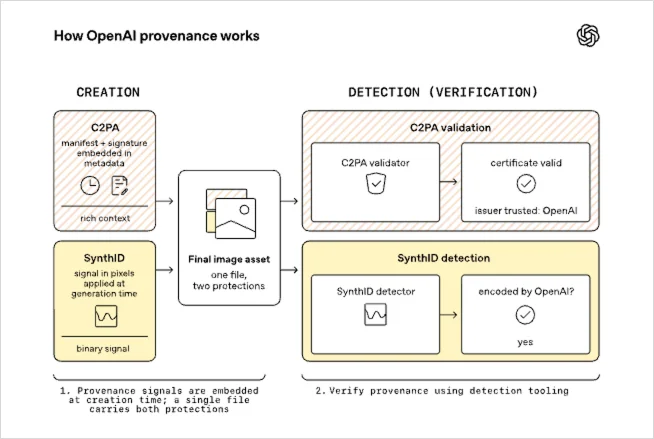
✅ Google SynthID (Invisible Digital Watermark)
- Developed by Google DeepMind; now expanding beyond Google’s ecosystem.
- Embeds a robust, human-imperceptible signal across frequency domains and color channels — resistant to cropping, compression, filters, rotation, screenshots, and re-encoding.
- Not location-bound: signature is distributed across the entire image, ensuring resilience.
- Already adopted by NVIDIA, Kakao, ElevenLabs, and now OpenAI.
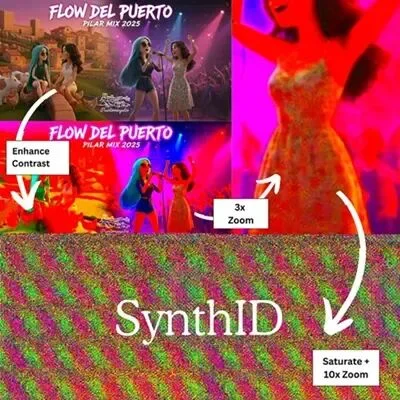
Real-World Verification in Action
The OpenAI verification tool delivers rapid, practical results:
- ✅ Detects GPT-Image-2 output even after:
- WhatsApp/WeChat re-saving
- Format conversion (e.g., PNG → JPEG)
- Partial screenshot + repost
- Social media (Xiaohongshu) screenshot upload
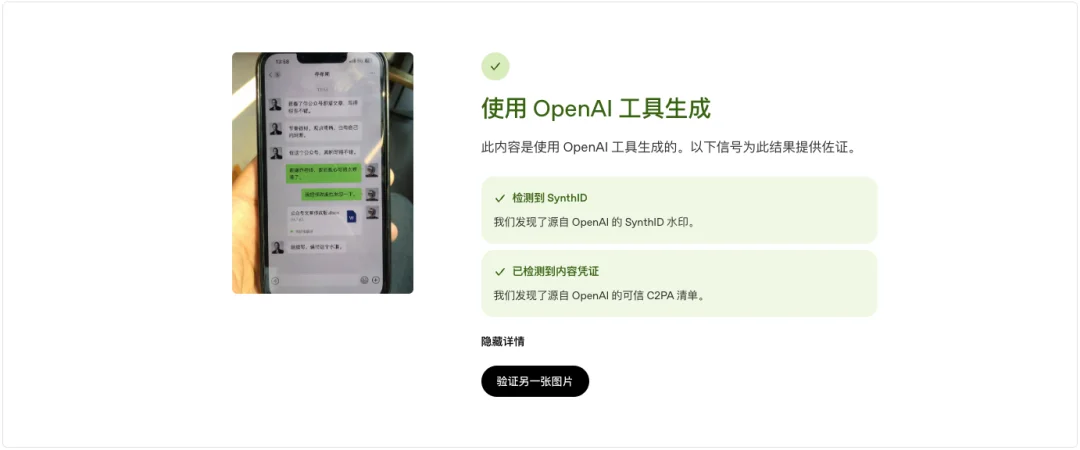
- ⚠️ Currently detects only OpenAI-generated images — but OpenAI confirms plans for cross-model, cross-vendor verification, enabling detection of outputs from NanoBanana, Midjourney, Stable Diffusion, etc., once they adopt compatible standards.
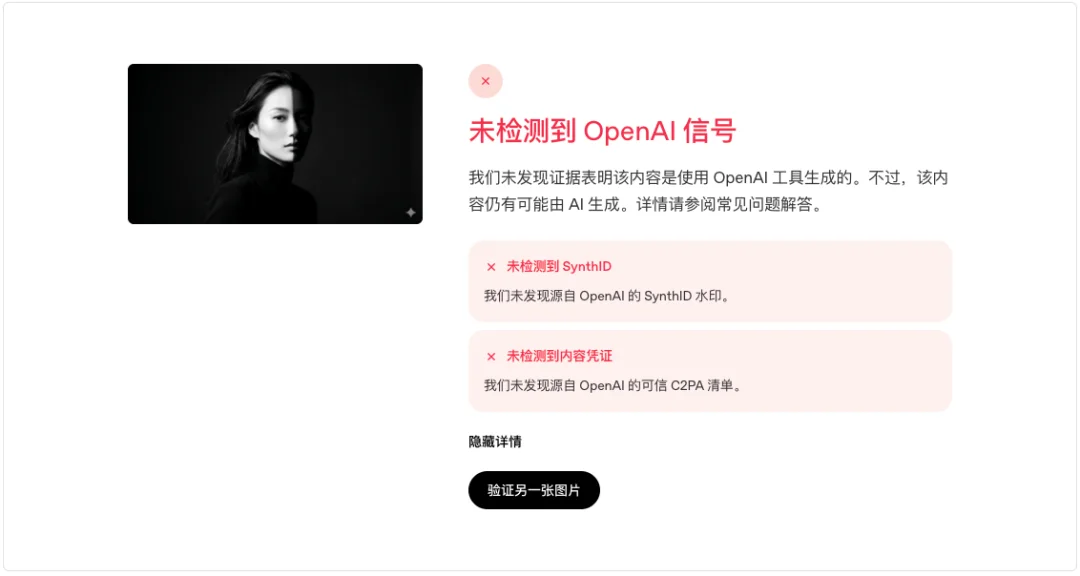
The Bigger Vision: A Verified Internet
This partnership signals a critical shift — away from proprietary silos toward interoperable trust infrastructure.
- C2PA = External label (verifiable origin & edits)
- SynthID = Embedded DNA (tamper-resistant, perceptually hidden identity)
Together, they form a dual-anchor system where:
– AI-generated images carry traceable provenance,
– Photographs from certified cameras bear cryptographic integrity,
– And future platforms (browsers, OSes, social apps) will natively surface verification status.
As OpenAI stated in its official blog:
“No single content provenance technology can succeed alone. Likewise, no single company can secure the internet’s information ecosystem — not in the age of generative AI.”
The precedent is set. Now, it’s up to the broader industry to follow.