OpenAI Launches ChatGPT Personal Finance Tool
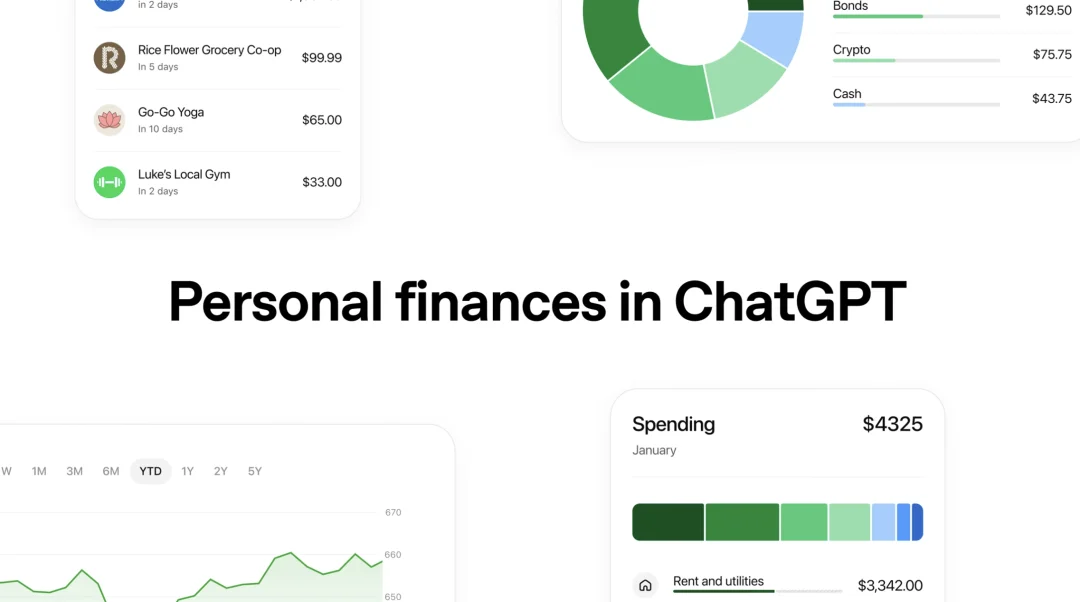
ChatGPT’s new personal finance interface — bridging AI assistance and real-world financial data.
A Bold Step Into Real-World Financial Assistance
On May 15, OpenAI unveiled a groundbreaking — and polarizing — new capability: ChatGPT’s Personal Finance tool. For the first time, users in the U.S. can securely connect their bank accounts, investment portfolios, and credit cards directly to ChatGPT.
This feature is currently in preview for U.S.-based ChatGPT Pro subscribers ($200/month), leveraging Plaid’s trusted financial data infrastructure to support over 12,000 institutions, including JPMorgan Chase, Fidelity, Charles Schwab, Robinhood, American Express, and Capital One.
💡 Crucially, ChatGPT never sees full account numbers or passwords. Plaid’s tokenized authentication ensures only encrypted, read-only access to balances, transactions, investments, and liabilities.
How It Works: From Connection to Insight
🔗 Secure Account Linking
Users activate the feature via the sidebar “Finances” tab or by typing @Finances, connect my accounts. The flow mirrors familiar fintech apps (e.g., Venmo or Robinhood) — seamless, compliant, and privacy-preserving.
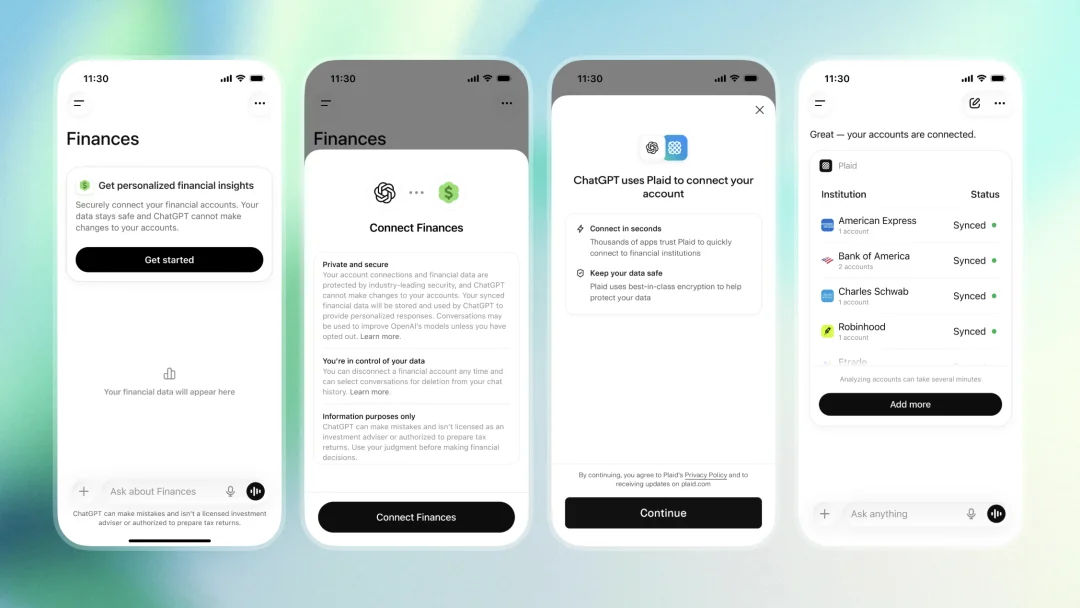
Plaid-powered connection process — no credentials shared with OpenAI.
📊 Intelligent Financial Dashboard
Once synced (typically within minutes), ChatGPT generates a dynamic, categorized dashboard showing:
– Real-time checking & savings balances
– Transaction history with AI-powered categorization
– Subscription tracking & recurring bill alerts
– Salary deposits & payroll trends
– Investment portfolio performance
– Credit card debt, mortgage, and loan liabilities
💬 Conversational Financial Intelligence
Unlike static budgeting tools (e.g., Mint or YNAB), ChatGPT delivers context-aware, natural-language financial guidance:
- ✅ “Have I spent more this month than last? What changed?”
- ✅ “Help me build a 5-year local home-buying plan.”
- ✅ “I owe my parents money and want to buy a car next January.” → ChatGPT stores these as financial memories, enabling longitudinal, personalized advice.
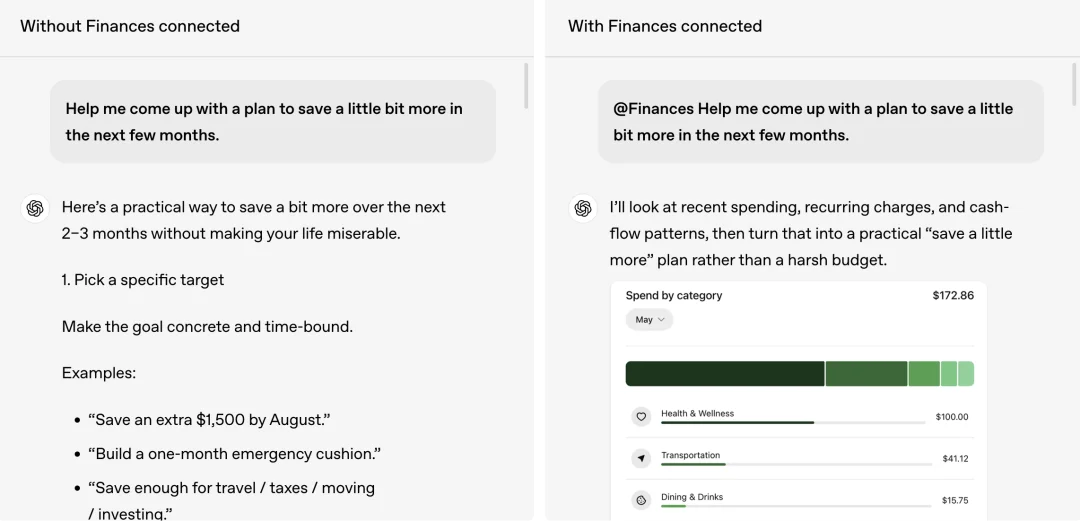
Left: Generic advice. Right: Actionable insights grounded in your actual data.
Strategic Foundation: Acquisitions & Ambition
OpenAI didn’t pivot overnight. Its financial ambitions are built on deliberate infrastructure:
- October 2025: Acquired Roi, a personal finance app founded by Sujith Vishwajith.
- April 2026: Acquired Hiro Finance, an “AI CFO” startup managing >$1B in assets, led by Ethan Bloch (ex-Digit founder).
These moves assembled a specialized “financial AI team” — backed by evidence that over 200 million users per month already ask ChatGPT finance-related questions, from budgeting to debt reduction.
The goal? Transform ChatGPT from a general-purpose chatbot into a trusted, data-informed super-assistant — following the same playbook used for ChatGPT Health, which integrates Apple Health and MyFitnessPal.
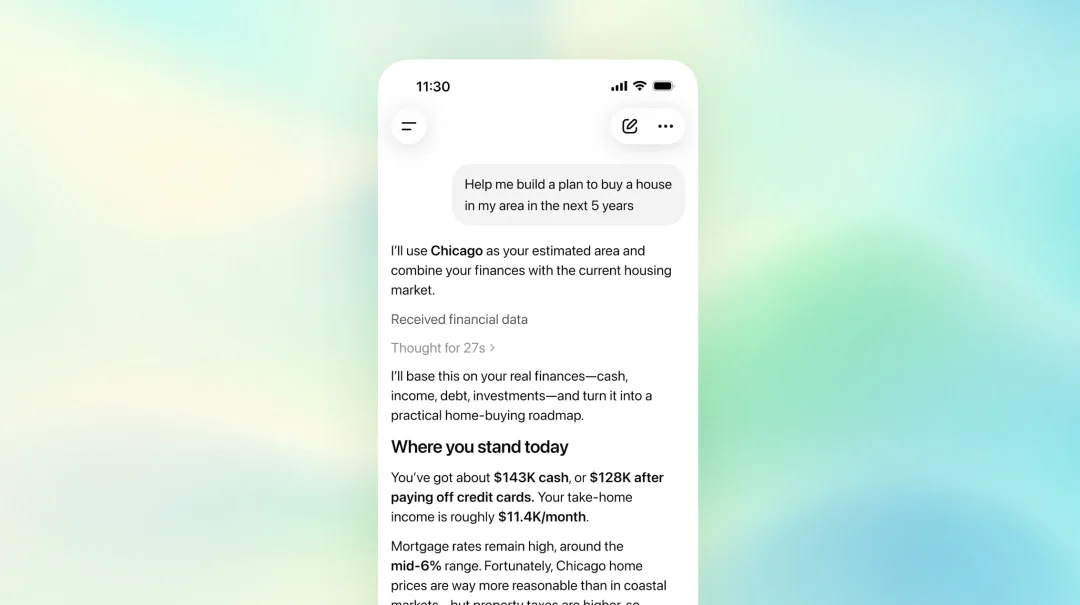
Real-time analysis powered by GPT-5.5 Pro — optimized for financial reasoning.
Privacy Under Pressure: Trust Is the Real Bottleneck
The launch coincided with a new class-action lawsuit filed in California federal court, accusing OpenAI of embedding Meta Pixel and Google Analytics trackers — allegedly transmitting sensitive health, legal, and financial conversation data to ad platforms without consent.
While OpenAI emphasizes strict safeguards —
– ❌ No write access to accounts
– ❌ No visibility into full account numbers
– ⏳ Automatic 30-day data deletion after disconnection
– 🧠 Optional “Improve model” toggle (opt-in only)
— critics remain skeptical. As one Slashdot user bluntly asked: “When does AI financial advice become legally actionable?”
⚠️ Critical distinction: ChatGPT explicitly disclaims offering regulated financial advice. It operates outside fiduciary oversight — unlike licensed human advisors.
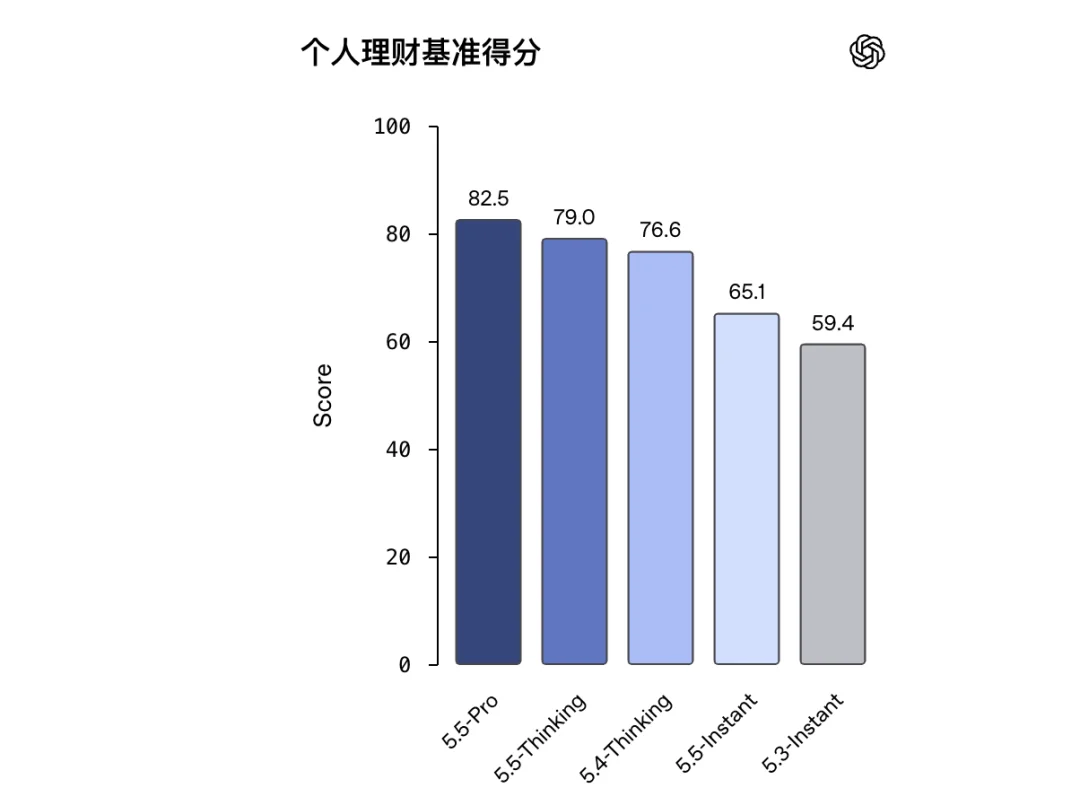
GPT-5.5 Pro demonstrates superior accuracy in private financial analysis.
Industry-Wide Shift: The Race for High-Value Data
OpenAI’s move reflects a broader AI industry trend: verticalization via high-stakes, high-value personal data.
| Company | Focus | Data Partners | Target Audience |
|---|---|---|---|
| OpenAI | Consumer Finance | Plaid, upcoming Intuit integration | General public |
| Anthropic | Institutional Finance | Moody’s, S&P Capital IQ, Morningstar | Banks, insurers |
| Perplexity | Professional Finance | PitchBook, Daloopa, Plaid | Analysts, funds |
Plaid has emerged as the de facto plumbing layer for AI-powered finance — much like Stripe for payments.
The Ultimate Question: Are You Ready?
Technically, ChatGPT is ready: secure integration, powerful reasoning, intuitive UX.
But readiness isn’t just technical — it’s psychological and regulatory.
As Sam Altman’s vision expands — from writing and coding to health and wealth — each new frontier demands deeper trust. And trust, unlike model weights, cannot be fine-tuned.
🎯 The future of AI isn’t just smarter models — it’s the ability to responsibly steward humanity’s most sensitive data.
Header image source: OpenAI
Article adapted from GeekPark.