Nvidia Unveils Vera CPU for AI Agents
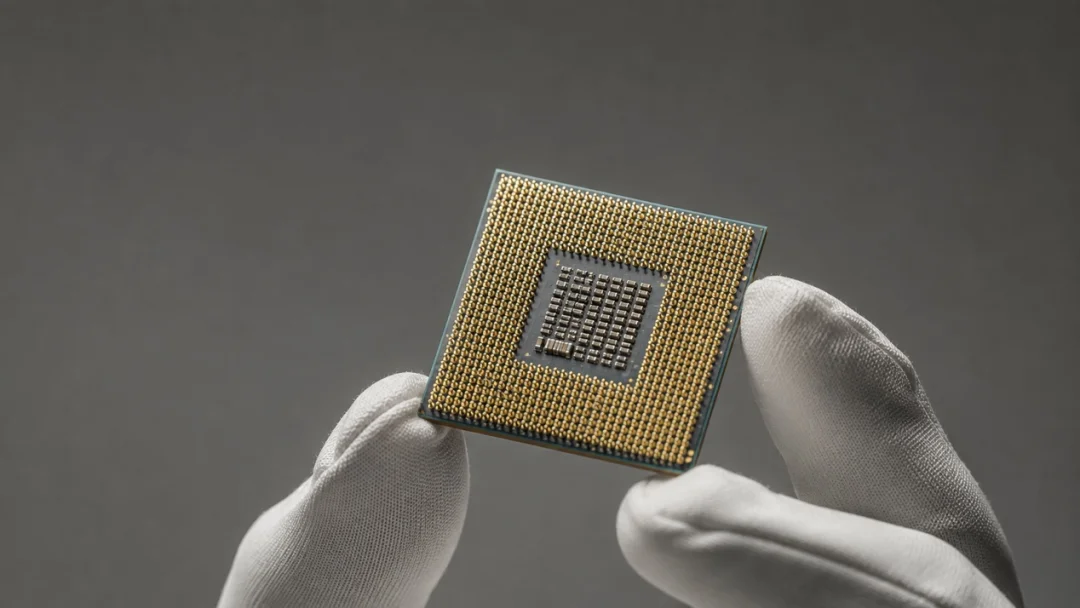
On May 31, 2026, Nvidia announced full-scale production of Vera — its first purpose-built CPU designed explicitly for AI agents. Featuring 88 custom Arm-based cores and Nvidia’s proprietary Olympus architecture, Vera is engineered to power both the Vera Rubin supercomputing platform and standalone CPU servers.
Major OEMs — including Dell, HP, Lenovo, and Supermicro — have already begun manufacturing Vera-integrated systems.
Why Vera? The Rise of the AI Agent Workload
Historically, AI infrastructure has been GPU-dominated: training, inference, scaling — all demanded more GPUs. CPUs played a supporting role: task orchestration, data movement, and system management.
That changed with the emergence of autonomous AI agents, which execute multi-step workflows:
- Parse model outputs
- Select and invoke tools (APIs, databases, code executors)
- Read/write files
- Conduct security checks
- Manage state across iterative “reason–act–observe” loops
📌 Key insight from AMD: In real-world agent pipelines, 7 out of 8 execution stages run exclusively on CPU, highlighting a fundamental shift in compute responsibility.
Performance & Architecture Highlights
| Feature | Specification |
|---|---|
| Core Count | 88 custom Arm cores |
| Microarchitecture | Olympus (Nvidia-designed) |
| Instruction Set | Armv9-compatible |
| Deployment Modes | Integrated into Vera Rubin platform; standalone CPU servers |
| Target Workloads | Agent orchestration, tool execution, tokenization, security auditing, I/O coordination |
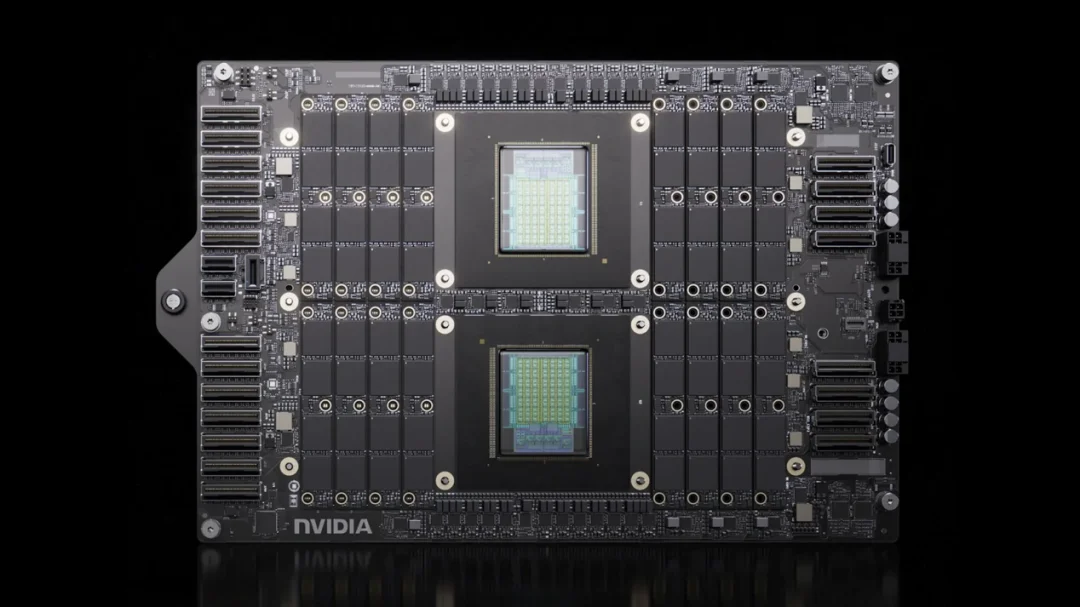
Figure: Nvidia Vera CPU (Source: Nvidia)
Tokenization: The Hidden CPU Bottleneck
Large language models require tokenization before inference, a highly sequential, branching-heavy process poorly suited for GPU acceleration.
- In long-context scenarios (e.g., 100K+ tokens), tokenizers may reprocess entire inputs upon small additions (e.g., +1K tool output tokens).
- Research by Georgia Tech (IEEE Spectrum, 2026) shows tokenization can consume up to 80% of first-token latency, starving GPU utilization.
- Increasing CPU core count reduced first-token latency by 1.47×–5.15×, without adding any GPU resources.
Market Impact: From GPU Shortage to CPU Scarcity
Supply Constraints Emerge
- Intel: Server CPU demand exceeded supply in Q1 2026; ASP rose 27% YoY, while unit shipments fell 5%.
- AMD: Datacenter revenue surged 57% YoY (Q1 2026); revised server CPU market CAGR forecast upward to >35% through 2030, targeting >$120B market size.
- Arm: Launched its first in-house datacenter CPU (136-core AGI chip, co-developed with Meta), projecting 4× higher CPU capacity needs in agent-native datacenters.
- Qualcomm: Released Dragonfly C1000 (250+ cores), signed multi-gen server CPU partnership with Meta.
Infrastructure Shifts
- Traditional GPU-to-CPU ratio (1:4 to 1:8) is shifting toward 1:1 or even CPU-heavy configurations.
- Cloud providers are evaluating dedicated CPU-only racks for agent orchestration layers.
Strategic Implications
Vera isn’t just a new product — it’s a vertical integration play:
✅ Offloads CPU-bound bottlenecks from Nvidia’s own GPUs → improves GPU utilization & ROI
✅ Enables end-to-end stack sales (CPU, GPU, networking, storage) → enhances vendor lock-in & margins
✅ Positions Nvidia at the center of the agent infrastructure stack, not just the inference layer
However, this expansion comes at a cost: constrained foundry capacity is increasingly diverted from client CPUs to high-margin server chips — foreshadowing consumer CPU shortages and price hikes, echoing the GPU shortage era.
References
- IEEE Spectrum: AI CPU Comeback
- AMD Blog: Agentic AI Changes the CPU-GPU Equation
- arXiv Preprint: Efficient Tokenization for Long-Context Agent Workloads (2603.22774v2)
Article adapted from DeepTech; author: Jiayang.