现场直击硅谷世纪庭审:马斯克 vs 奥尔特曼——谁是 “最讨厌的人”
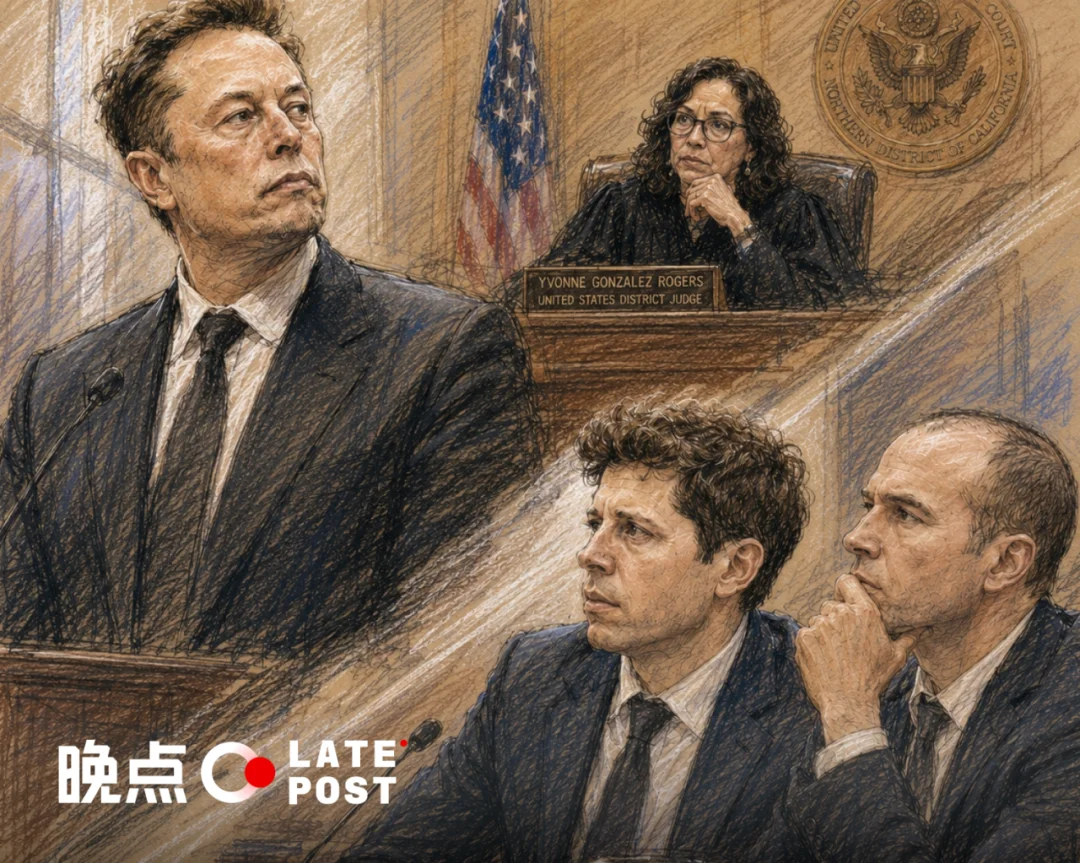
A trial about betrayal, greed, and idealism.
The world’s most consequential AI lawsuit entered its second week — a high-stakes civil trial pitting Elon Musk against OpenAI, CEO Sam Altman, and President Greg Brockman. Musk alleges that OpenAI abandoned its founding non-profit mission and betrayed a charitable trust he helped establish in 2015.
🔍 Opening Moves & High-Tension Messaging
Days before opening arguments, Musk texted Brockman: “By the end of this weekend, you and Sam will be the most hated people in America.” Brockman replied proposing mutual dismissal of lawsuits — a gesture swiftly rebuffed. The exchange was excluded from evidence by Judge Yvonne Gonzalez Rogers, who ruled it irrelevant to core fiduciary claims.
Yet the sentiment reverberated beyond the courtroom. Outside Oakland’s Ronald V. Dellums Federal Building, graffiti declared: “STRIKE” and “TRUMP & MUSK OUT” — a stark reminder of the region’s political climate and deep-seated skepticism toward Musk, once hailed as a local tech visionary.
⚖️ Inside the Courtroom: Power, Posture & Precision
- Pacific Time, May 4, 7:00 AM: Reporters, photographers, and legal observers lined up outside the courthouse. A fresh red paint smear on the façade — unexplained, but unmistakably symbolic.
- 7:50 AM: Security cleared entry. Spectators filled the gallery — including The New York Times’ Cade Metz and The Information’s Amir Efrati.
- 8:00 AM: Judge Gonzalez Rogers opened proceedings. No cameras, no recordings — only human memory and court stenography.
Key Legal Figures
| Role | Name | Notable Background |
|---|---|---|
| Plaintiff’s Lead Counsel | Steven Molo | Described by Chambers & Partners as “a courtroom presence who lights up the room”; known for surgical cross-examination. |
| Defendant’s Lead Counsel | William Savitt | Former guitarist in NYC underground bands; clerked for RBG; co-chair of litigation at Wachtell Lipton; previously forced Musk to close the $44B Twitter deal. |
| Presiding Judge | Yvonne Gonzalez Rogers | First Latina federal judge in the Northern District of California; presided over Epic v. Apple; renowned for tight control and uncompromising rigor. |
🧾 The Jury: A Microcosm of America
Nine jurors were seated — six women, three men:
– Professions: Nurse, caregiver, painter, Lockheed Martin project manager (retired), two retirees.
– Origins: Six immigrants — from Mexico, the Philippines, Guatemala, and Pakistan.
– AI Experience: Divergent views — two never use AI; two rely on it daily; two complain it slows down work due to verification overhead.
– Views on Musk: Several admitted political bias — one stated plainly: “My discomfort is political — not tied to his business conduct.”
Judge Rogers acknowledged the challenge candidly: “The reality is, many people dislike him. Many truly dislike him.”
📚 Expert Testimony & Narrative Collision
Dr. Stuart Russell, UC Berkeley CS professor and co-author of the seminal AI textbook, testified as Musk’s expert witness — compensated $235,000 for 40 hours (5× market rate). His testimony aimed to frame AI risk as existential — arguing AGI development must remain non-commercial to avoid corporate hegemony.
But Russell didn’t spare Musk: “The race isn’t just about OpenAI — xAI is part of the same unsafe, profit-driven sprint.”
Judge Rogers promptly sustained OpenAI’s objection — cutting off broader existential discourse. Later, when Musk himself invoked Terminator-style extinction during testimony, she interjected firmly: “In this case, we do not discuss species extinction.”
📔 The Fatal Diary: Truth in Private Words
The most damning evidence came from Brockman’s personal digital diary — maintained since 2010 and subpoenaed during discovery.
In a 2017 entry, amid escalating tensions with Musk, Brockman wrote:
“This is our only chance to get rid of Elon. Is he my ‘glorious leader’? Do we really have a shot at this? Financially — how do I get to $1B?”
That single paragraph — displayed verbatim to the jury — fused moral rupture with personal ambition. When pressed by Molo (“Is $1B insufficient? Do you need $30B to get out of bed?”), Brockman paused, then replied: “That’s not what I meant.”
Meanwhile, Altman sat silently behind counsel — posture shifting from relaxed to contemplative, finger resting pensively on his chin.
🕯️ Origins: The Dinner That Changed Everything
It began with dinner — December 2015, Hotel Vitale, San Francisco.
Musk and Altman envisioned an AI counterweight to Google’s dominance — one governed by ethics, not equity. OpenAI launched as a non-profit with a $1B funding pledge. Musk contributed $38M — no shares, no control, only stewardship.
By 2017, scaling costs exploded. Musk proposed full operational control or merger with Tesla. Altman and Brockman refused. Musk resigned from the board in 2018.
What followed: Microsoft’s massive investment, ChatGPT’s global explosion, and an $85B+ valuation — rendering OpenAI’s original charter a historical footnote.
📉 What Comes Next? Odds, Outcomes & Exit Ramps
- Kalshi prediction markets: Musk’s win probability dropped from 61% → 53.5% → 37% after his testimony — driven less by evidence than by perceived credibility erosion.
- Legal realities: Strong likelihood of partial liability on breach-of-trust claims — but near-zero chance of forced reversion to non-profit status or Altman’s removal.
- Most probable outcome: Narrow injunction + nominal damages — symbolic, not structural.
- Appeal inevitable: Ninth Circuit review expected within 12–24 months. Supreme Court intervention is highly unlikely.
- The quiet path forward? Settlement. With OpenAI’s IPO imminent, pressure to resolve uncertainty grows — potentially yielding a public commitment to mission alignment (but no leadership change).
💫 Final Reflection
As courtroom photos of early OpenAI team members crowded into Brockman’s living room flashed on screen, his voice cracked — not from guilt, but from memory.
Altman left mid-session. The jury watched impassively.
In Silicon Valley, losing a lawsuit isn’t fatal. But losing the narrative — the moral high ground, the origin story, the sense of shared purpose — may prove irreversible.
Author: Hengxing Zhou — Founder of Pandaily, author of The Altman Biography, translator of Elon Musk: Tesla, SpaceX, and the Quest for a Fantastic Future.
Cover image: Generated via GPT Image 2
Originally published by LatePost.