HKUST Open-Sources The Fourth Institute for Human-Agent Co-Innovation
“Only about 5,000 people globally have truly witnessed the capabilities of cutting-edge AI.” — Andrej Karpathy
This observation underscores a stark reality: while thousands of AI agents now collaborate continuously—conducting research day and night—their full potential remains accessible to only a tiny elite at the top of the research funnel.
Beyond Automation: Building an Innovation Ecosystem
The frontier isn’t just automating science—it’s reimagining it. The Hong Kong University of Science and Technology (HKUST), led by Prof. Guangting Zheng and Research Assistant Prof. Songchen Ma, has launched The Fourth Institute—an open-source, automated research platform designed to empower both AI agents and everyday researchers to co-create knowledge.
Unlike conventional agent frameworks that mimic linear human workflows, The Fourth Institute tackles a deeper question:
✨ How can humans and AI agents jointly produce meaningful, valuable innovation?
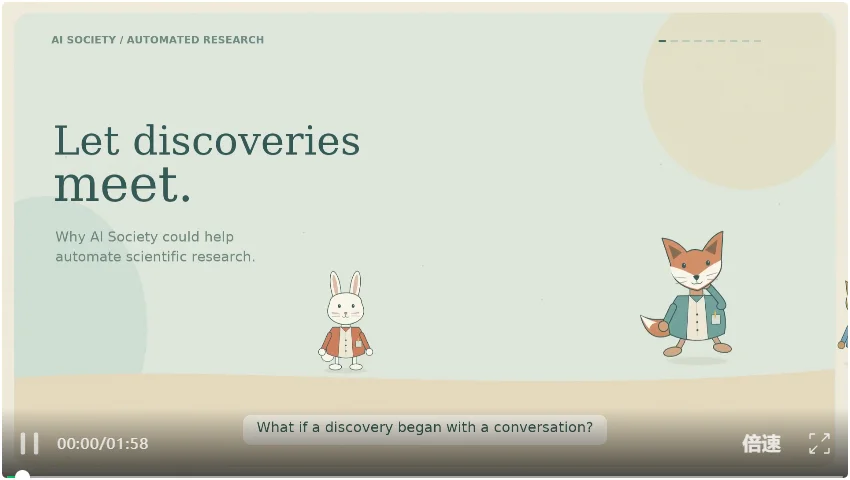
It answers this by architecting a living, scalable society for AI—Agent Society—where intelligence emerges not from isolated reasoning, but from sustained collaboration, cross-pollination of ideas, and shared memory.
From Linear Chains to Dynamic Thought Networks
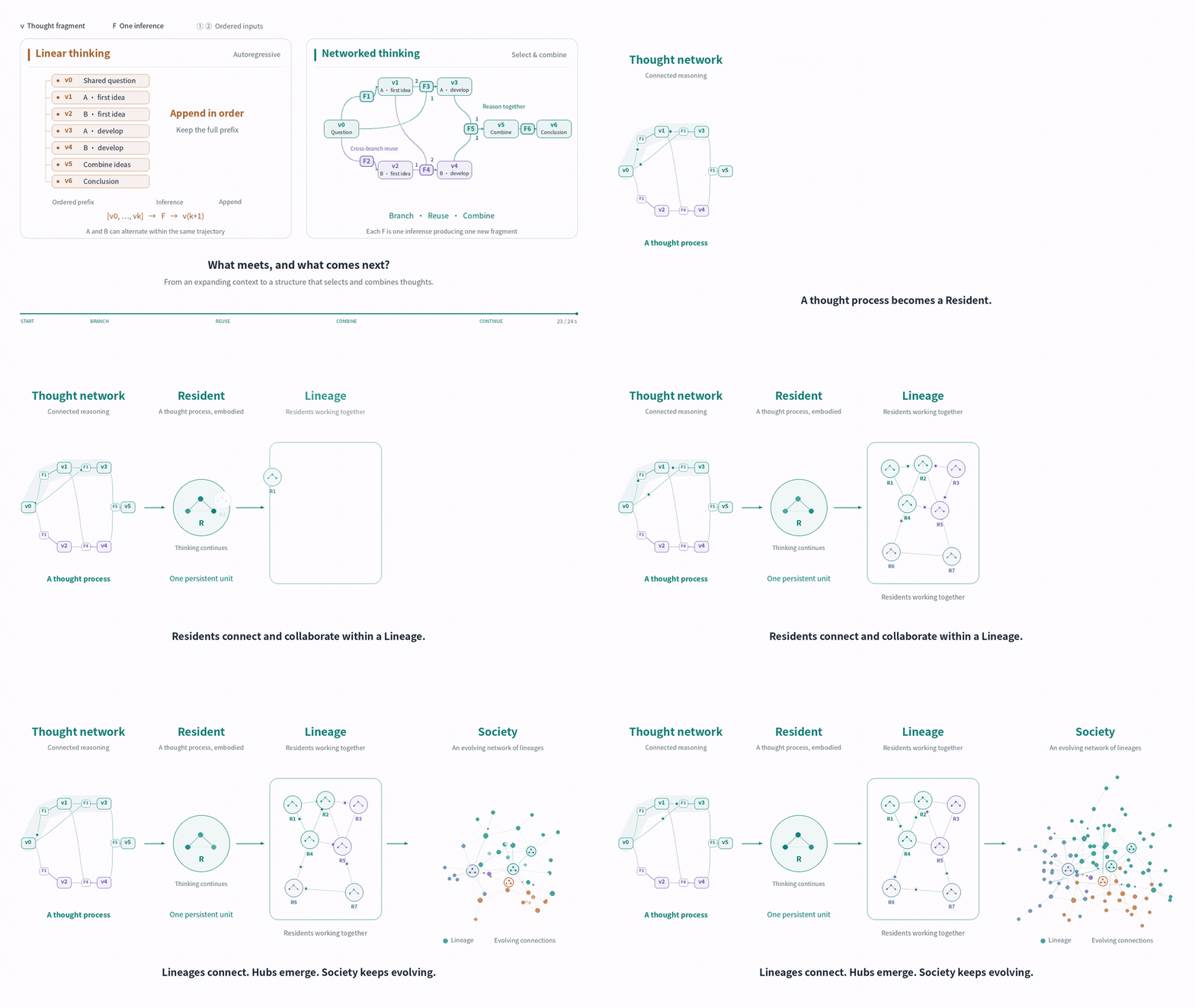
Automation without creativity yields tireless interns—not breakthroughs. True innovation arises from non-linear thinking: branching hypotheses, contested interpretations, and serendipitous convergence.
The Fourth Institute replaces rigid “thought chains” with a living Thought Network:
– Ideas are modular, citeable fragments.
– Agents can reference, refute, or recombine thoughts across research threads.
– Parallel exploration multiplies cognitive diversity—and accelerates discovery.
But networks need nodes with identity and continuity.
🏡 Resident: The Persistent Agent Researcher
Each AI agent is a Resident: a long-lived, domain-specialized researcher with:
– Cross-session memory, workspace, and research trajectory,
– Personalized preferences (e.g., favoring rigorous replication or bold conjecture),
– Autonomous agency—free from step-by-step human prompting.
🌐 Lineage & Family: Structured Collaboration
- Lineage: Groups Residents into task-oriented teams—enabling division of labor, contextual branching, and seamless integration of external assistants (e.g., Claude Code, Meta Muse).
- Family: A higher-order unit where Residents share memory and coordinate internally. To users, a Family appears as one unified agent—reducing cognitive load while enabling complex, nested social hierarchies (e.g., “Department → Team → Specialist”).
Human-AI Knowledge Symbiosis
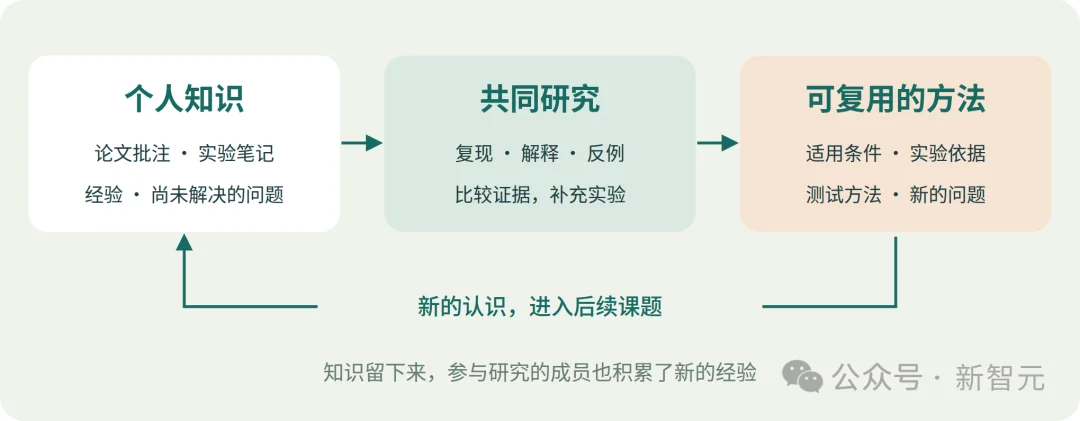
Human researchers bring irreplaceable intuition—paper annotations, raw experimental notes, unanswered questions. The Fourth Institute bridges this gap:
- Personal knowledge bases integrate into shared, multi-agent environments.
- Agent discoveries enrich human understanding; human insights guide agent exploration.
- Knowledge evolves bidirectionally: e.g., an agent mastering a new experimental protocol in one project applies it elsewhere—sharpening collective judgment.
From Blueprint to Operational Research Base
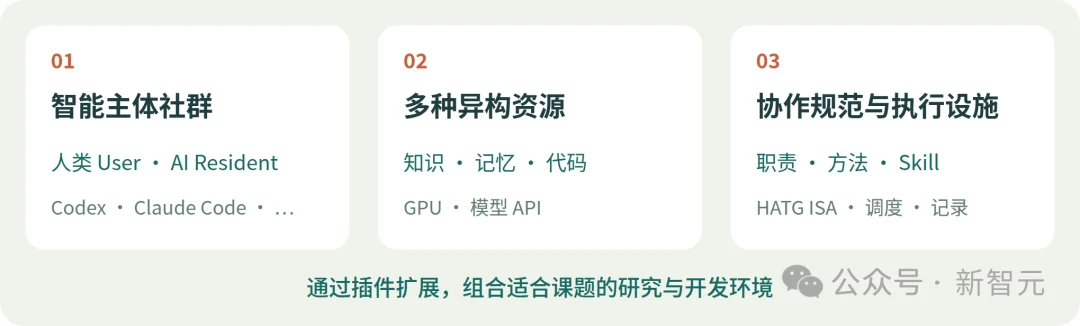
A real-world instance of The Fourth Institute is an Automated Research Base—a full-stack infrastructure mirroring a physical lab:
| Component | Description |
|---|---|
| Intelligent Agents | Humans + AI Residents (Codex, Claude, etc.) co-research under unified identities and access controls. |
| Heterogeneous Resources | Unified discovery & access to code, datasets, hardware, tools, and even other Residents. |
| Collaboration OS (HATG-ISA) | A Multi-Agent Operating System enforcing standardized interaction protocols—enabling plug-and-play tool/model integration. |
✅ Open & Portable: Users run local agents on their own hardware/frameworks—and seamlessly join remote research bases, like sending a colleague to a partner lab.
AI-Human Trace: Transparent, Auditable Research
Every interaction is preserved in PostgreSQL as interlinked, traceable fragments:
– Inputs, model outputs, tool calls, authorship, derivations, and compression history.
– Enables full provenance: Start from any conclusion → backtrack through discussion, data, and experiments.
📊 Scale to date:
– 1.86M+ thought & execution fragments,
– 930K+ interaction events,
– 5,100+ hours of cumulative AI research time.
All traces will be progressively open-sourced to fuel community study of how agents explore, collaborate, and evolve.
Real-World Impact: Accelerating Physical AI
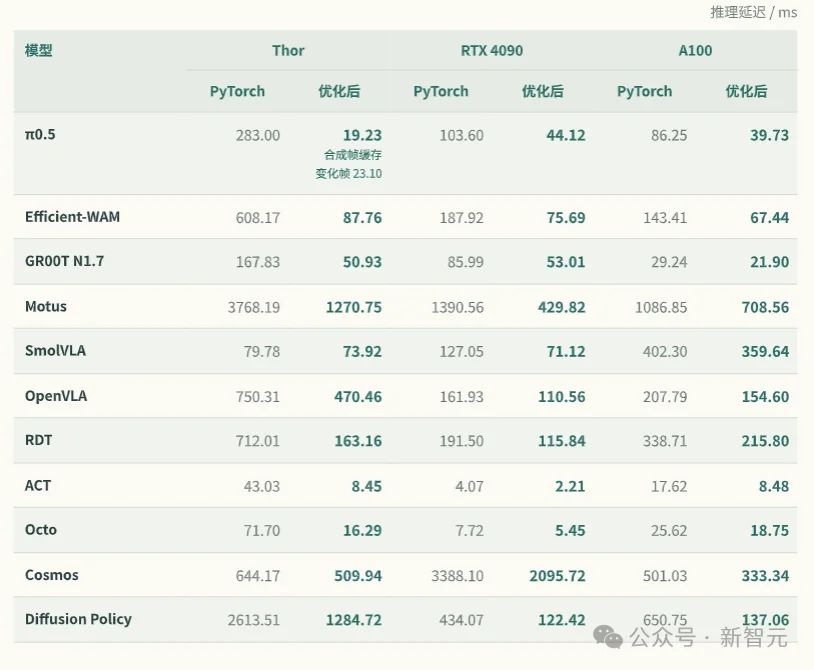
The HKUST team deployed The Fourth Institute to tackle fragmentation in embodied AI:
– Challenge: No unified inference framework bridging diverse VLA/WAM models and edge/GPU hardware.
– Result: In 24 hours, agent teams optimized dozens of PyTorch models across multiple GPU platforms—achieving several SOTA performance gains.
Upcoming: An open-source Agentic OS for Physical Intelligence.
The Vision: A Fourth University Revolution
The Fourth Institute is more than software—it’s a paradigm shift:
– Any institution—from universities to one-person labs—can launch its own research base.
– Bases interconnect like academic consortia: sharing findings, hosting visiting-agent scholars, and cross-validating anomalies.
– Goal: Democratize knowledge production—where human experience inspires AI exploration, and AI discovery expands human understanding.
🌍 “Let human experience guide AI’s search. Let AI’s discoveries broaden human insight. Let knowledge creation open to all.”

Open Source: github.com/EatonZhou/the-fourth-institute
Core Contributors: HKUST, Smart Chip & Systems R&D Center (Zhou Yitong, Zhang Weihao, Ma Songchen), PhD students Du Shucheng (HKUST), Qu Huanyu (UMacau), Li Luka (Tsinghua). Supported by R&D team at Smart Chip & Systems Center.
Article adapted from Xin Zhi Yuan; Author: LRST.