Harvey Launches Tenet Model on Kimi K3
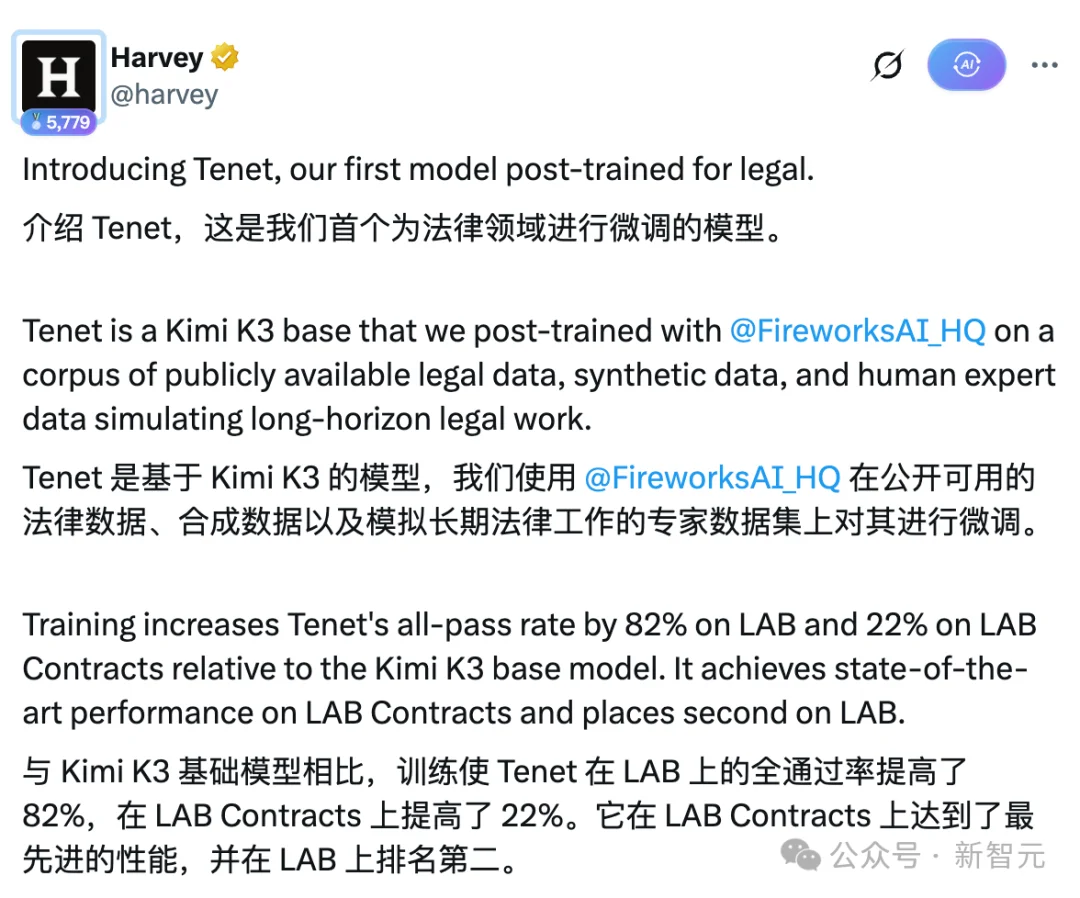
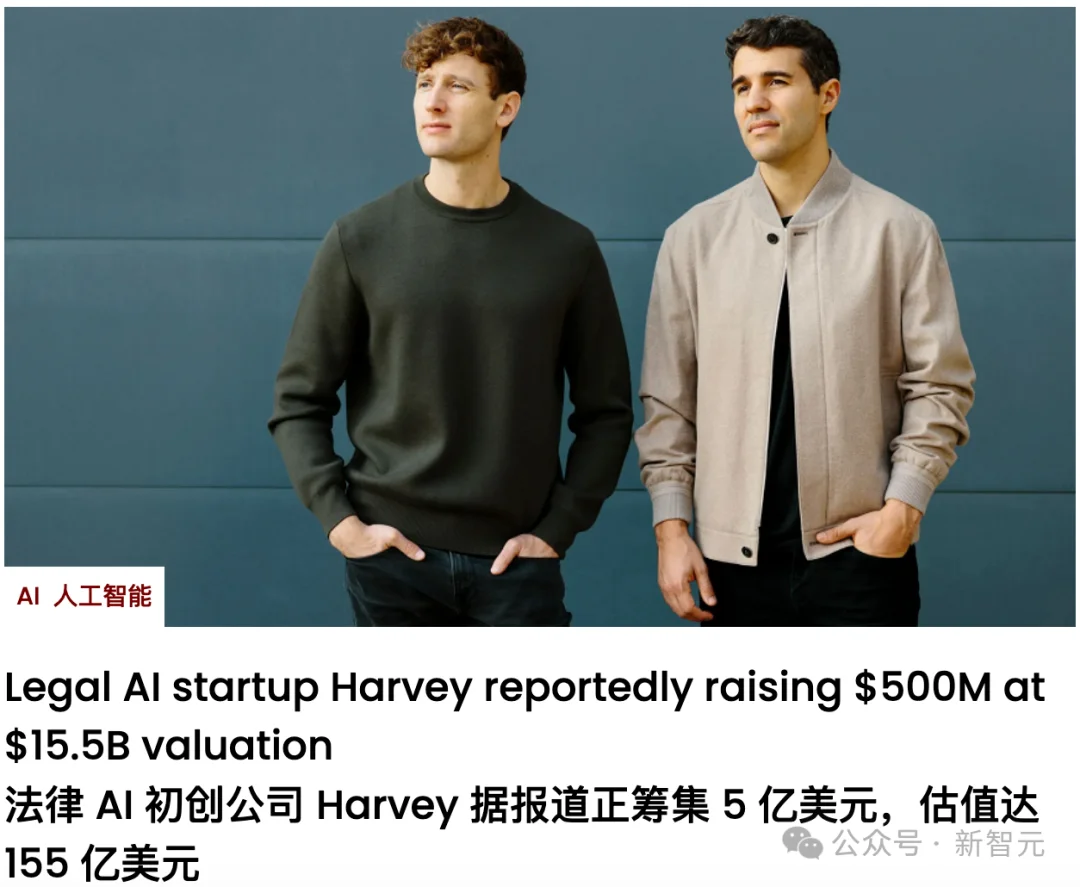
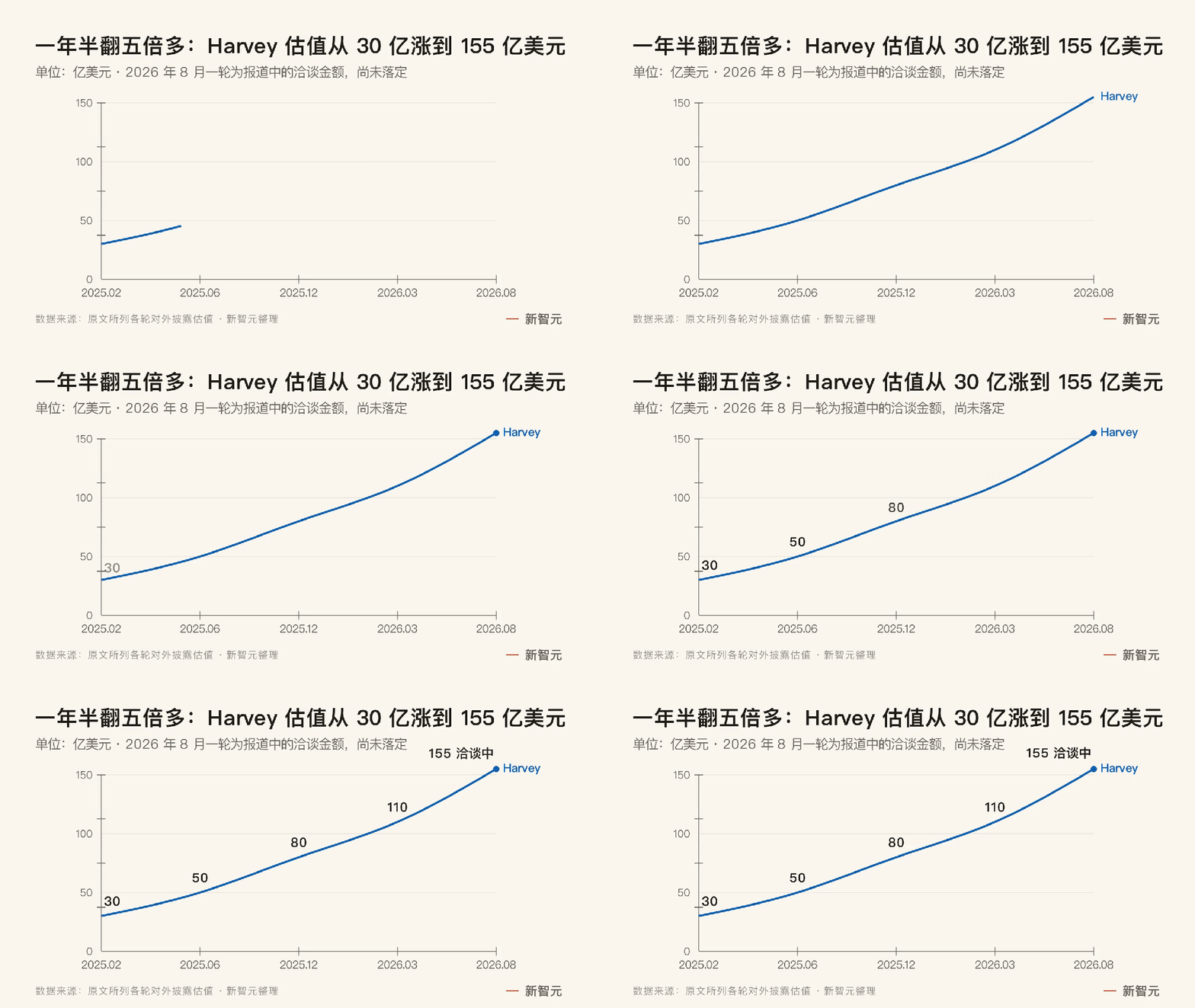
In a landmark move signaling shifting dynamics in the AI infrastructure landscape, Harvey — the $11.5B-valued legal AI startup backed by OpenAI — has officially launched its first proprietary large language model: Harvey Tenet.
🔑 Key revelation: Tenet’s foundational architecture is built on Kimi K3, the open-weight Chinese MoE model — not GPT, Claude, or any closed-source alternative.
Why This Matters: The Strategic Pivot
Harvey’s choice breaks conventional wisdom. As an OpenAI portfolio company — and one of the most prominent AI-native enterprises globally — its decision to anchor its flagship model on an open, China-developed base reflects deep technical and economic calculus:
- ✅ Cost control: Tenet delivers comparable or superior performance at <25% of mainstream LLM inference costs.
- ✅ Full controllability: With public weights, Harvey applied LoRA fine-tuning across 500,000 expert tensors, enabling surgical domain adaptation.
- ✅ Legal-grade context: Kimi K3’s native 1M-token context window handles multi-thousand-page M&A agreements, litigation dockets, and cross-jurisdictional statutes — impossible for shorter-context models.
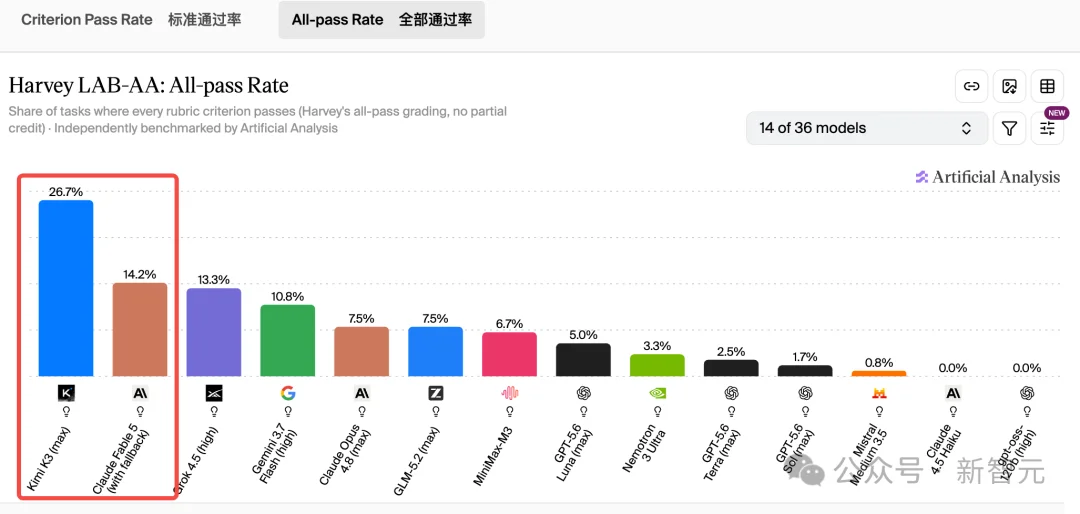
- ✅ Zero-tolerance reliability: On Harvey’s own open benchmark (LAB-AA), K3 achieved 26.7% full-pass rate, nearly double Fable 5 (14.2%), validating its raw capability for high-stakes legal reasoning.
The Training Breakthrough: 150 GPUs, 2 Months
Harvey co-founder Gabe Pereyra detailed an unprecedented training methodology:
- 🧠 Asynchronous Reinforcement Learning: Instead of generic pretraining, Harvey employed real practicing lawyers as RL coaches, designing realistic legal scenarios (e.g., fictional merger disputes) and scoring outputs with binary pass/fail criteria on risk identification, precedent citation, and logical coherence.
- ⚙️ Efficiency: Trained using only ~150 NVIDIA B300 GPUs over two months, bypassing the traditional $100M+ multi-month, multi-thousand-GPU paradigm.
- 📈 Results:
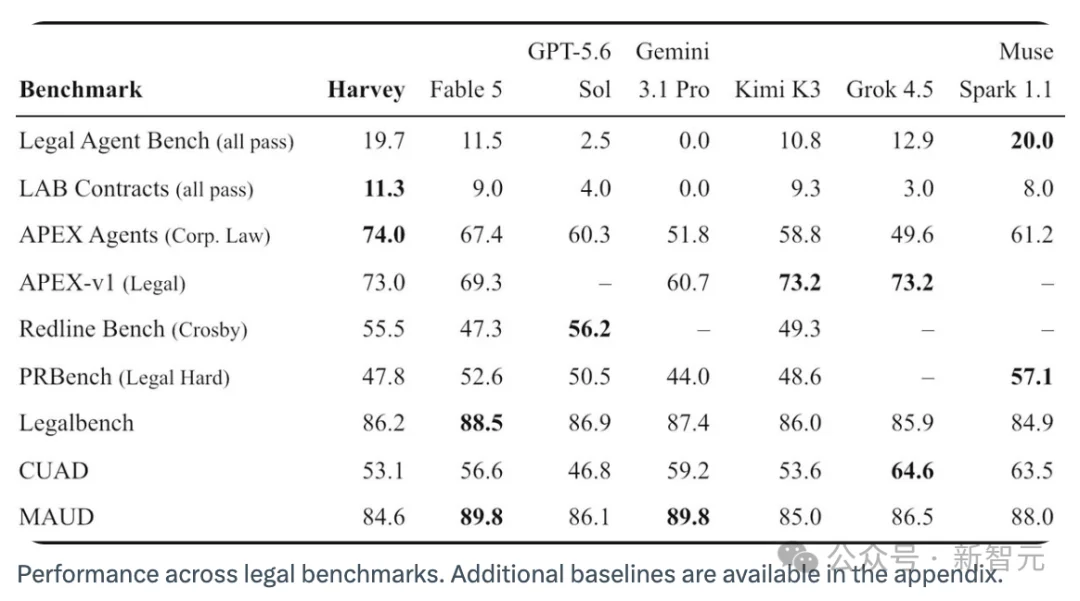
- +82% full-task pass rate over base K3 on LAB benchmarks
- Near-doubling of completed legal tasks
- SOTA on Contracts sub-benchmark, #2 overall on LAB
Beyond Harvey: Kimi K3 Emerges as the “Base Model of Choice”
Harvey isn’t alone. A growing cohort of elite U.S. AI firms is adopting Kimi models:
| Company | Model | Base Used | Key Insight |
|---|---|---|---|
| Cursor | Composer 2 | Kimi K2.5 | Admitted omission of base attribution was “an oversight” |
| Perplexity | Internal Legal Agent | Kimi K2 | CEO Aravind praised its “standout internal evaluation performance” |
| Thinking Machines (ex-OpenAI CTO Mira Murati) | Tinker Platform | Kimi K2 Thinking | Integrated into production microfine-tuning stack |
💡 Industry signal: When vertical leaders in legal, programming, and search converge on the same open base — it signals a new standard for production-ready, modifiable, cost-efficient foundation models.
The Broader Implication: Vertical AI Sovereignty
Harvey’s move crystallizes a pivotal industry shift:
- 🏗️ Base models are becoming commodities — like silicon wafers or cloud compute.
- 🎯 True differentiation now lives in:
- Domain-specific expert data & feedback loops
- Proprietary post-training methodologies (e.g., lawyer-guided RL)
- Deployment efficiency and inference economics
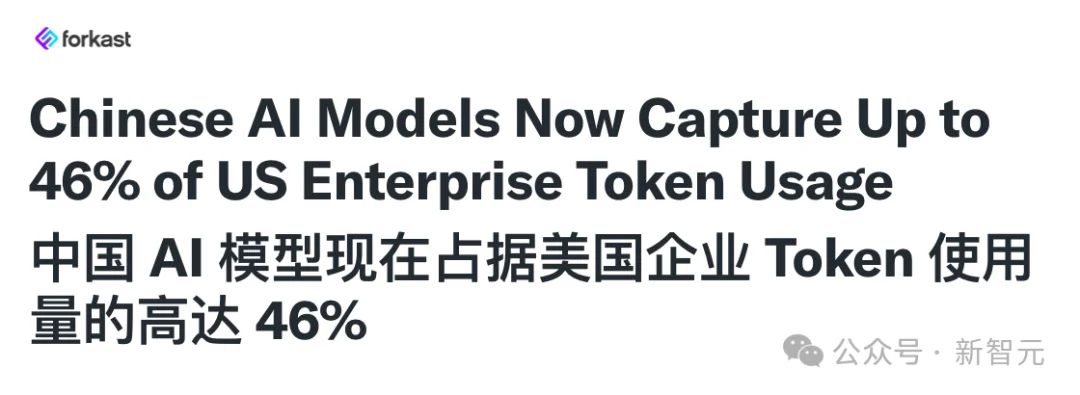
- 🌐 Global supply chain diversification: U.S. enterprises increasingly leverage open Chinese models to hedge against API volatility — e.g., GPT-5.6 Luna’s 80% price cut just three weeks post-launch; OpenRouter shows 46% of U.S. enterprise token volume now routed through Chinese open models (CNBC).
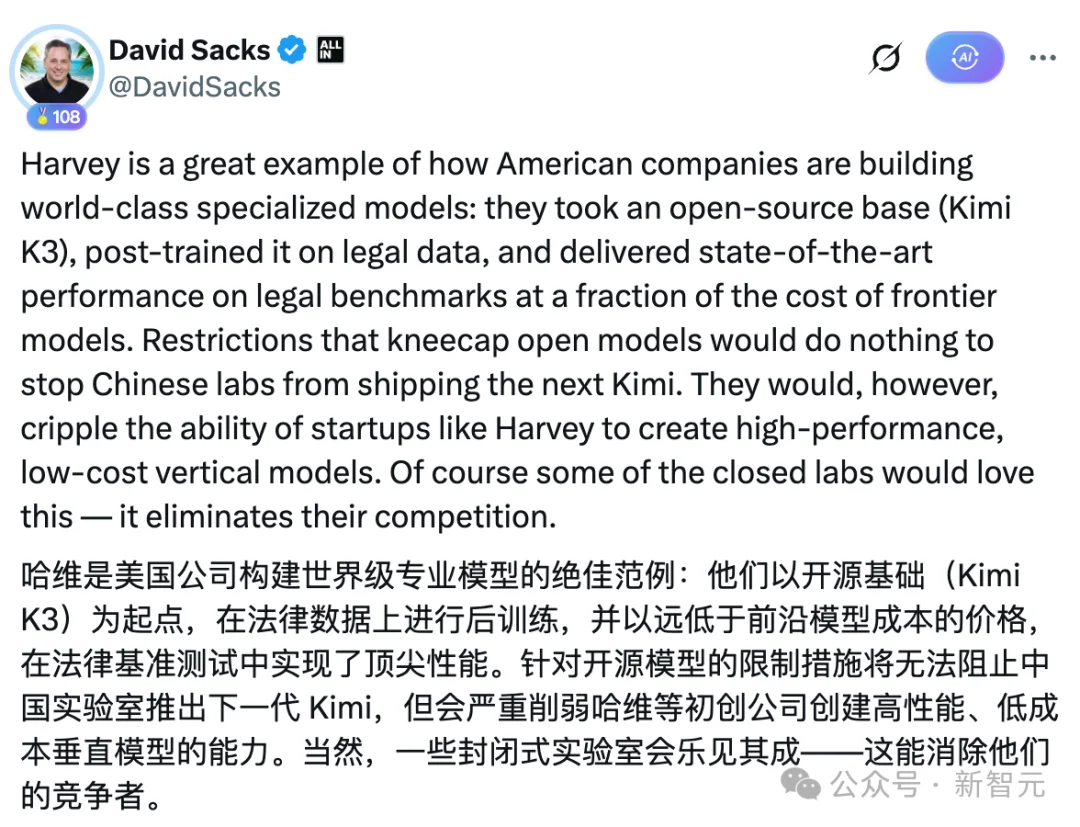
As David Sacks noted: “Ban open models, and China still ships Kimi — but U.S. startups like Harvey lose their runway.”
Looking Ahead: From Tenet to Every Law Firm
Harvey plans to scale training from 1,000 → 10,000 GPUs, explore full-parameter fine-tuning, and test additional open bases — with an audacious goal: enabling every law firm to deploy its own proprietary, low-cost, legally certified LLM.
If successful, this blueprint extends far beyond legal AI — to healthcare, finance, engineering, and regulatory compliance.
🌟 Final takeaway: The era of “model-as-API” is yielding to “model-as-infrastructure” — and Kimi K3 has just become the most trusted open foundation for mission-critical vertical AI.
Source: Harvey X Post | Reporting: Solomon, XinZhiYuan