GPT-6 Prompt Caching Cuts Input Costs by Up to 78.5%
Have you ever experienced this scenario?
You feed a large batch of documents to an AI—asking it to draft a report, verify sources, and generate a polished PowerPoint presentation.
After the first version arrives, you tweak the request: “Move the conclusion to the top.”
Then, moments later: “Add a competitor comparison slide.”
On your screen, it’s just two short edits. But behind the scenes? Every follow-up instruction may trigger a full reprocessing of the original materials, task instructions, and conversation history—if those inputs fail to hit the cache.
You changed two lines—but the backend re-read every page you’d already fed the model. Each redundant pass burns compute credits and adds latency.
That hidden overhead is precisely what OpenAI targeted in its September 22, 2026 update to GPT-6 Prompt Caching—delivering higher default cache hit rates and introducing powerful new diagnostic, monitoring, and control tools.
How Much Can You Actually Save?
According to OpenAI’s official pricing model:
- Cache write cost: 1.25× standard input price (one-time fee to store computed KV states)
- Cache read cost: 0.1× standard input price (for subsequent reuse)
✅ Example: Reusing the same 1,024+ token prompt 10 times:
– Without caching: 10 × base cost = 10.0 units
– With caching: 1.25 (write) + 9 × 0.1 (reads) = 2.15 units
– Savings: 78.5% on that repeated input segment
⚠️ Important: This reduction applies only to the cached portion—not total API costs, which still include new prompts, generated outputs, tool calls, and non-cached tokens.
What Exactly Does the Cache Store?
📝 “Saved Drafts” — Not Memory, Not Copy-Paste
Large language models don’t “read” text like humans. Instead, they compute and retain complex intermediate states—called KV (Key-Value) states—which encode contextual understanding for coherent generation.
Prompt caching saves these precomputed KV states—like keeping a solved math problem’s scratch work to skip recalculation on similar problems.
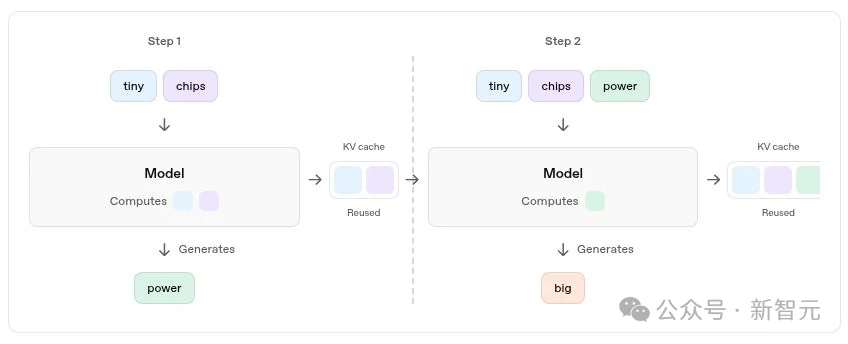
Official documentation: KV states from prior runs are reused for identical prefix segments.
🔑 Two Critical Requirements
-
Exact Prefix Matching
The shared prefix—including system instructions, tool definitions, image/audio context, and user text—must match character-for-character. Even a timestamp appended at the start breaks the cache. -
Minimum Token Threshold & TTL
- Requires ≥1024 visible input tokens (GPT-5.6+ models)
- Cached entries persist for ≥30 minutes, auto-refreshed on reuse
- Subject to server affinity: cross-region or multi-node routing may cause misses
Why Doesn’t “10% Read Cost” Mean “90% Cheaper Bills”?
Because caching introduces a trade-off:
| Operation | Cost Multiplier | Purpose |
|---|---|---|
| First write | ×1.25 | Pays to compute & store KV states |
| Subsequent reads | ×0.10 | Reuses stored states instantly |
💡 Real-world implication: High reuse frequency = big savings. Low reuse (e.g., one-time cached prompt) = higher net cost than skipping caching entirely.
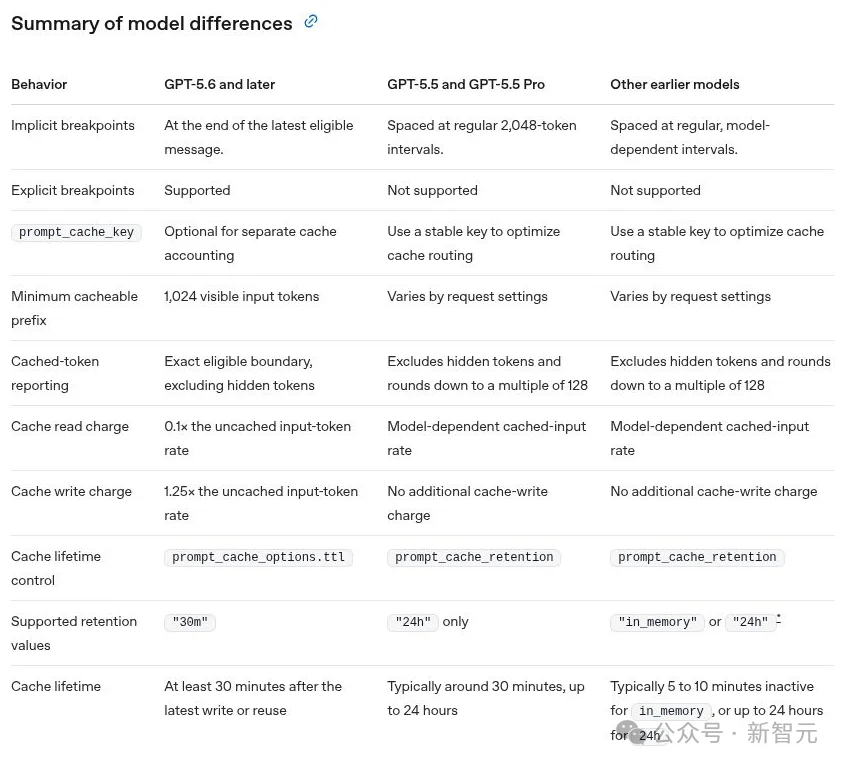
GPT-5.6+ caching rate structure: Write premium, deep read discount.
Pro Tips to Maximize Hit Rates
OpenAI’s upgrade includes developer-grade controls to stabilize cache performance:
✅ Explicit Breakpoints
Insert cache_breakpoint markers to define fixed vs. variable segments—telling the model: “Everything before this point is safe to reuse.”
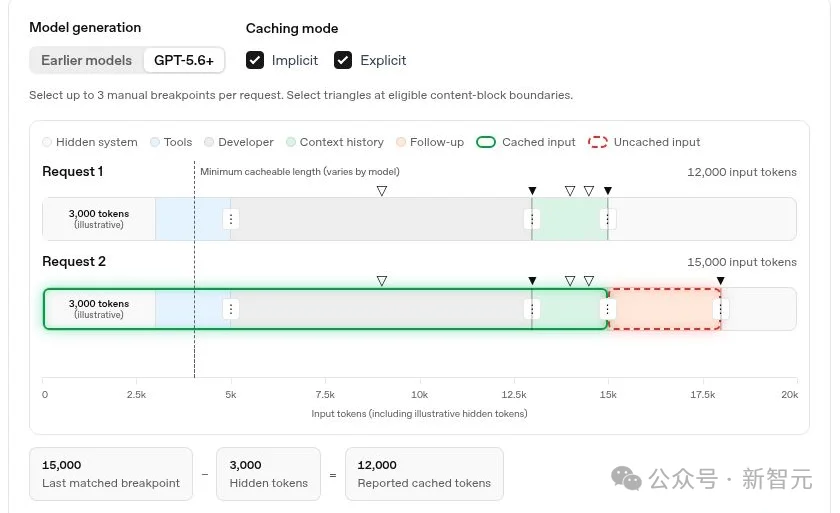
Green zone = reused prefix; red zone = freshly processed content.
✅ Stable Tool Definitions
Avoid renaming tools or reordering parameters—both invalidate caches. Instead, use visibility flags to conditionally hide unused tools.
✅ Incremental Reasoning Control
Adjust reasoning intensity within the chat (e.g., via dynamic temperature scaling), not globally—preserving prefix integrity.
Transparency = Speed + Savings
A major leap in this release is observability:
– Cache Dashboard: Real-time breakdown of cached vs. recomputed tokens, hit-rate trends, and drop-point diagnostics
– Diagnostic Engine: Pinpoints exactly why a cache missed—e.g., “Tool name change caused 5,629-token miss”
– Pre-warming: Load system prompts and docs into cache before user interaction—cutting perceived latency without eliminating compute cost
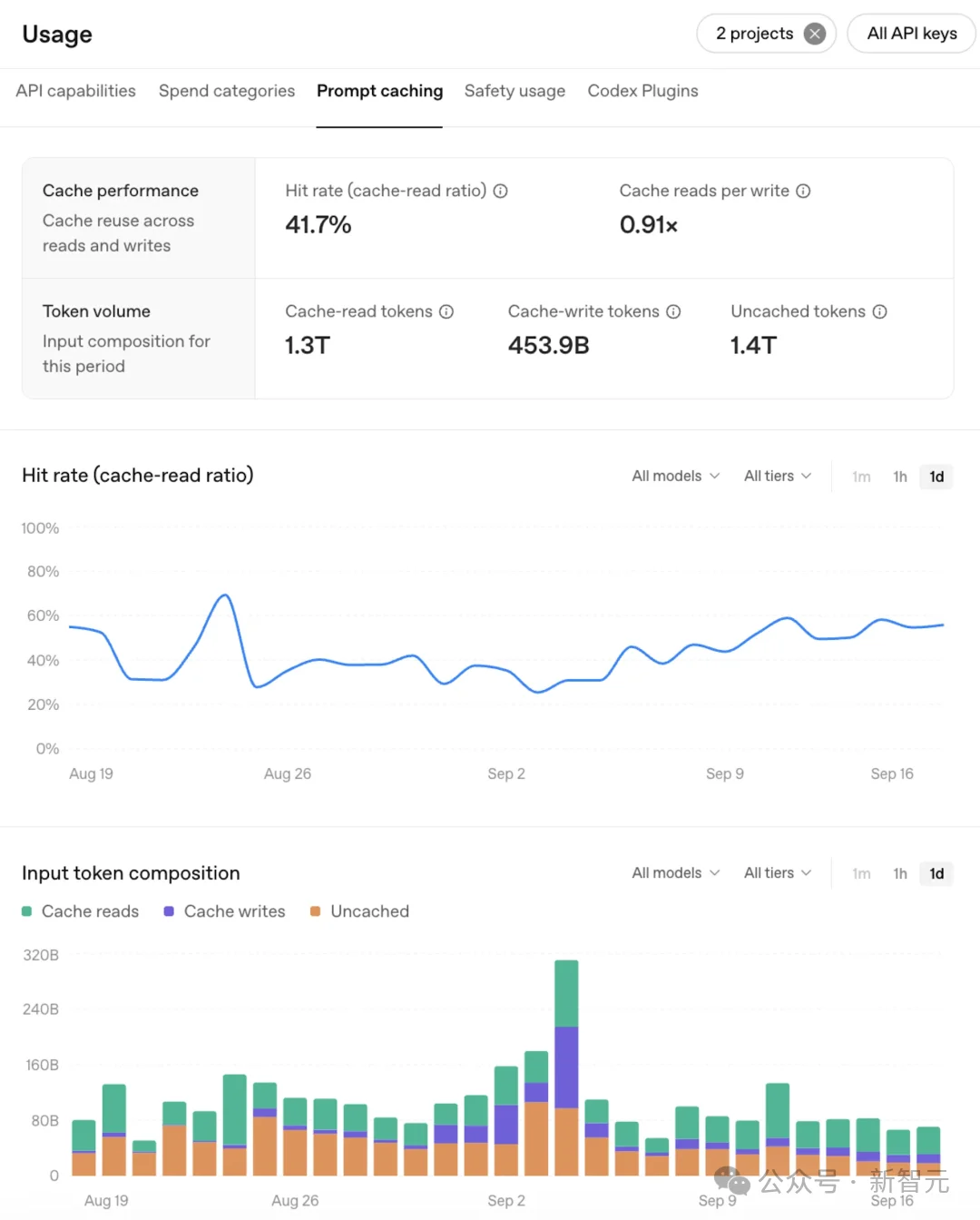
Live cache analytics: Clear visibility into token sourcing and efficiency.
Early adopters report measurable gains:
– Manus AI agents: Cache hit rate ↑ from ~85% → sustained >90%
– GitHub Copilot: Reprocessed prompt tokens ↓ >50% across trillions of requests; faster first-token response
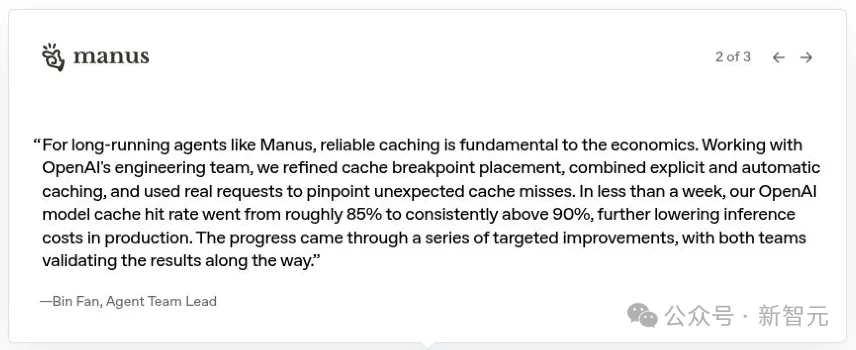
Manus: Consistent >90% cache hit rate post-optimization.
So—Will Your AI Bill Drop?
👨💻 For API Developers
→ Yes, directly. Savings appear immediately in usage reports and billing dashboards.
👥 For End Users (ChatGPT, Manus, etc.)
→ Not automatically. This is not a ChatGPT subscription price cut. Lower compute costs may translate to:
– More generous monthly token allowances
– Lower-tier plan pricing
– Enhanced features (e.g., longer context, multimodal support)
But final pricing remains at each product’s discretion.
The Bigger Picture
As AI evolves from single-turn Q&A to multi-hour autonomous workflows, competitive advantage shifts from raw model capability to infrastructure intelligence:
Two apps using identical GPT-6 APIs can deliver vastly different user experiences—based purely on how skillfully they orchestrate prompts, manage state, and leverage caching.
Users won’t pay for “how many times the model was called.” They’ll pay for results delivered efficiently.
The real question isn’t “Will AI get cheaper?”—it’s “How much of these hard-won efficiencies will reach end users?”
References
• OpenAI: Better Prompt Caching for GPT-6
• OpenAI Developer Docs: Prompt Caching Diagnostics
Article adapted from XinZhiYuan; Author: Yuan Yu.