GPT-6 Astra and the Future of Specialized 3D AI
By Ethan Hu, Founder & CEO of Meshy.ai — MIT Ph.D. in Computer Graphics, Tsinghua Yao Class alumnus
🔍 The Breakthrough: Beyond CLI to GUI Automation
GPT-6 Astra pushes the frontier of foundation models further into the 3D world — not just by generating text or images, but by operating Blender, writing procedural code, and constructing full 3D scenes through computer use agents.
Where coding agents (e.g., Claude Code) automate CLI-based tasks (dev, testing, security), Astra pioneers GUI-level automation: navigating maps, filling tax forms, booking DMV appointments — and yes, modeling 3D assets via visual interfaces.
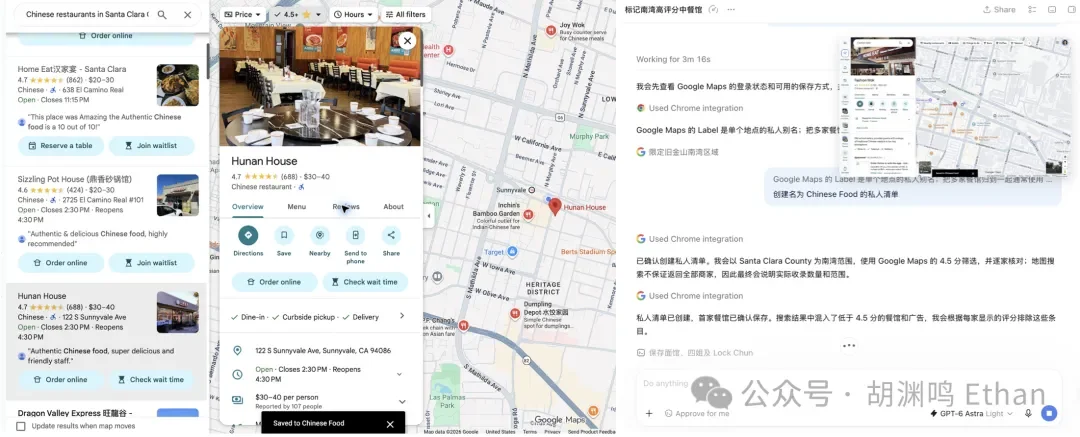
Caption: Astra’s “killer use case” — marking all Bay Area Chinese restaurants in Google Maps.
This leap transforms productivity across domains — especially for developers and creators facing real-world GUI bottlenecks.
⚖️ Complementarity, Not Competition: Astra vs. Meshy
✅ What Astra Excels At
- Parametric & industrial modeling: Cars, aircraft, architectural components
- Low-poly / game-ready assets: Where geometric simplicity is preferred
- Scene assembly via scripting: Using Python + Blender API
- Spatial reasoning + code generation: Enabled by enhanced multimodal understanding
✅ What Meshy Specializes In
- Pixel-perfect 3D reconstruction: Faithful translation of input images into high-fidelity meshes
- 4K-resolution texture-aware output: Including fabric folds, surface micro-details (Meshy 7.1)
- Real-time, diffusion-optimized inference: Sub-minute generation vs. Astra’s multi-minute runtime

Input image
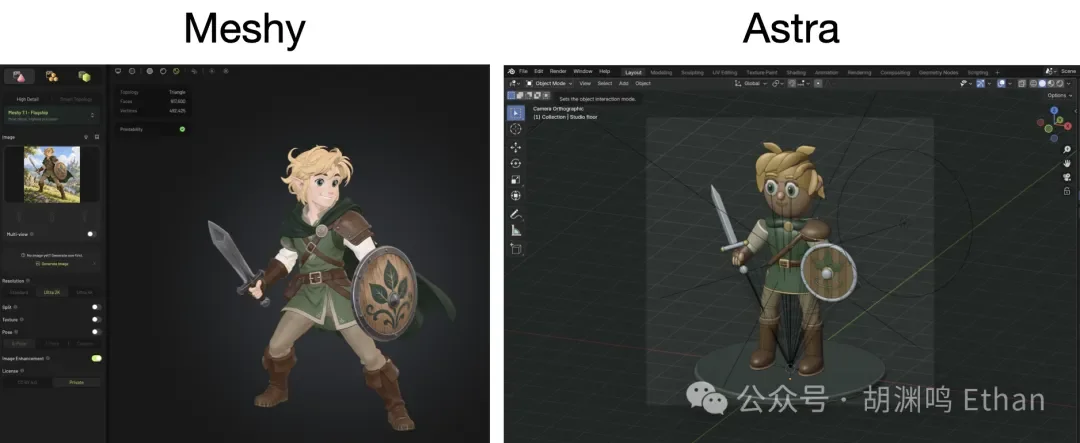
Side-by-side results: Astra (left) vs. Meshy-style precision (right)
❗ Why Replacement Isn’t Imminent
| Dimension | Astra (VLM + Agent) | Meshy (Diffusion + Geometry-Aware Gen) |
|---|---|---|
| Core strength | Understanding & planning | Generation & fidelity |
| Quality control | Struggles with fine pose, texture, identity | Optimized for perceptual accuracy |
| Latency | Minutes (LLM+Blender loop) | Seconds (dedicated 3D diffusion) |
| Training objective | Task completion in GUI environments | Pixel- and mesh-level reconstruction loss |
💡 “Understanding ≠ Generation.” Just as LLMs haven’t displaced DALL·E or Sora, Astra augments — rather than replaces — purpose-built 3D generative models.
🌐 Strategic Synergy: Astra Powers Mora
Meshy’s upcoming Mora platform — an AI-native engine for dynamic 3D world generation — benefits directly from Astra:
- ✅ Demand acceleration: As Astra handles routine labor, demand surges for AI for Fun — Mora’s core mission.
- ✅ Technical leverage: Astra’s spatial reasoning enhances Mora’s scene layout, level design, and interactive mechanism synthesis.
- ✅ Architecture alignment: Mora was designed to scale with agent capabilities — making Astra a natural infrastructure upgrade.
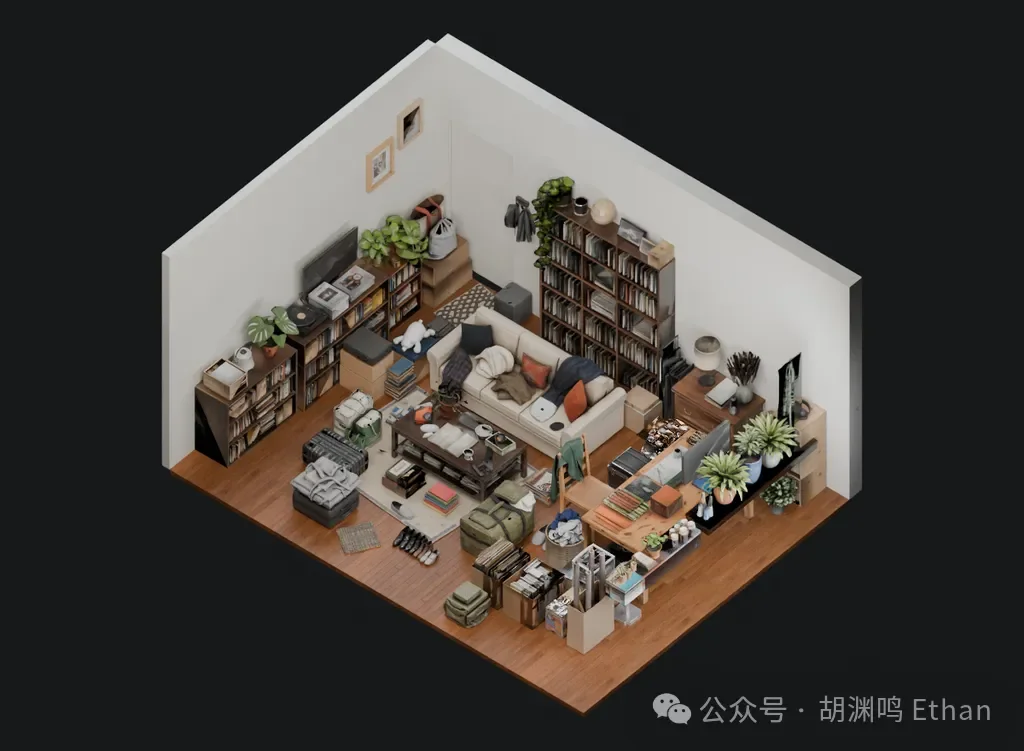
Astra orchestrating full-scene generation via Meshy’s T2 API.
🎓 Opportunities for Researchers & Practitioners
For graphics/3D researchers, Astra opens — not closes — doors:
-
GPU & AI Infrastructure
Leveraging deep GPU knowledge for agent kernel optimization (e.g., Kernel Design Agents). -
Neural Rendering & Real-Time Video Models
Building low-latency, controllable pipelines for immersive virtual worlds. -
Agent-Augmented World Simulation
Bridging coding agents with physics-aware simulation — e.g., “Is this procedurally generated game mechanic fun?” -
3D Printing-Centric Design
Democratizing printable content for 30M+ global 3D printers. -
Foundational Geometry & Rendering Research
Revisiting classical problems (e.g., differentiable rendering, inverse optics) with agent-guided search.
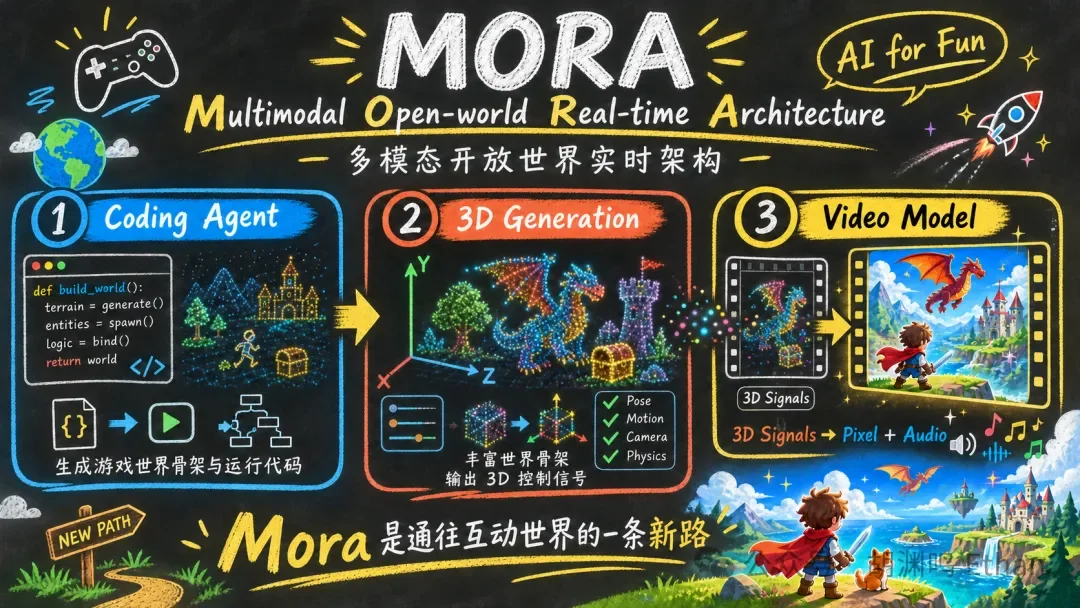
🧩 Final Insight: Intelligence ≠ Experience
- AI for Work (Astra) → Optimizes efficiency, accuracy, task completion.
- AI for Fun (Meshy/Mora) → Optimizes joy, creativity, expressive fidelity.
🌟 Science asks “How does the world work?” — Art asks “How do we experience it?”
Astra advances the former; Meshy doubles down on the latter.
The future isn’t monolithic AI — it’s orchestrated stacks: agents for intelligence, specialized models for experience, and infra that unifies them.
Originally published on Founder Park. Republished with permission.