Google Unveils Gemini Enterprise as Agentic OS
Las Vegas, April 22, 2026 — Google Cloud Next 2026 marks a paradigm shift: from AI-powered tools to a full-stack operating system for autonomous agents.
The End of the Pilot Era
At Google Cloud Next 2026, CEO Thomas Kurian declared: “The pilot era is over. The agentic era has begun.” This isn’t incremental AI enhancement—it’s architectural reinvention. Google Cloud is positioning Gemini Enterprise Agent Platform as the enterprise-grade control plane for managing thousands of intelligent agents—functioning as digital employees across business workflows.
“You can’t create real value by stitching together fragmented chips and disjointed models. You need an architecture where chips are built for models, models are grounded in your data, agents are built on those models, and infrastructure ensures trust and governance.”
— Thomas Kurian, CEO, Google Cloud
Five-Layer Agentic Stack: The New Enterprise OS Foundation
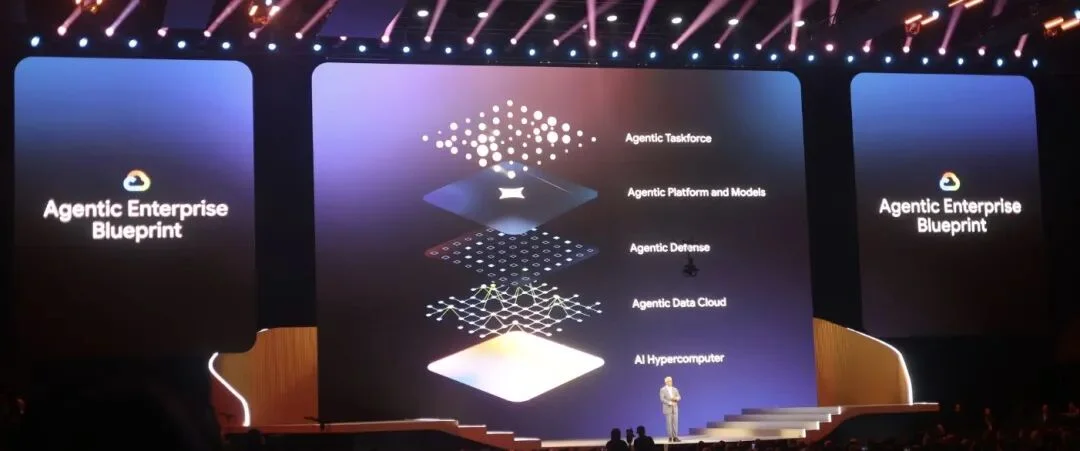
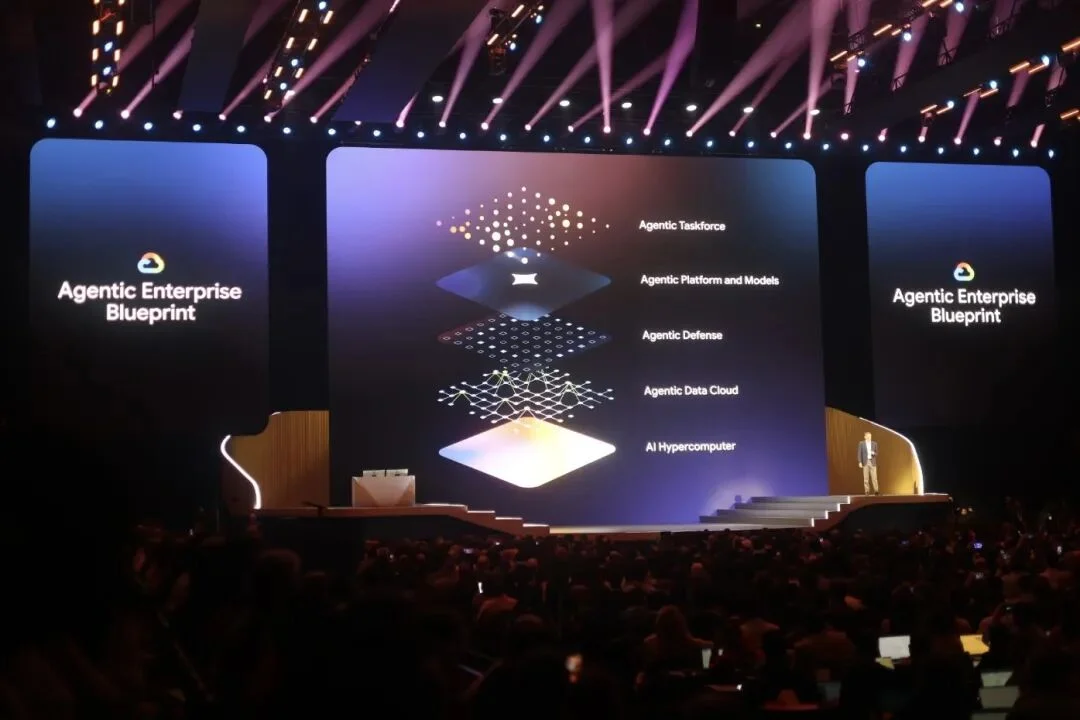
Google introduced a vertically integrated five-layer stack—designed end-to-end for agent scalability, security, and sovereignty:
🔹 Layer 1: AI Hypercomputer
- 8th-gen TPUs, split into dedicated training & inference platforms
- Training clusters scale to 9,600 TPUs, delivering 2.8× higher performance, with 2PB memory per unit (≈100× U.S. Library of Congress digital archive)
- Inference clusters: 1,152 TPUs with 4.5-topology networking, enabling near-zero-latency responses to millions of concurrent agent requests
- Virgo network architecture: Doubles interconnect bandwidth; supports >1M TPU coordination
- First cloud provider offering NVIDIA Vera Rubin NBL72 instances, optimized for long-context, high-interactivity inference (10× efficiency gain)
🔹 Layer 2: Agentic Data Cloud
The “memory & common sense” layer—transforming dark data into agent-ready semantic context:
– Knowledge Catalog: Auto-ingests files (PDFs, videos, unstructured docs) into Google Cloud Storage and instantly extracts entities, relationships, and business-specific definitions (e.g., “net income” maps precisely to your ERP schema)
– Cross-Cloud Lakehouse: Open Iceberg-based engine enabling BigQuery to query AWS S3 and Azure Blob storage directly—no data migration, no egress fees
🔹 Layer 3: Agentic Defense
A self-operating security layer co-developed with Wiz, deploying autonomous red/blue/green agent teams:
– Red-team agents: Actively scan for exposed surfaces and auth bypass vulnerabilities
– Blue-team agents: Hunt threats using Mandiant, VirusTotal & Chrome telemetry (98% external threat detection accuracy)
– Green-team agents: Auto-locate vulnerable code lines, generate PRs, and trigger auto-fixes via coding agents
– Internal results: >90% reduction in threat mitigation time
🔹 Layer 4: Agentic Platform & Models
The unified management hub for building, governing, and observing agents:
– Agent Studio: Natural-language low-code builder—business users define logic without writing code
– Agent Registry & Skills Registry: Centralized discovery directory + modular skills (GCP/Workspace services + Atlassian/Salesforce via MCP protocol)
– Deterministic & Delegated Orchestration: Enforces compliance-critical workflows and enables master agents to autonomously assign subtasks to domain-specialist agents
– Agent Identity & Observability: Cryptographic identity, fine-grained audit trails, and full-path visualization of tool calls, latency, and decision lineage
– New models: Gemini 3.1 Pro (complex orchestration), Gemini 3.1 Flash Image (high-fidelity visuals), Veo 3.1 Light (video), Lyria 3 Pro (audio)
🔹 Layer 5: Agentic Taskforce
Pre-built, production-ready digital employees for core functions:
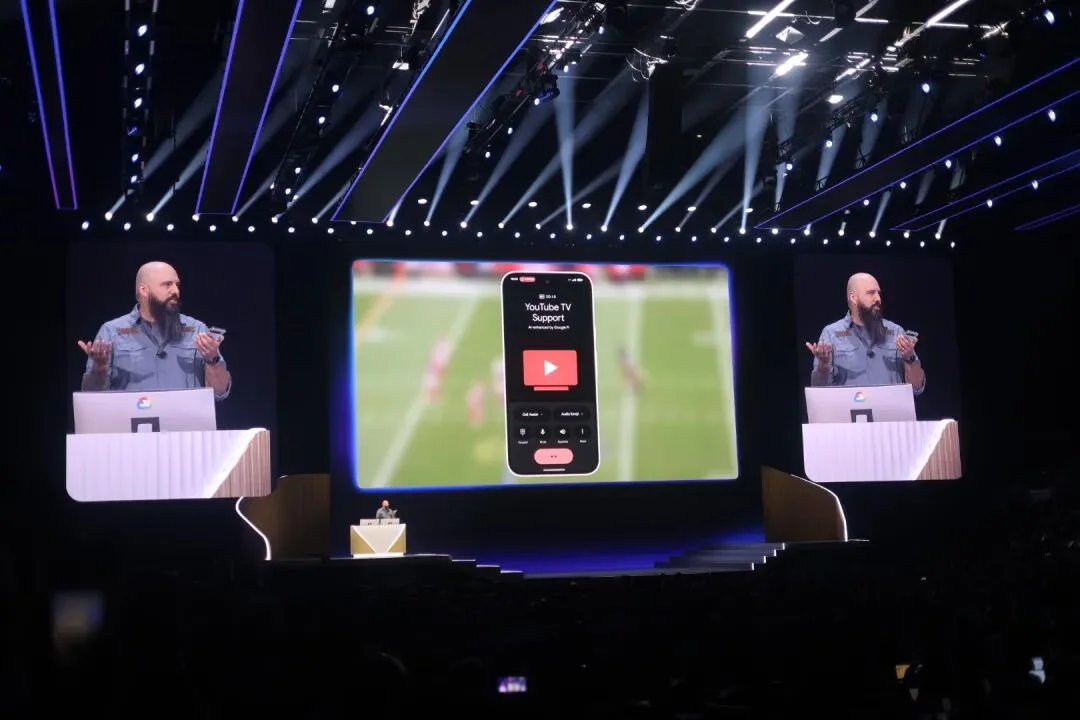
– Customer Experience: Best Buy’s shopping guide agent, Home Depot’s “Magic Apron”, Papa John’s hyper-personalized ordering, YouTube TV’s bilingual voice support
– Industry-Specific Agents: Citywealth’s multilingual CitiSky (wealth management), NASA’s RMS2 flight safety agent (longest human spaceflight record holder)
– Internal Productivity: Google Cloud’s own engineering team achieved 6× faster code migration, marketing saw 70% faster campaign turnaround + 20% higher conversion
Why It Matters: From Chatbots to Control Planes
Last year’s Gemini Enterprise was a chat interface. Today’s release is a full enterprise operating system—with governance, identity, observability, and cross-cloud interoperability baked in.
Real-world adoption signals rapid trust:
– Walmart: Rolled out to store managers via Pixel Fold—reduced operational reporting time from hours to seconds
– Signal Iduna: Achieved 80% AI adoption in weeks, with health insurance agents accelerating coverage verification by 37%
– KPMG: 90% employee adoption in Month 1, >100 production agents deployed
Strategic Implications: Openness as Lock-in
Google emphasizes openness—but strategically:
– ✅ Open model support (Gemini, Claude Opus 4.7, etc.)
– ✅ Open data access (cross-cloud, zero-eject fees)
– ✅ Open protocols (MCP for service integration)
– ✅ Open ecosystem (BCG, Deloitte, McKinsey, Apple)
❌ But the control plane remains proprietary: Agent creation, policy enforcement, audit logging, and orchestration are centralized within Gemini Enterprise. Once hundreds of agents, custom policies, and governance flows are embedded, switching becomes prohibitively costly.
This is the classic “open entry, narrow exit” strategy—positioning Google Cloud not as an infrastructure vendor, but as the productivity OS designer for the agentic age.
The Bigger Shift: From Model Wars to Control Wars
The battleground has changed:
– ❌ Past focus: Benchmark scores, parameter count, context window length
– ✅ Future focus: Who owns the agent control panel? Who defines how enterprises build, govern, audit, and scale digital labor?
With $175–185B in annual capex (up 6× since 2022), Google is betting that infrastructure, data, security, and orchestration—not just models—are the true moats. As Kurian concluded: “Real power lies not in what agents know—but in how they transform your workflows.”
The race for the next-generation enterprise OS has officially begun.
Header image credit: GeekPark
Article source: GeekPark, by Xu Shan