Ex-OpenAI Researcher Unveils ‘Silent’ AI Model Jev
24 million views in days — a paradigm shift from generative chat to deterministic, structured decision-making.
🚀 The Birth of Jev: A System-One Model
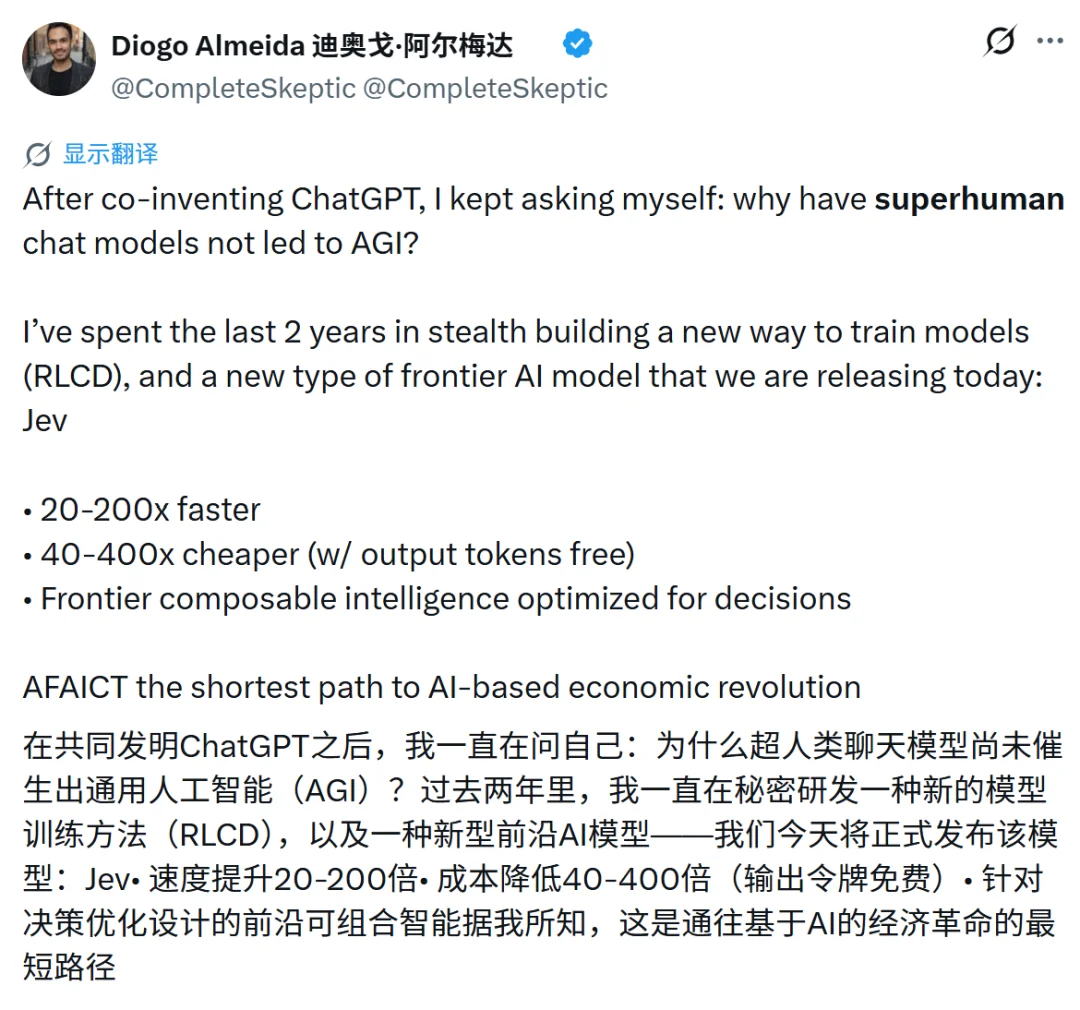
Former OpenAI researcher Diogo Almeida, co-author of the foundational InstructGPT paper and key contributor to RLHF and GPT-4 development, has emerged from two years of stealth to launch Jev — the flagship model of startup TypeSafe.
Unlike conventional LLMs trained to generate fluent text, Jev is explicitly designed to refuse free-form language generation. Its mission: deliver fast, cheap, and type-safe probabilistic decisions — not conversations.
⚡ Performance Breakthroughs
Jev abandons autoregressive token-by-token generation. Instead, it processes inputs in parallel and outputs predefined, typed decisions with calibrated confidence scores.
| Metric | Jev Performance |
|---|---|
| Speed | Up to 193.6× faster (vs. baseline in internal workflow eval) |
| Cost | Up to 444.6× cheaper; output tokens are free |
| Latency | End-to-end response: 70–500 ms |
| Input Cost | $0.042 per million input tokens |
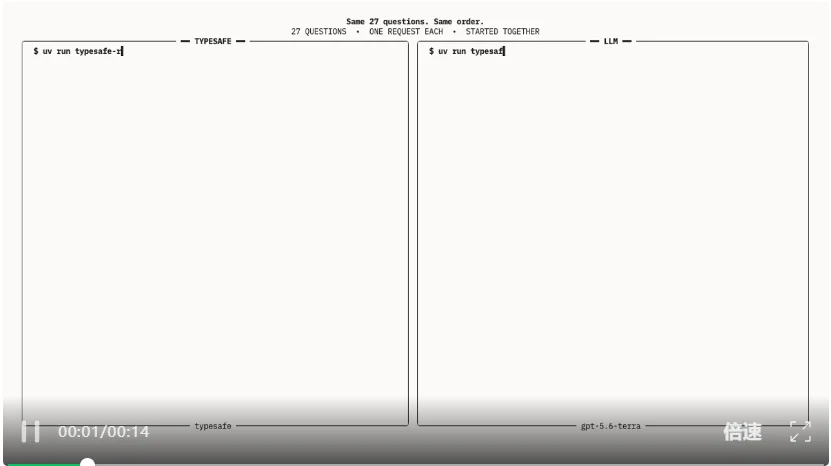
Source: TypeSafe Blog
External validation confirms real-world impact:
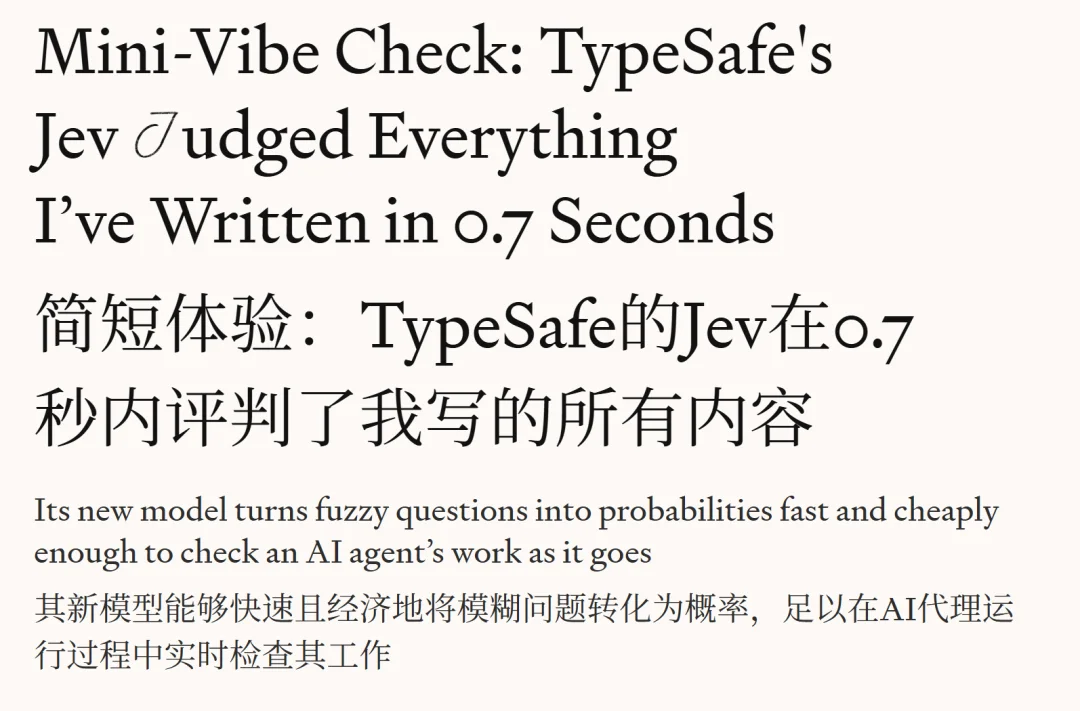
– Every.io ran 777 independent judgments across 37 documents — completed in < 0.7 seconds.
– In writing quality assessment: Jev (0.35s) vs. Fable 5.1 (8.83s) → 25× faster, 580× lower cost.
🔍 How It Works: Unstructured In → Typed Out
✅ Traditional LLM Workflow (Inefficient for Automation)
- Read input (e.g., user email)
- Generate verbose natural-language answer: “Based on the content, this appears to be a complaint…”
- Downstream parser must extract structured fields — error-prone and slow.
✅ Jev Workflow (Optimized for Software)
- Input arrives → Jev reads unstructured state
- Outputs typed, parallel decisions with probabilities:
json

{"category": "complaint", "confidence": 0.92, "urgency": "high", "routing": "support-team"} - No parsing needed — direct integration into logic pipelines.
💡 TypeSafe’s mantra: “Unstructured state in, typed probabilistic decisions out.”

Source: typesafe.ai
🧠 RLCD: Reinforcement Learning for Calibrated Decisions
Jev introduces RLCD — a novel training framework that reimagines RLHF’s goals:
| RLHF (Human-Centric) | RLCD (System-Centric) |
|---|---|
| Optimize for human preference (e.g., “Which response sounds best?”) | Optimize for epistemic honesty: “How well do predicted probabilities match real-world accuracy?” |
| Rewards fluent, persuasive answers | Rewards calibrated confidence — e.g., 90% confidence should mean ~90% correctness |
This enables programmable fallback logic:
– confidence ≥ 95% → execute automatically
– 70% ≤ confidence < 95% → escalate to stronger model
– confidence < 40% → route to human
🛑 Zero Hallucination? Clarifying the Claim
TypeSafe boldly declares Jev achieves “0% hallucination” — but this refers specifically to type safety, not factual accuracy:
- ✅ Guaranteed schema compliance: Output only from pre-defined options (e.g.,
"complaint","refund","inquiry"). No invented categories. - ✅ No rogue strings: No unsolicited explanations or off-schema text.
- ⚠️ Not immunity to error: A model can be perfectly calibrated and consistently wrong — calibration ≠ correctness.
As OpenAI’s hallucination research notes: Calibration ensures honesty about uncertainty — not truthfulness of answers.
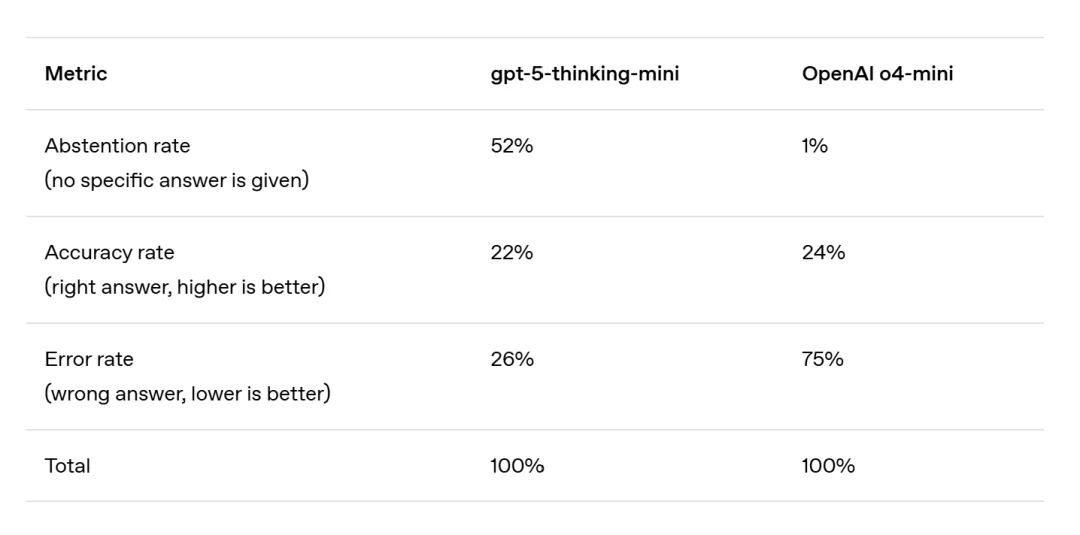
Source: openai.com/index/why-language-models-hallucinate
🤔 Critical Perspectives & Community Response
Jev’s viral success (24M+ views) sparked debate:
-
Hugging Face researcher Niels Rogge quipped: “A JSON classifier with 12M views? Yes, we’re in a bubble.”
-
Developer Harsha Gundala released an open-source analog —
Qwen2.5-1B-RLCD— in under 2 hours, proving similar parallel structured inference is achievable without novel architecture.

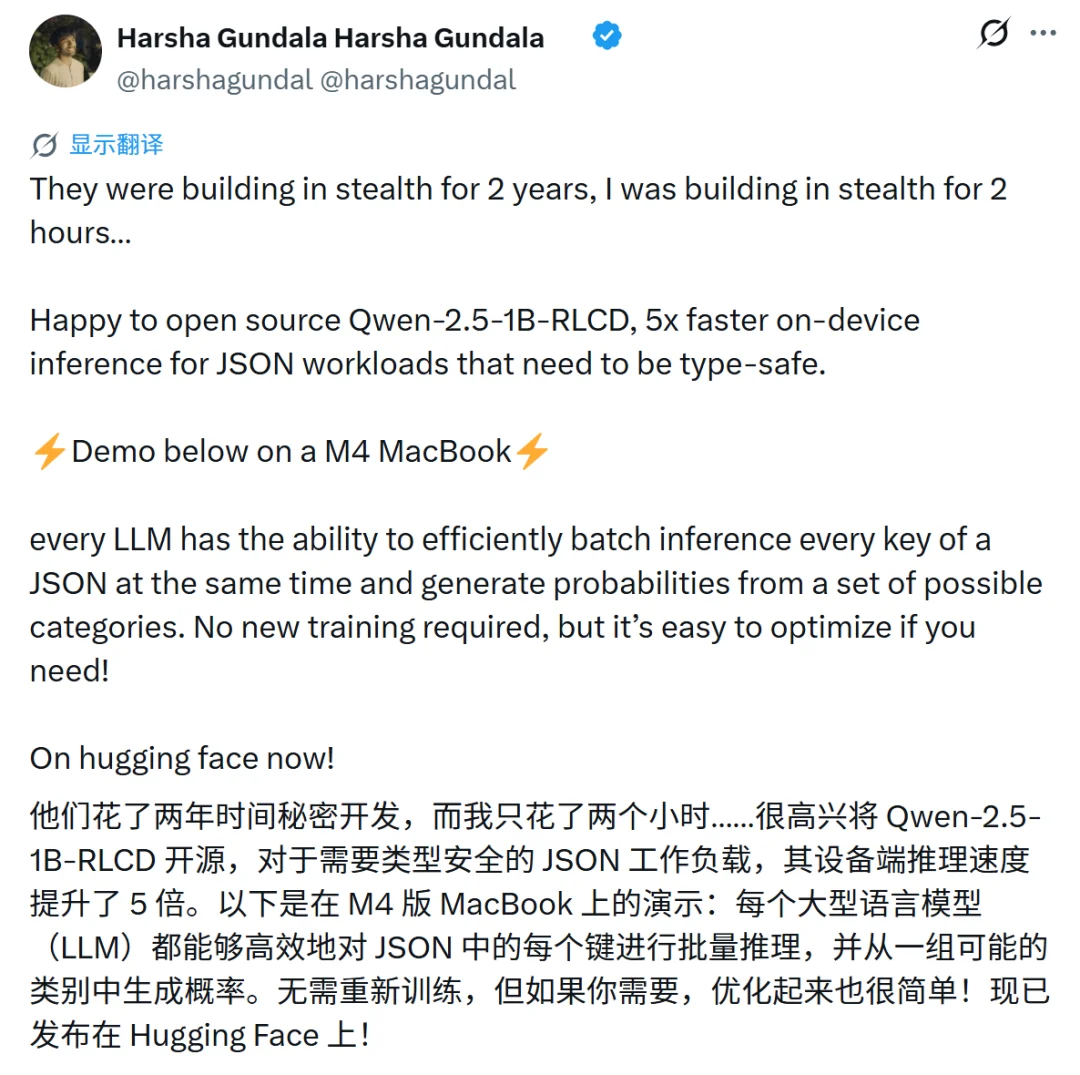
Yet these critiques reinforce Jev’s core thesis: For high-volume, low-latency automation tasks, smaller, purpose-built models may outperform bloated general-purpose LLMs — at lower cost and higher reliability.
🌐 Why It Matters: Beyond the Hype
Jev doesn’t chase SOTA benchmarks. It pursues pragmatic intelligence:
- ✅ Tight integration with production software (no parsing, no hallucinated tokens)
- ✅ Predictable latency & cost — critical for scalable workflows
- ✅ Uncertainty as first-class output, enabling adaptive routing
- ✅ Democratizing structured reasoning: Not just for 70B models
In essence, Jev flips the script: Instead of asking “What can AI say?”, it asks “What can AI decide — and how confidently?”
As one observer noted: “Proving a model is strong is impressive. Proving it solves daily problems — simply, reliably, and affordably — is transformative.”