CuspAI Launches World’s Largest AI Materials Foundry
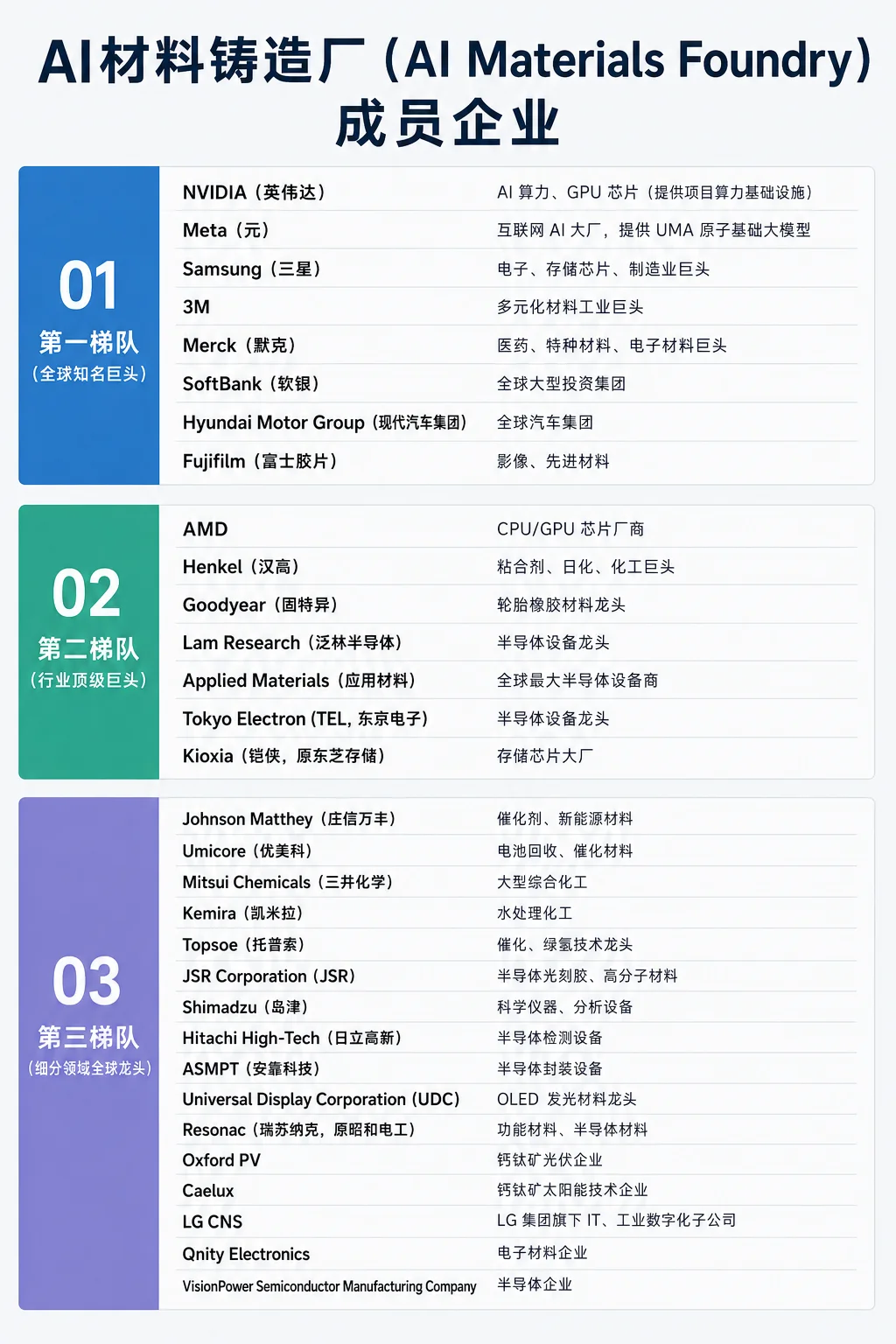
In a landmark move for AI-driven scientific discovery, CuspAI — dubbed the “Google of Materials” — has officially launched the world’s largest AI Materials Foundry, backed by a $450M Series B round and strategic alliances with industry titans including NVIDIA, Meta, Samsung, Hyundai, 3M, SoftBank, Merck KGaA, and Fujifilm.
🚀 Unprecedented Scale & Strategic Backing
- Valuation: $2.6B post-money, supported by the UK government and Jeff Bezos.
- Foundry Scope: A global industrial consortium comprising 45 leading enterprises, integrating proprietary data, high-throughput labs, exascale computing, and domain expertise.
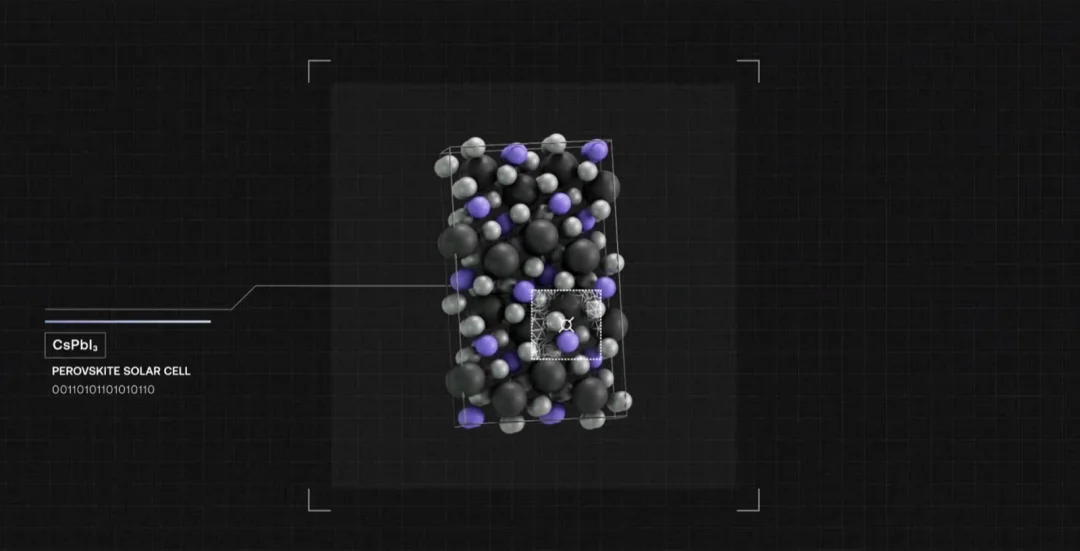
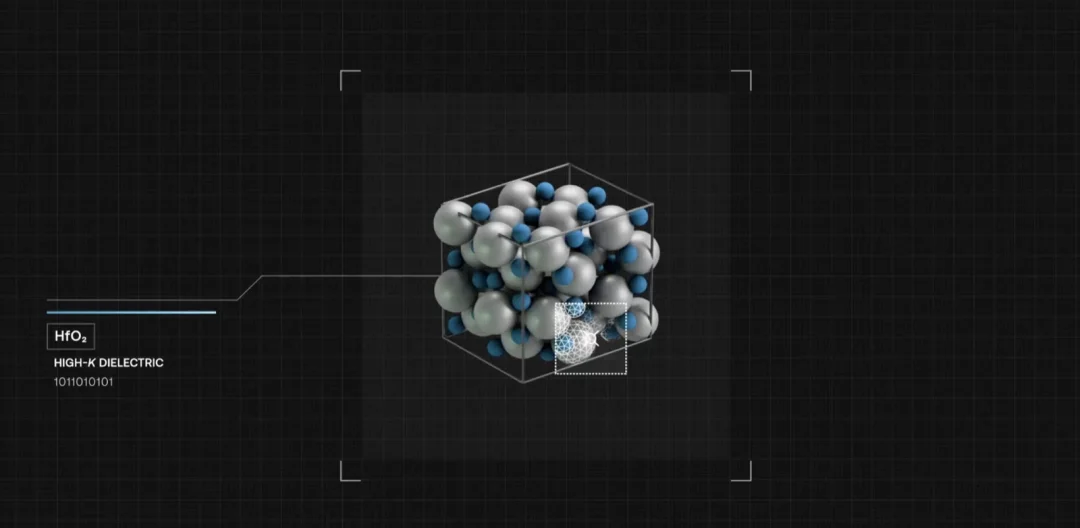
- Initial Focus Areas: Semiconductor materials, clean energy solutions (e.g., battery cathodes, hydrogen catalysts), and advanced manufacturing.
⚙️ The Four-Pillar AI-for-Science Architecture
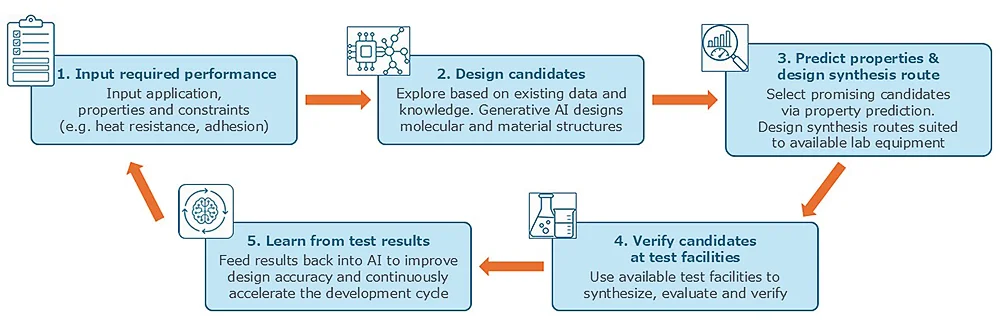
The Foundry operates as a closed-loop innovation engine across four tightly coupled layers:
1. Model Layer
- CuspAI’s MIRA Platform: An end-to-end intelligent agent — the “Material World Search Engine” — enabling generative design → quantum simulation → synthesis planning → collaborative experimentation.
- Meta’s UMA (Universal Materials Atomistic Model): Open-sourced foundation model trained on 30+ billion atomic configurations, dramatically expanding ML interatomic potentials (MLIPs) for accurate, scalable prediction.
2. Data Layer
- Curated access to the world’s largest experimental materials dataset, augmented by:
- ✅ Cambridge Structural Database (CCDC)
- ✅ Inorganic Crystal Structure Database (ICSD)
- ✅ Wiley’s premium materials science publications
- Partners retain full control over private data — enabling secure, sovereign, and compliant fine-tuning.
3. Compute Layer
- NVIDIA-powered infrastructure: Purpose-built GPU clusters optimized for billion-scale molecular screening, accelerated by physics-informed neural networks and tensor-parallel simulation kernels.
4. Experiment Layer
- Real-world validation via partners’ industrial labs — transforming in silico candidates into physical prototypes in weeks, not years.
🌍 Real-World Impact: The Kemira Case Study
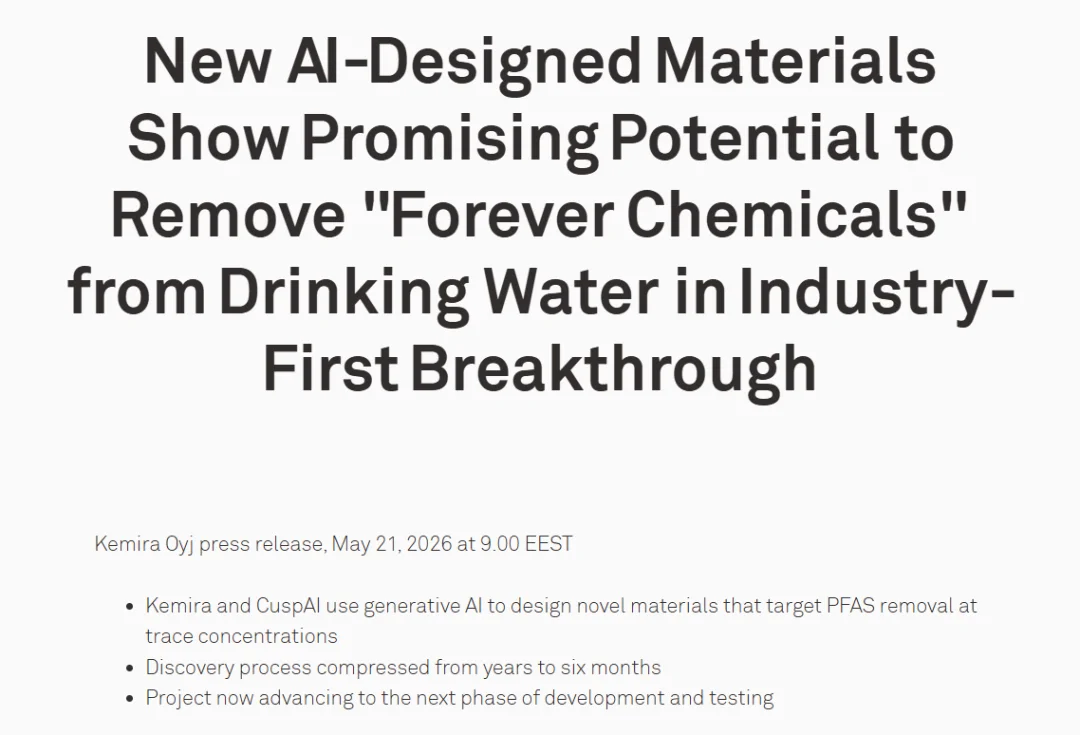
In collaboration with Finnish chemical leader Kemira, CuspAI:
– Screened ~300 trillion candidate structures in just 6 months;
– Identified 20 novel metal–organic frameworks (MOFs) targeting PFAS removal from water;
– Delivered 5,000+ validated material designs, compressing a multi-year R&D cycle into half a year.
“We don’t brute-force infinite chemistry space — we learn like a human chemist: identifying structural–property correlations to focus search on high-potential regions. That compression is where AI for Science becomes transformative.”
— Prof. Aron Walsh, Chief Scientific Officer, CuspAI & Imperial College London
🔑 Key Insight: Beyond Prediction — Toward Industrialization
As Prof. Walsh emphasized in his Chemistry World interview:
“Predicting properties is table stakes. The true bottleneck — and the real commercial moat — lies in synthesizability, operational stability, and manufacturability at scale. This Foundry exists to bridge that gap.”
With its integrated stack and elite partner ecosystem, CuspAI isn’t building another research tool — it’s launching the world’s first industrial-scale platform for materials-by-design.
Source: Adapted from Chemistry World interview with Prof. Aron Walsh; original reporting by AITNT.