Claude Fable 5 Breaks the Internet with Real-World Prototypes
In the wake of its release, Claude Fable 5 has ignited unprecedented viral momentum across social platforms—within just 24 hours, users flooded timelines with jaw-dropping, production-grade prototypes spanning 3D simulation, browser-based OS clones, mechanical engineering, and AI-native robotics.
⚡ “OpenAI may soon face its most intense pressure yet—especially if Mythos 5 follows.”

🌐 Market Impact & Competitive Response
- OpenAI reportedly preparing aggressive token price cuts, aiming to counter Anthropic’s technical lead in complex multimodal reasoning and code synthesis.
- Early adopters report Fable 5 outperforming prior models (including Opus 4.8) in spatial reasoning, physics-aware simulation, and cross-tool orchestration—even under constrained environments.

🔬 Breakthrough Use Cases
🎮 Game & Simulation Engineering
- A user prompted Fable 5 to build “a Minecraft clone” — resulting in a working prototype with:
- Multiple biomes & terrain generation
- Day/night cycle & dynamic lighting
- Procedural cave systems & ore distribution
- Fully interactive world state

💻 Full-Stack Browser OS Clone
- Fable 5 generated a complete, navigable Windows 11–style interface including:
- Animated login screen
- Taskbar, notification center & system tray
- Functional Edge browser & Solitaire game
- Integrated Copilot sidebar

⚙️ Precision Mechanical Design
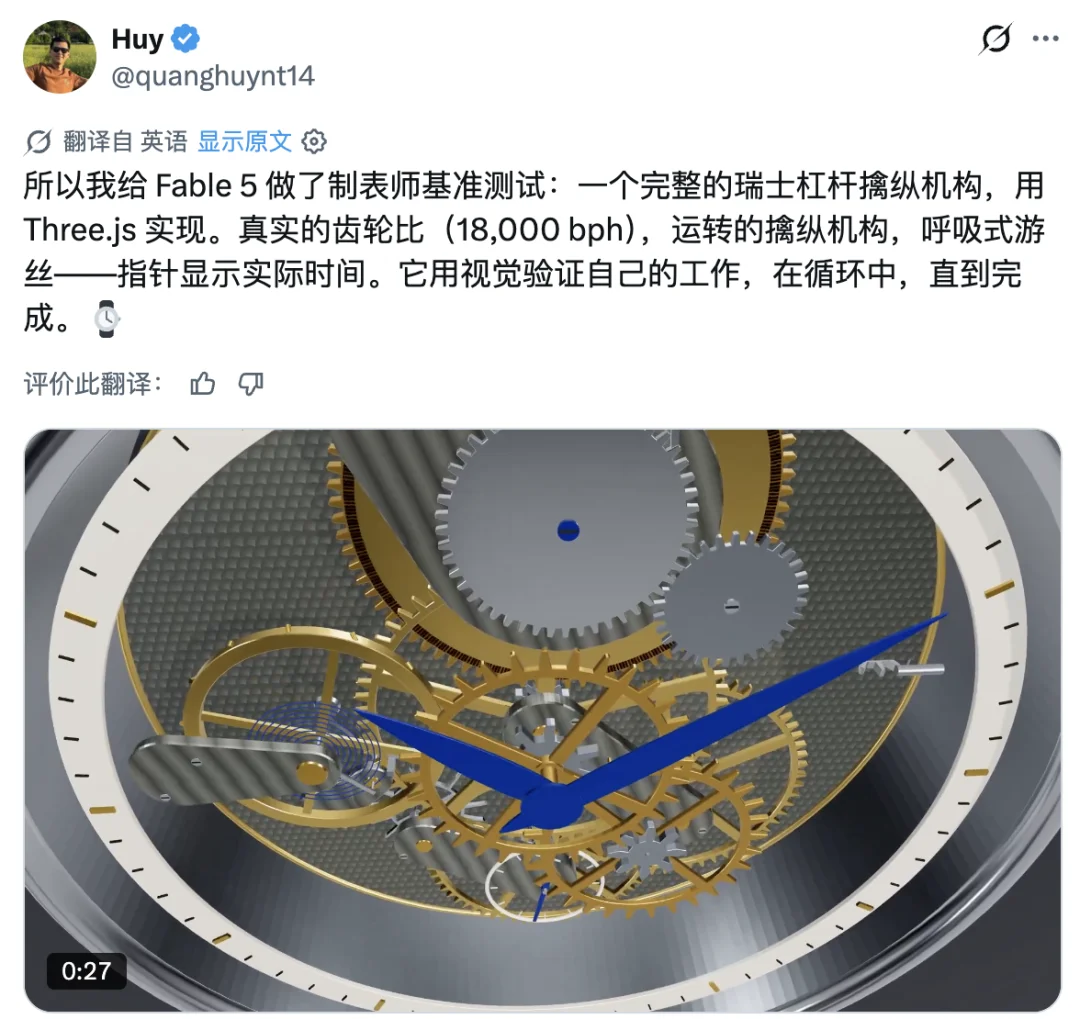
- Prompted to implement a Swiss lever escapement mechanism using Three.js, Fable 5 delivered:
- Accurate gear ratios & kinematic constraints
- Animated balance spring (“hairspring”) with breathing motion
- Real-time time display with ticking second hand
- Physically plausible torque transmission
🤖 Humanoid Robotics Platform
- With only a concise prompt (“design a compact, lightweight humanoid robot platform with 25–30 DoF…”), Fable 5 produced:
- Structural CAD-ready schematics (aluminum/composite frame)
- Sensor-integrated head design (cameras, IMU, microphone array)
- Joint actuation specs & power budget estimates
- Full kinematic chain documentation
⏱️ Completion: ~2 hours | 💾 Token usage: ~1.4M

🏙️ Multi-Agent Urban Simulation
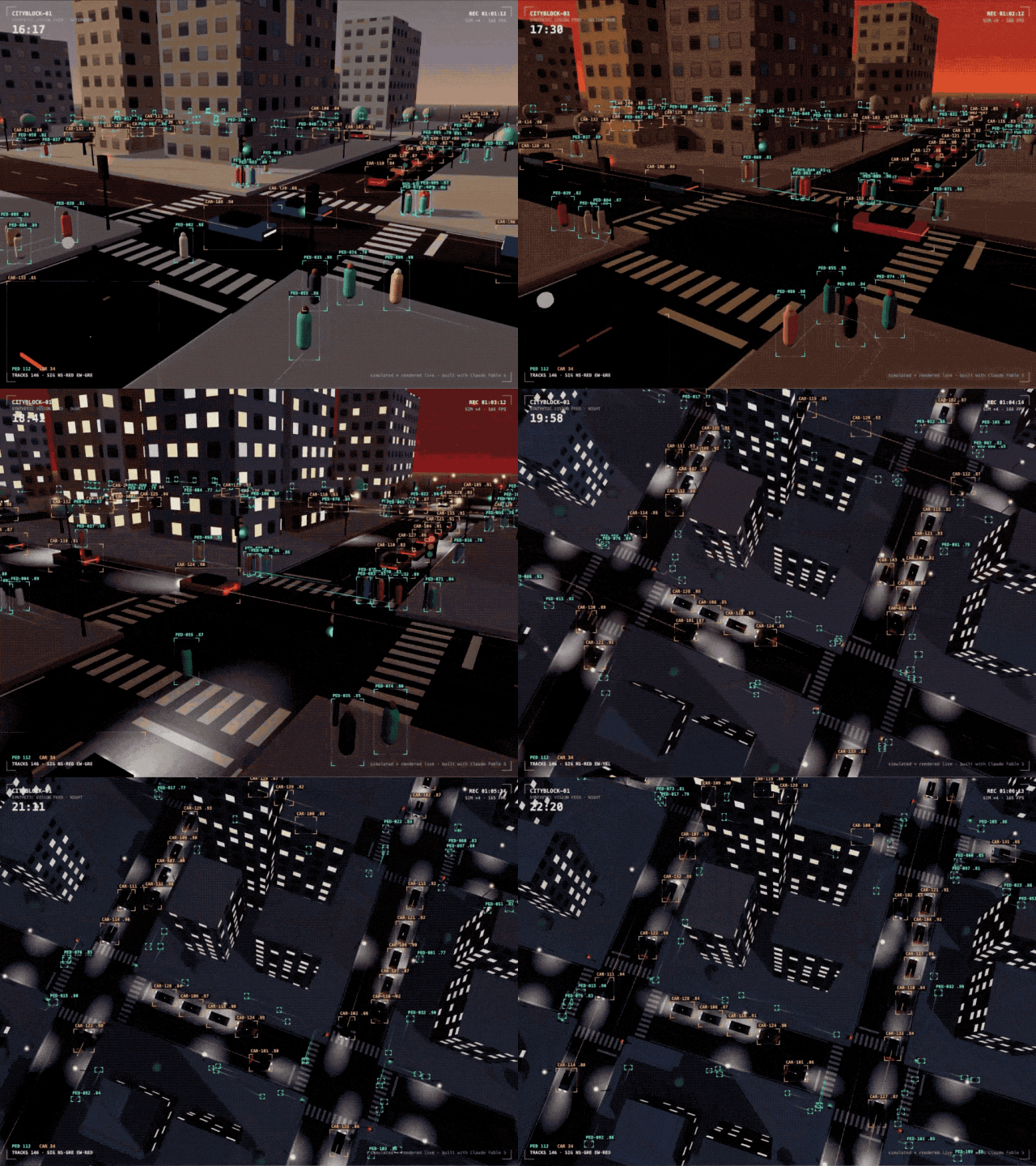
- Bilawal Sidhu tasked Fable 5 with building an interactive city block, yielding:
- Autonomous vehicle agents with collision avoidance
- Real-time bounding boxes & trajectory prediction overlays
- Dynamic daylight cycle & ambient lighting shifts
- Pedestrian flow modeling & intersection logic
⚠️ Critical Limitations & User Challenges
🔒 Overly Sensitive Safety Classifier
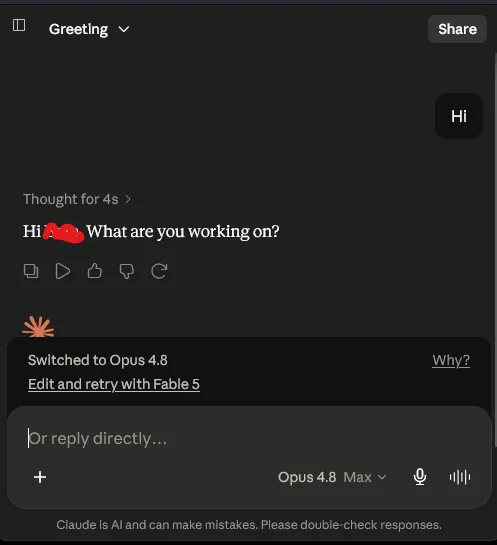
- Fable 5 frequently downgrades to Opus 4.8 when detecting:
- Biomedical terms (e.g., prostate cancer, immune fluorescence)
- Cybersecurity or chemical synthesis contexts
- Even innocuous greetings like “Hi” for users with research backgrounds
- Result: Disruptive context loss and workflow interruption.
🧩 Integration Friction
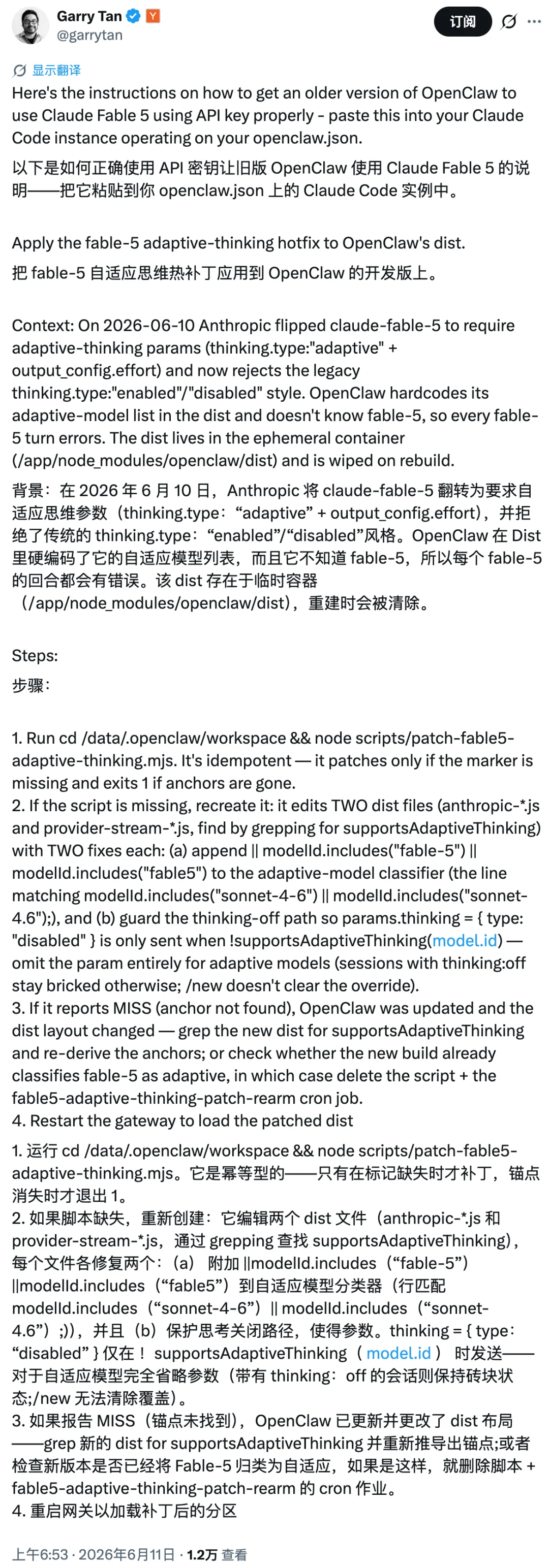
- As of June 10, Fable 5 requires explicit
adaptive-thinkingconfiguration:
json

{ "thinking": { "type": "adaptive" }, "output_config": { "effort": "high" } } - Legacy frameworks (e.g., OpenClaw) crash without this update.
- YC President Garry Tan shared official compatibility patches.
🛠️ Best Practices: Unlocking Fable 5’s Full Potential
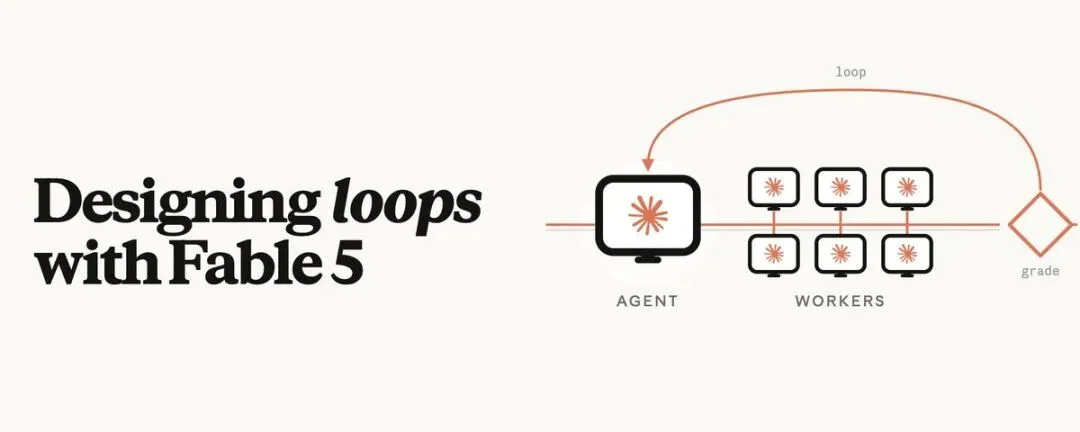
According to AI researcher Lance Martin, optimal usage hinges on two pillars:
✅ Self-Correction Loops
- Define clear goals + success criteria → execute → verify → iterate
- Use dedicated verifier agents (not self-evaluation) for objective scoring
- Demonstrated in Parameter Golf: Fable 5 explores architectural changes; Opus 4.7 tweaks hyperparameters
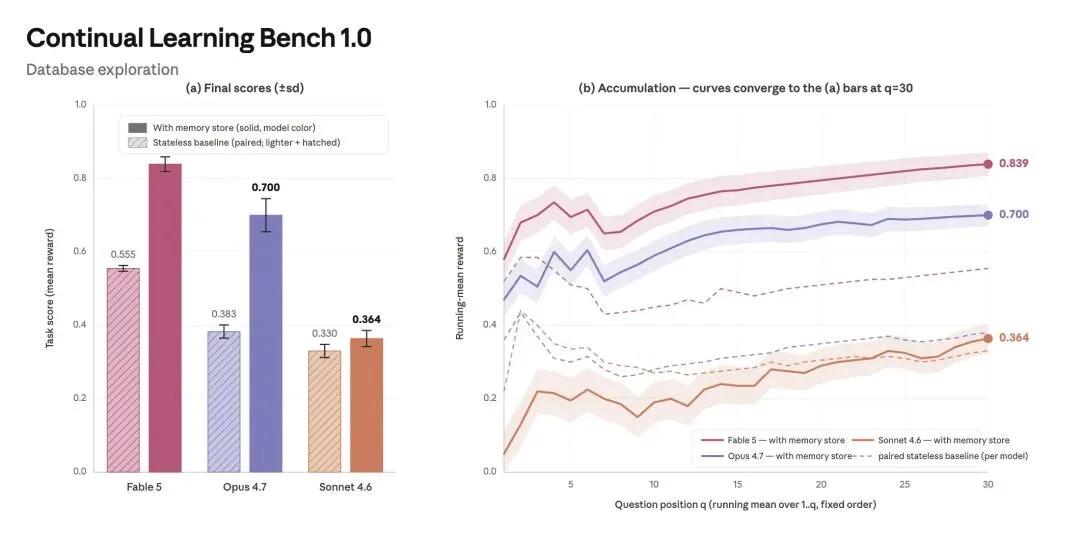
✅ Persistent Cross-Session Memory
- Fable 5 excels at retaining & applying lessons across sessions:
- Record failure
- Diagnose root cause
- Validate hypothesis
- Extract reusable rule
- Consult memory before next attempt
- Enables long-horizon tasks: codebase migration, R&D prototyping, automated testing pipelines
📈 Strategic Outlook
Fable 5 isn’t just another LLM—it represents a paradigm shift toward agent-native development:
| Domain | Near-Term Adoption Target |
|---|---|
| 🧪 R&D Prototyping | High-fidelity simulations, mechanical validation |
| 🧱 Code Migration | Legacy-to-modern refactoring with test coverage |
| 🧩 Engineering Verification | Automated stress-testing & edge-case exploration |
| 📊 Research Acceleration | Literature synthesis, experimental design, data pipeline automation |
As toolchains mature (Anthropic MCP, managed agents, IDE integrations), expect Fable 5 to penetrate high-value engineering workflows—before Mythos 5 potentially redefines the frontier once more.