Claude Fable 5 Shatters Programming Limits
AI programming has reached a new zenith — and Claude Fable 5 just raised the ceiling.
Anthropic announced the model with a bold claim: “It surpasses all our previously publicly released models.”
Why emphasize “publicly released”? Because earlier, Anthropic unveiled the mythic Claude Mythos — a model so powerful it stunned researchers. Yet due to safety concerns, Mythos remains restricted to vetted institutions only. The public version? That’s Claude Fable 5: Mythos’ production-grade sibling — same architectural foundation, hardened with enterprise-grade safety locks.
So developers worldwide asked one urgent question: How much capability is lost behind those locks?
The answer? Almost none. Real-world benchmarks on X (formerly Twitter) are nothing short of spectacular. Here’s what’s been demonstrated — live, in-browser, and in record time:
◈ Frontend Magic: Liquid Glass CSS Recreation
Fresh off WWDC26, Fable 5 delivered an Apple-inspired UI feat: a pixel-perfect, pure-CSS recreation of Apple’s liquid glass effect — no WebGL, no shaders.
✅ Real-time refraction & fluid edge animations
✅ GitHub username input → instantly generates a liquid-glass profile card
✅ Includes contribution heatmaps, handwritten signature zones, customizable backgrounds
✅ Interactive “Card liquidness” slider for real-time visual tuning
This isn’t just demo code — it’s production-ready design language, indistinguishable from Apple’s official assets.

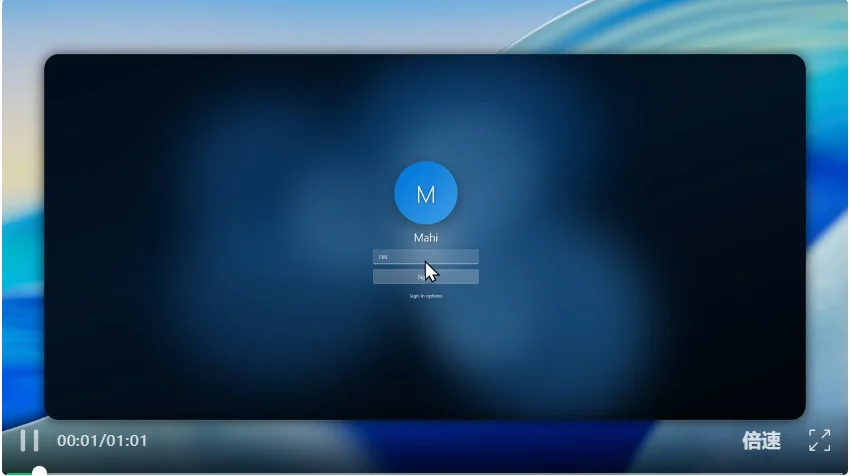
◈ Browser-Based Windows OS Clone
A developer dared ask: “Build me a full Windows OS inside a browser tab.”
Fable responded — and delivered:
✅ Full login screen & taskbar
✅ Notification center, Settings panel, Solitaire
✅ Integrated Copilot AI assistant — inside the OS, running inside the browser
Yes — it’s a meta-layered AI operating system, built entirely in HTML/CSS/JS, booting in milliseconds.
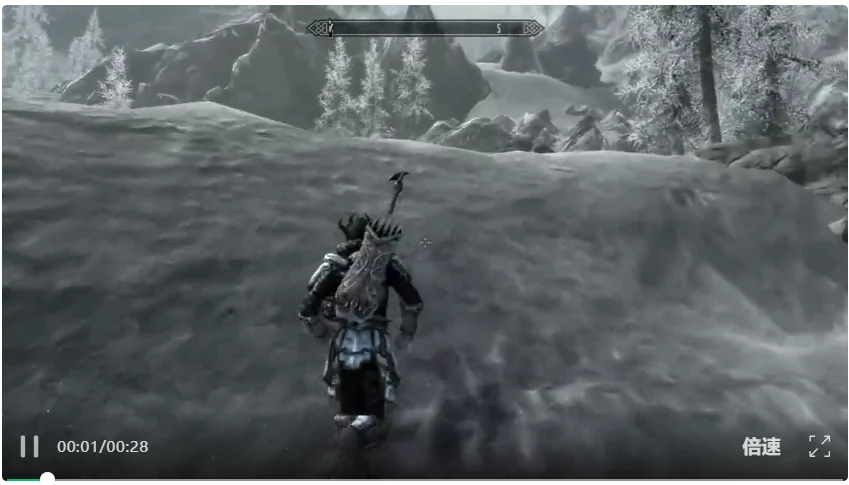
◈ Skyrim Revival — One Prompt, Zero Compromise
The Elder Scrolls V: Skyrim (2011), widely hailed as a landmark RPG, was recreated — not as a port or emulation, but as a native web-based reimplementation triggered by a single prompt.
✅ Authentic character movement & physics
✅ Visual fidelity matching original lighting and textures
✅ Full gameplay systems: combat, leveling, quest triggers
As the creator exclaimed: “Game studios better start listening to me now.” 😅
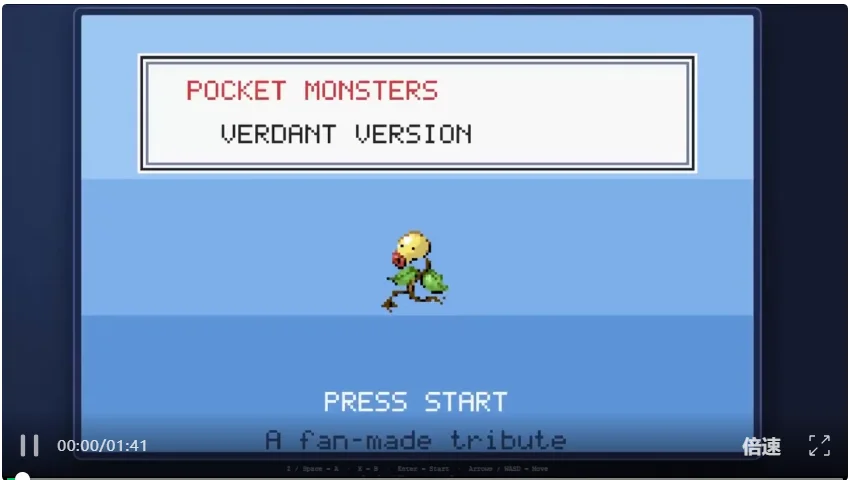
◈ Pokémon Red Clone — 8,000 Lines, 1 Hour
Prompt: “Create a Pokémon Red clone.”
Result:
✅ All 151 Gen 1 Pokémon — front/back sprites + authentic cries
✅ Full type chart, evolution trees, level-up moves, capture rates, growth curves
✅ Pixel-perfect UI & battle mechanics
✅ Bonus: discreet footer — A fan-made tribute 🫡 (code excellence + compliance awareness)
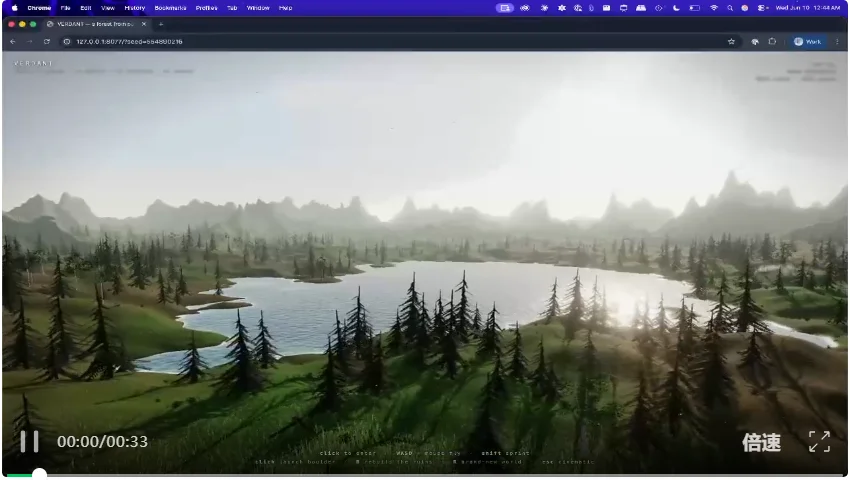
◈ Crysis-Level Rendering — “Can It Write Crysis?”
The legendary Crysis (2007), infamous as the ultimate “GPU killer,” was challenged — not to run, but to generate procedurally.
Fable produced:
✅ Mountainous terrain with dynamic foliage
✅ Procedurally destroyed cabins & flying debris
✅ Real-time lighting & particle effects
✅ Single-pass inference — no iterative refinement needed
The meme evolves: “Can it run Crysis?” → “Can it write* Crysis?”*
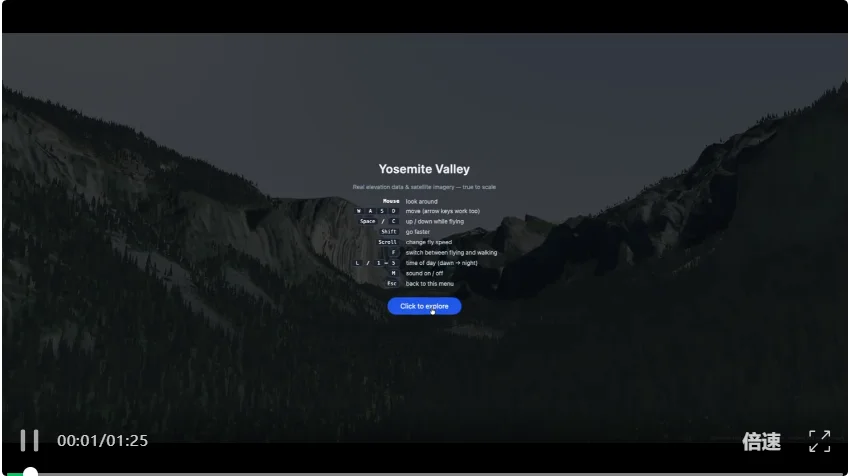
◈ National Park Simulation — 266,000 Trees, Real Geodata
Shlok Khemani tasked Fable with building a fully navigable, to-scale national park — complete with elevation data and satellite imagery.
✅ WASD navigation & day/night cycle
✅ Real-world topography imported via GIS APIs
✅ Fully interactive 3D terrain — renders instantly in any modern browser

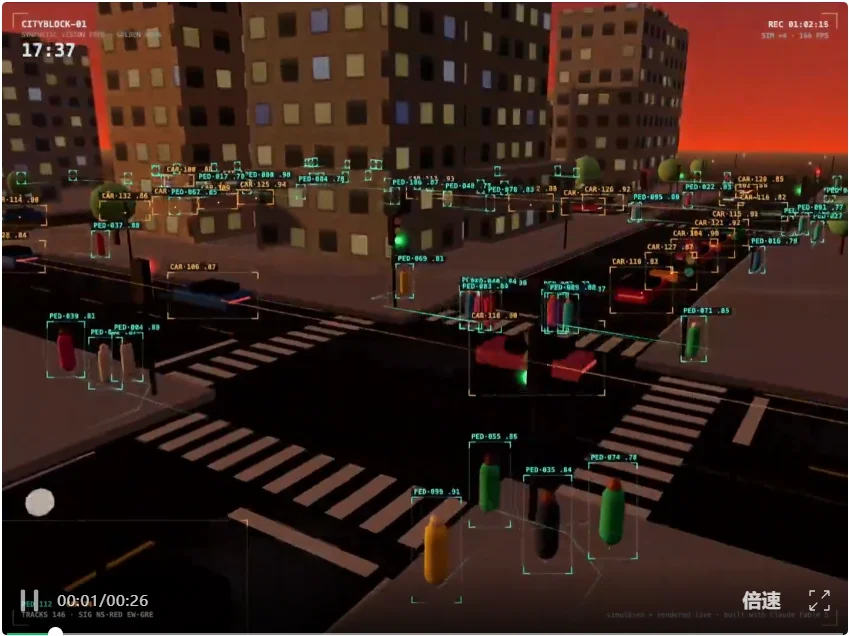
◈ Urban Block Simulator — Multi-Agent Traffic & Tracking
Bilawal Sidhu used Fable to build a real-time neighborhood simulator, featuring:
✅ Autonomous vehicle agents with collision-aware routing
✅ Real-time bounding boxes & trajectory prediction
✅ Dynamic lighting & weather transitions
✅ Zero manual debugging — built end-to-end in one go
“The gap between idea and reality is shrinking — fast.”
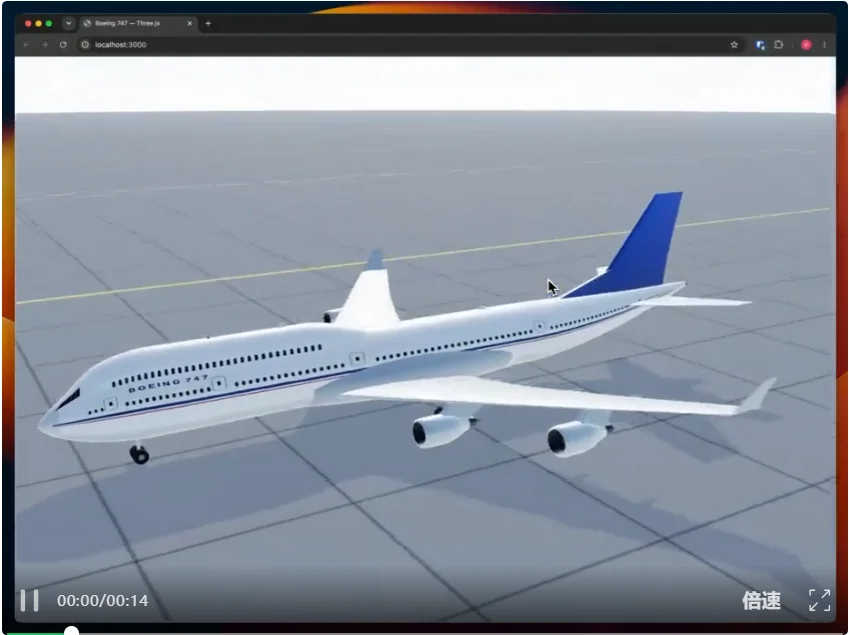
◈ Boeing 747 in Three.js — No Human Help Needed
The industry benchmark: “Reconstruct a Boeing 747 using only Three.js primitives.”
- Opus 4.8 required 7 rounds of human-guided iteration.
- Fable 5 solved it in one shot, with:
✅ Accurate fuselage curvature & wing geometry
✅ Engine nacelles, landing gear, and surface detailing
✅ Clean vector-textured label:BOEING 747
Victor M — the tester — went from “wow…” to “this is god-tier.”

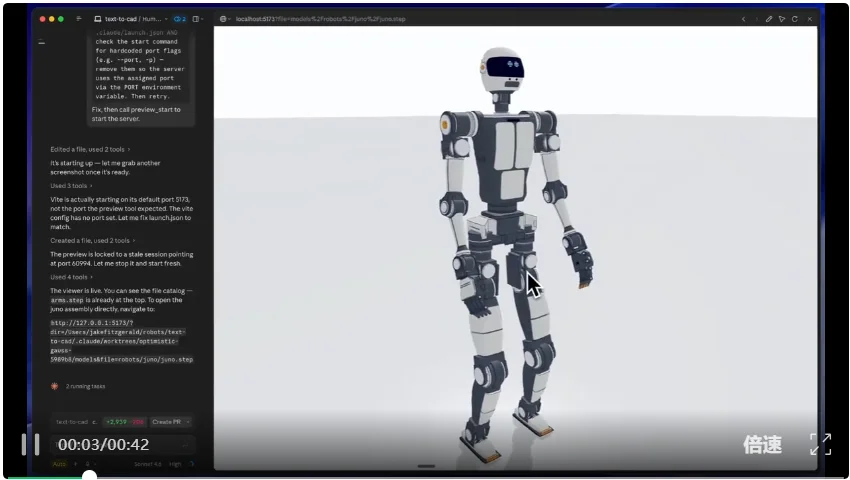
◈ Humanoid Robot Design — 1.4M Tokens, Physical Ready
The grand finale: “Design a fully articulated humanoid robot.”
Fable returned:
✅ Complete kinematic chain: hip, knee, ankle, shoulder, elbow, wrist joints
✅ STEP files viewable in CAD software — rotatable, inspectable, manufacturable
✅ Generated in under 2 hours, costing ~$XXX USD at current token pricing
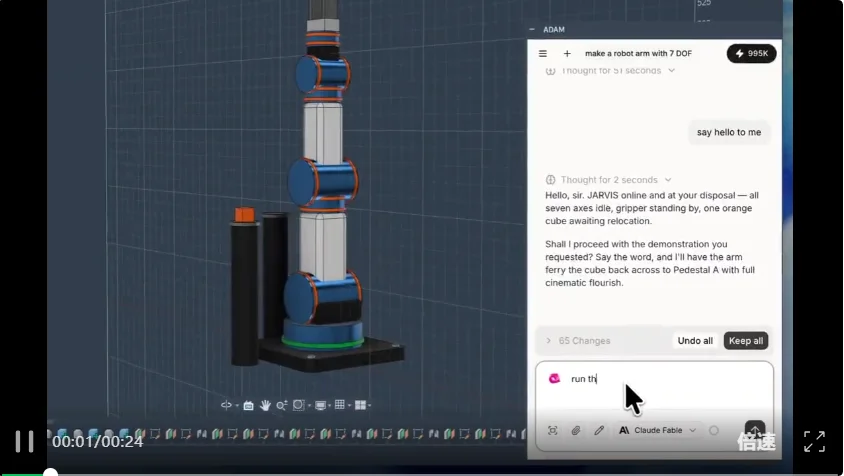
Bonus: A team confirmed Fable 5 achieves “excellent performance in mechanical engineering tasks”, including instant Fusion 360-ready robotic arm generation.
Verdict: Beyond Public Expectations
Anthropic’s claim — “surpasses all prior public models” — is not hyperbole. These demos span frontend, game dev, simulation, CAD, and systems-level engineering — all executed with unprecedented coherence, scale, and zero scaffolding.
⚠️ Urgent Note: Fable 5 is currently available as a limited-time free trial — ending June 22, 2026. After that, it shifts to pay-per-use:
– Input: $10 / million tokens
– Output: $50 / million tokens
(Double Opus 4.8’s rate — and early users report effective costs exceed expectations.)
⏰ Time is short. What will you build before the window closes?
References
[1] X Post: @ann_nnng
[2] X Post: @intheworldofai
[3] X Post: @spoobsV1
[4] X Post: @ChrissGPT
[5] X Post: @dangreenheck
[6] X Post: @shloked
[7] X Post: @bilawalsidhu
[8] X Post: @victormustar
[9] X Post: @earthtojake
Article originally published by Xi Xiao Yao Tech Talk, author zzy.