Claude Code Admits Token Waste in CLI Status Updates
Breaking insight into inefficient subagent architecture — and what users really pay for
🚨 The Revelation: 30-Second Full-Context Re-Reads
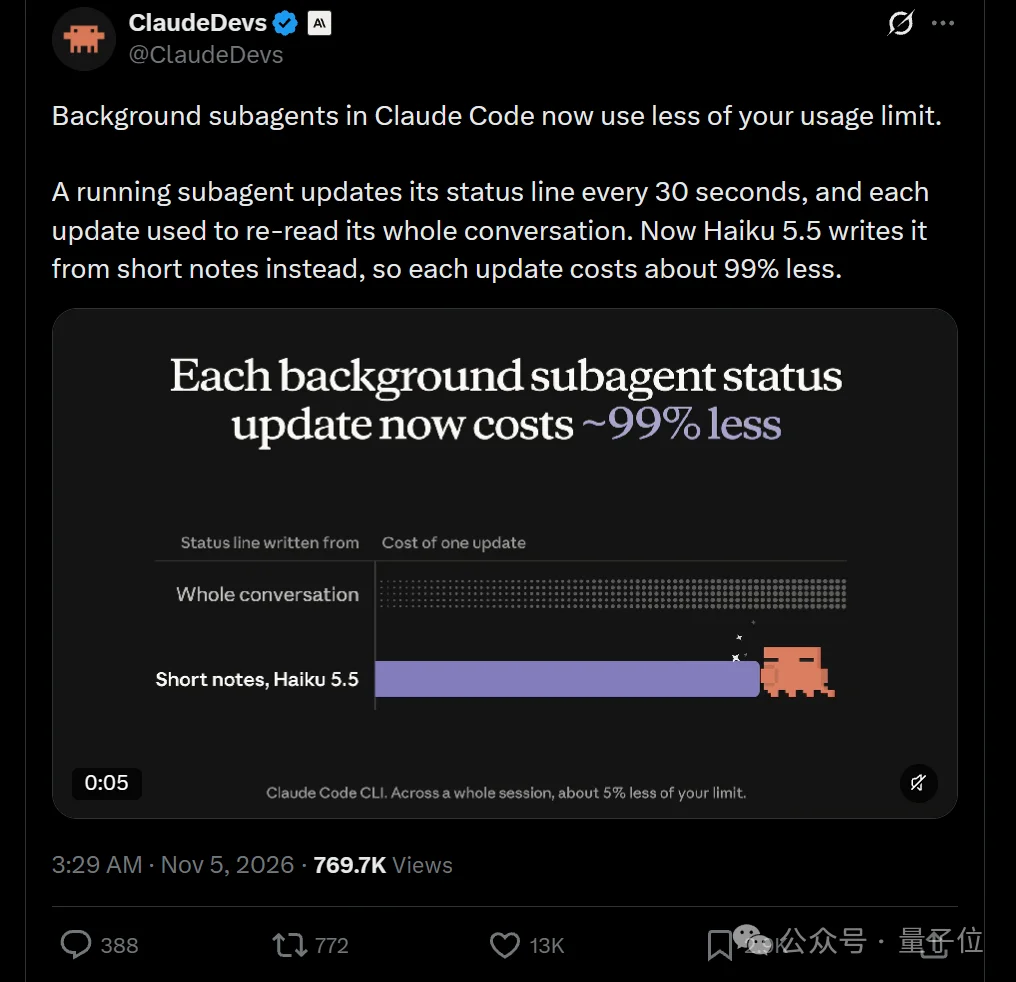
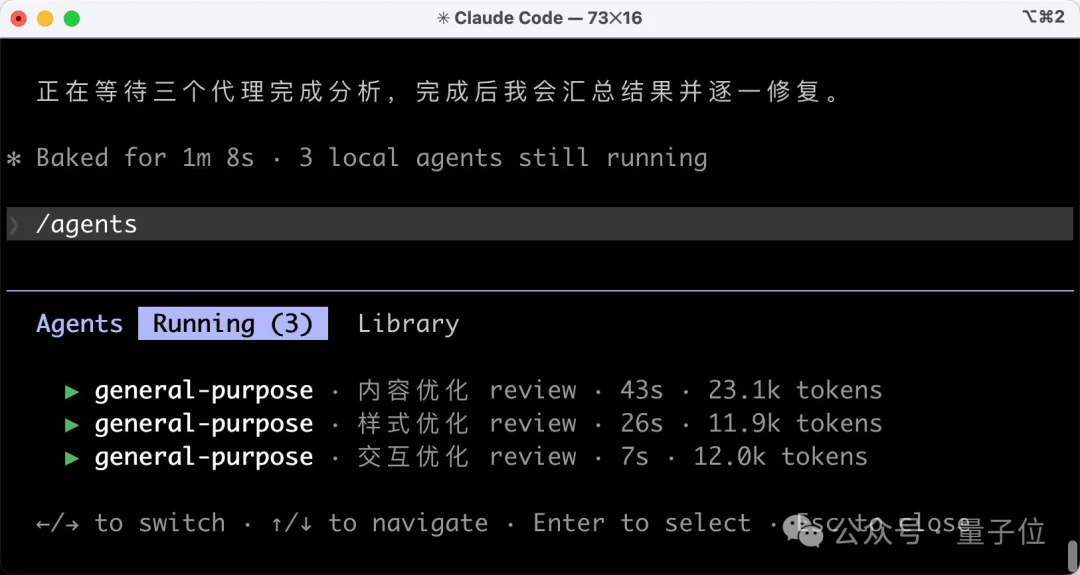
In a recent official announcement, Claude Code confirmed a startling inefficiency: its background subagent—responsible for updating the terminal status line—was reloading the entire conversation history every 30 seconds, solely to generate a single-line status message (e.g., "Running task…").
This meant:
– ✅ Every status update triggered a full context re-ingestion.
– ⚠️ For long-running coding sessions (tens of thousands of tokens), this repeated overhead consumed vast amounts of user quota.
– 💸 Users paying for token-limited plans were unknowingly funding redundant inference cycles — not code generation.
🔧 The “Optimization”: Haiku-Powered Status Generation
The fix? Switching status-line generation from the main model to Haiku 5.5, using only lightweight, structured notes instead of full dialogue context.
✅ What Changed
- Status updates now cost ~99% less per call — dropping from heavy context ingestion to ultra-lightweight note parsing.
- Enabled in v2.1.316+.
❌ What Didn’t Change
- The core subagent still uses its original model for actual task execution.
- Overall session token savings: just ~5% — translating to only ~6% more prompts per quota.
💡 As Lydia Hallie (Developer Experience Lead) clarified: “This affects CLI only — desktop app users are unaffected.”
🖥️ CLI Users Bear the Brunt
The disparity is stark:
| Environment | Status-Line Logic | Token Impact |
|————-|——————-|————–|
| Command Line (CLI) | Full-context reload every 30s → Haiku notes | High baseline waste; modest net savings |
| Desktop App | No status-line rendering at all | Zero impact — no change required |

⚖️ Broader Implications: Trust, Transparency & ROI
This incident highlights systemic challenges in AI tooling:
– Hidden cost surfaces: Critical UX elements (like status lines) can silently dominate token budgets.
– Misleading metrics: A “99% reduction” sounds transformative — until you realize it applies only to a tiny, non-core component.
– ROI skepticism: Developers question whether current tooling delivers proportional value — especially when basic context reuse isn’t implemented.
🎮 Bonus Fallout: Game Dev Interception Bug
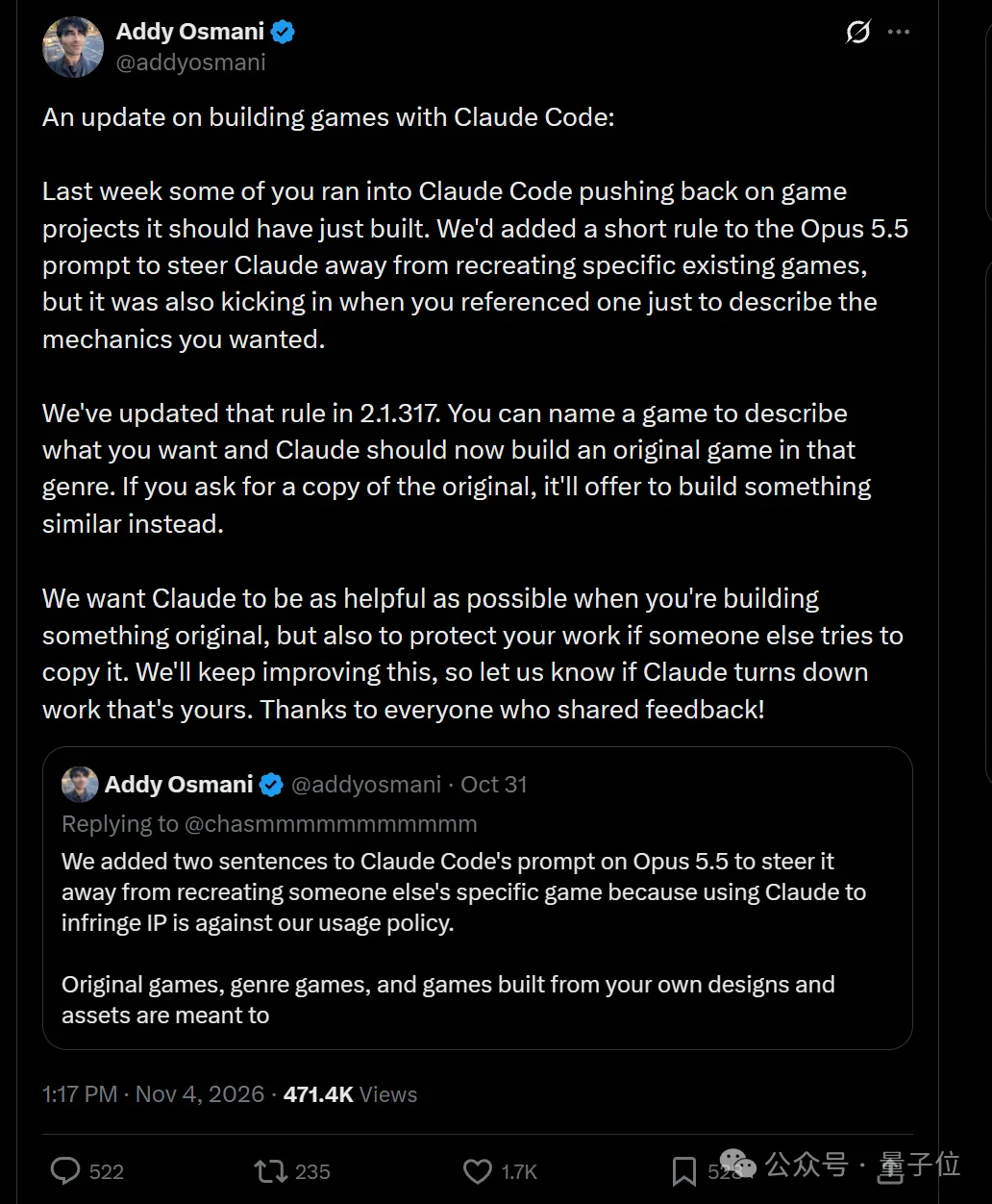
Simultaneously, Claude Code faced backlash over an overzealous safety rule that blocked legitimate game-development prompts — e.g., mentioning “Flappy Bird” or “Diablo” to describe mechanics triggered immediate refusal.
✅ Patched in v2.1.317:
- Mentions of game titles for reference are now allowed.
- Direct copying requests are gently redirected toward original implementation suggestions.
📌 Tech analyst Andrew Curran noted: “These rules expose how fragile LLM alignment remains — small phrasing shifts cause wildly divergent behavior.”
💬 Community Reaction: Frustration & Calls for Accountability
Users expressed sharp disappointment:
Peter Petrash (paid subscriber): “Is a free quota reset too much to ask? This is egregious token abuse.”
Hashim (developer): “For a paid subscription, this level of wastefulness is absurd.”
Mason Geloso: “This should’ve shipped as a silent patch — not a headline feature. It’s embarrassing.”

📌 Key Takeaways
- ✅ Optimization ≠ holistic efficiency — always inspect where gains occur.
- ✅ CLI users should audit status-line usage; consider disabling if unnecessary.
- ✅ Transparency in cost attribution is essential for developer trust.
- ✅ Overly aggressive safety heuristics risk alienating legitimate use cases.
Sources: ClaudeDevs (X), CobaltHere (X), Andrew Curran (X)
Article originally published by QuantumBit, author Yi Shui.