Claude Code Unleashes Lego-Style Modding for Developers
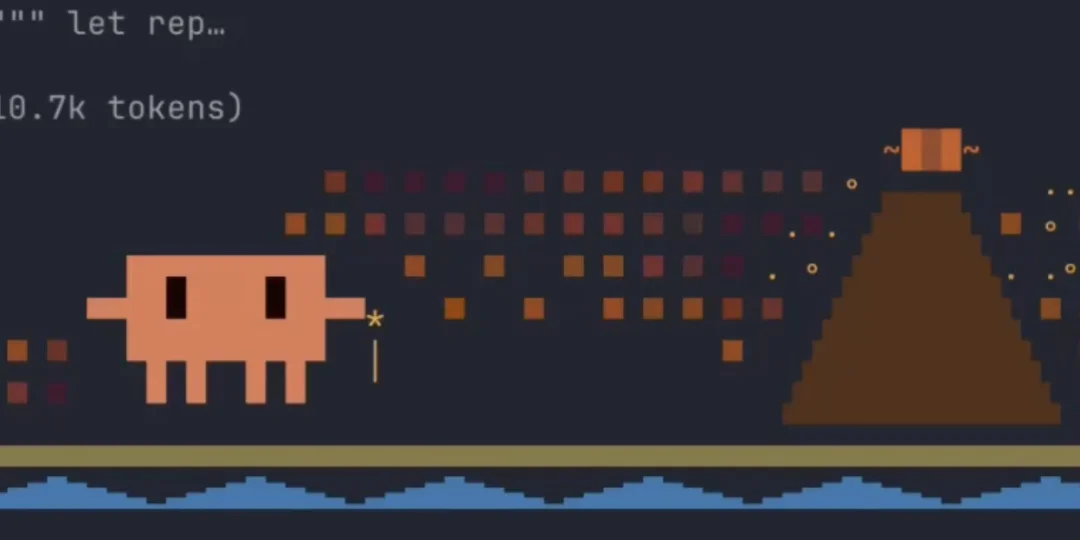
AI programming tools have entered the “Minecraft era.”
For decades, the terminal has been sacred ground for developers — monochrome, precise, and unforgiving. But in recent weeks, Claude Code has undergone a radical cultural shift: programmers aren’t just using it — they’re remixing, personalizing, and playfully subverting it like digital LEGO bricks.
🎮 From Tool to Toybox: The Rise of “Vibe Coding”
Developers are building whimsical, functional, and surprisingly sophisticated mods — all powered by Claude Code’s newly default-enabled Mods system, introduced by Anthropic engineer Boris Cherny in mid-September and officially enabled on October 1, 2026.
Notable Community Creations:
- Pixel Pet Mod: A retro-style companion that eats when Claude executes tools, falls ill on failures, and panics during
rm -rfcommands. - Dino Runner Mod: Recreates Chrome’s offline T-Rex game — users jump over cacti while Claude handles backend logic in parallel.
- 4-7-8 Breathing Animator: A mindfulness overlay that guides breathing during AI inference — vanishes automatically when the response arrives.
- Storytime Mod: Embeds a lightweight 260K-parameter model that generates real-time micro-stories about what Claude is currently doing — turning coding into narrative play.
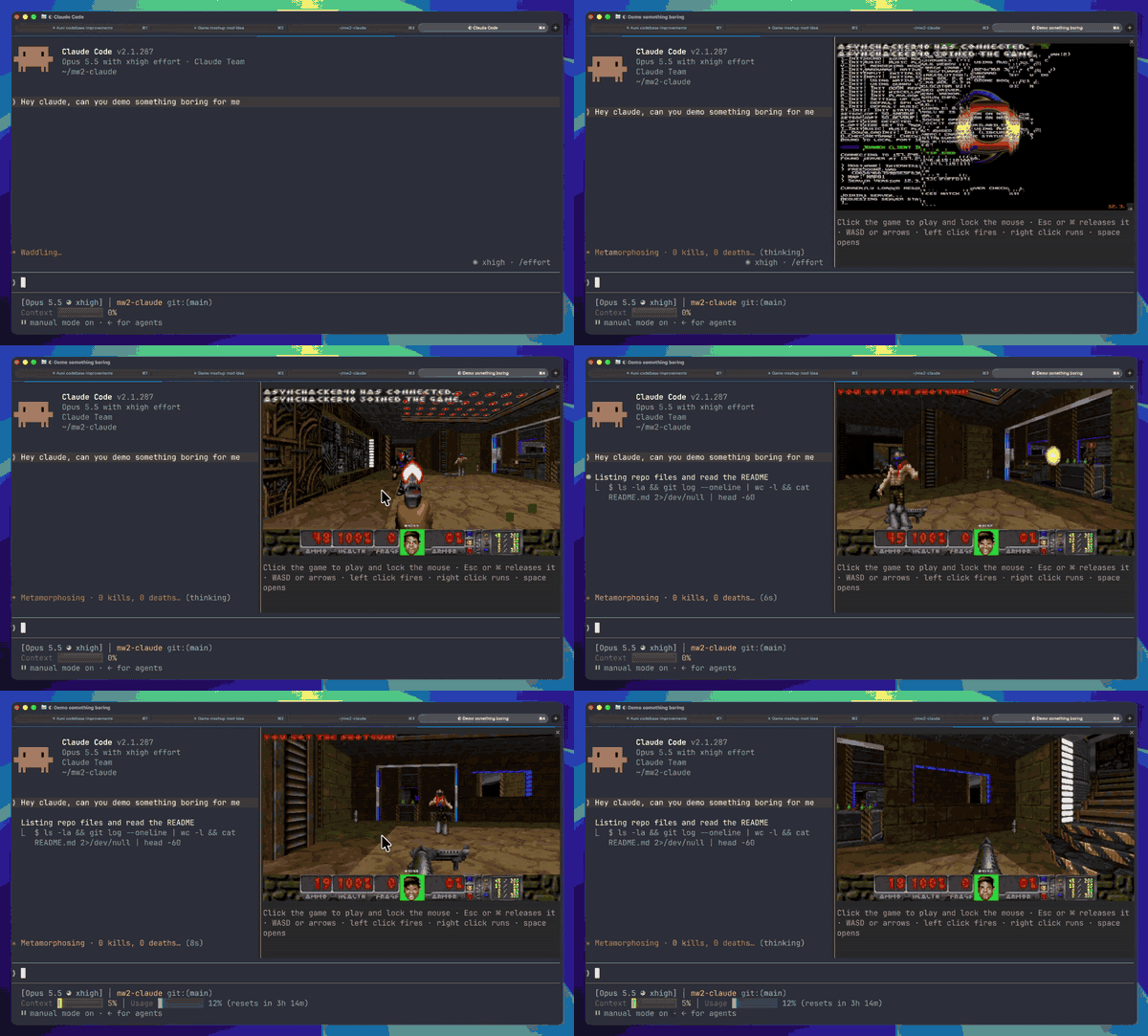
Developer jarrodwatts’ Doom mod running inside Claude Code — Image source: X
⚙️ How Mods Work: Power Without Abstraction
Claude Code mods are lightweight TypeScript functions — but with unprecedented runtime privileges:
✅ Inject panels beside chat threads
✅ Overlay UI elements (e.g., banners, progress bars) above input fields
✅ Intercept and rewrite tool calls before execution
✅ Route requests to external LLMs or custom endpoints
✅ Modify built-in interfaces (e.g., /diff, AGENTS.md rendering)
Even non-developers can participate: simply ask Claude “Help me write a mod”, and it scaffolds the code — then installs itself.
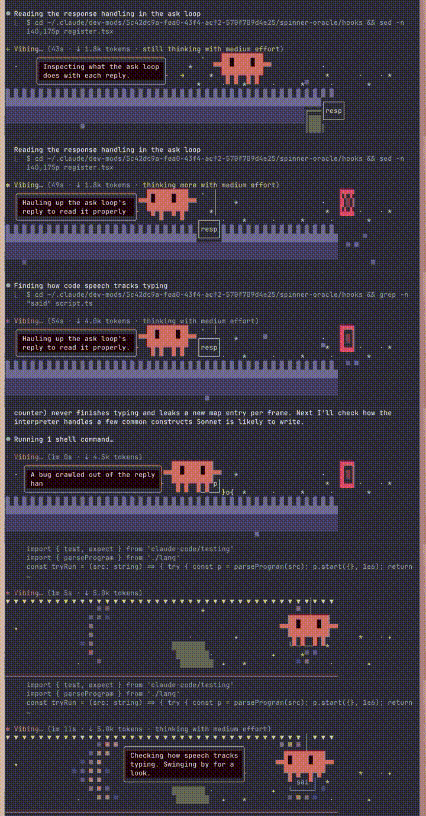
Ansu’s storytelling mod — bringing warmth to dev workflows — Image source: X
🏗️ Official + Community = One Codebase
Crucially, Anthropic didn’t just grant permissions — it shared its own blueprint. Features like the /diff panel and AGENTS.md support? They’re built with the same Mods API — and their source code is publicly available on GitHub. This isn’t skin-deep customization; it’s co-creation at the architecture level.
🔑 Unlike Minecraft’s modding — which emerged from reverse-engineering — Claude Code launched with modding as first-class, intentional design.
🛒 The Claude Marketplace: A Full-Stack Ecosystem, Built in 10 Days
Anthropic’s strategic rollout was lightning-fast:
| Date | Milestone |
|---|---|
| Sep 23 | Launch of Claude Marketplace — 2,000+ plugins & connectors |
| Sep 25 | Opened developer portal with automated security scanning & human review |
| Oct 1 | Enabled Mods-by-default, bundled with plugin submissions |
The vision is clear: unify Claude applications and Claude Code under one extensibility layer, with upcoming cross-platform plugin discovery.
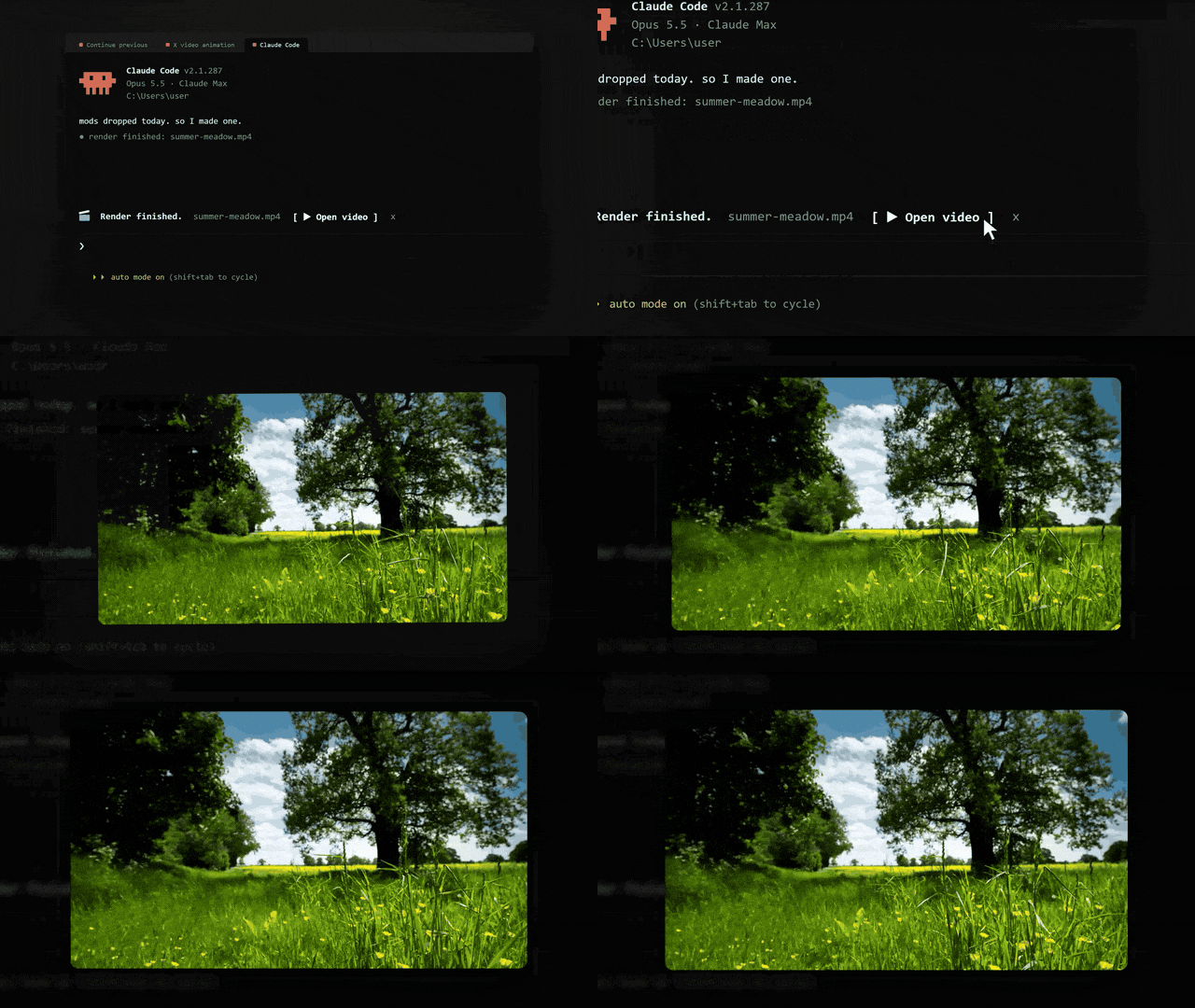
OneWave AI’s “agent-race” mod — live leaderboard for concurrent Claude agents — Image source: X
⚖️ The Trade-Off: Freedom vs. Trust & Sustainability
With great power comes great responsibility — and risk:
⚠️ Security: Mods run with full filesystem and network access — equivalent to native binaries. Anthropic explicitly warns users to install only from trusted sources and provides enterprise controls for mod governance.
💸 Monetization Gap: Unlike major app stores, Claude Marketplace offers no revenue sharing. Top mods (e.g., the viral Dino Runner) yield only usage analytics — no financial incentive.
🧩 Can a vibrant mod ecosystem thrive long-term without economic returns? Or will passion alone sustain it — like early open-source communities?
🌐 The Broader AI Coding Spectrum
Claude Code occupies a deliberate middle ground:
| Tool | Philosophy | Extensibility Boundary |
|---|---|---|
| Codex | Feature-first | Interface & UX locked; only pre-approved plugins |
| Claude Code | Tool-first | UI, tool interception, routing — but not core reasoning loop |
| DeepSeek Harness | Framework-first | MIT-licensed; replace models, agents, even Claude/Codex as sub-agents |
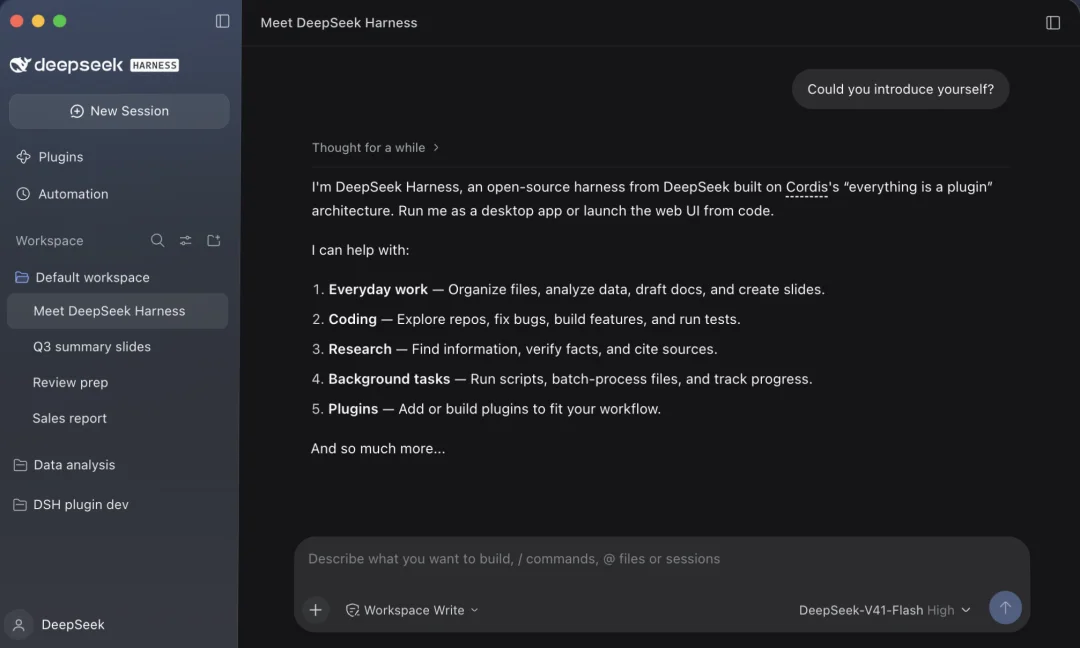
DeepSeek’s DSH desktop client — Image source: DeepSeek
💡 Why It Matters: Beyond Fun — Toward Loyalty
In an era of rapidly evolving models, user retention hinges on emotional resonance. A well-crafted mod isn’t just utility — it’s identity, joy, and ownership. As one developer put it:
“Don’t underestimate the bond between a coder and the tool they’ve personally shaped.”
Anthropic didn’t just drop a feature — they dropped a sandbox. Now, the world’s developers are racing to build the next block — and deciding, collectively, how big this world will grow.

The human-tool connection — Image source: theodysseyonline
Header image source: X | Article adapted from GeekPark