China’s AI Video Models Dominate Global Top Four
AI video generation is now challenging “real-time world creation”
Real-Time World Building — And Its Physical Limits
In early September, Runway unveiled its GWM Worlds 2 research preview—pushing audiovisual generation into the realm of real-time interactive world building.
With a single command, users can make characters walk forward, flood rooms with water, or summon sandstorms—and the model seamlessly continues generating both visuals and synchronized sound. Camera movements, scene transitions, and dynamic instructions are all supported in real time.

The generated world evolves in response to human input—but a critical question arises: If frames connect smoothly, does physics hold up?
A preprint titled PhysWeep poured cold water on the assumption that “video models understand physics.” Researchers evaluated three open video generation models—and found that two exhibited a troubling flaw: while motion appeared natural, underlying physical parameters (e.g., velocity, acceleration, force) failed to conform to real-world constraints. Instead, outputs were heavily influenced by random seeds—not physical laws.
📌 Visually convincing ≠ physically coherent.
This gap represents a fundamental bottleneck: models have mastered immediate responsiveness, but not causal reasoning. Characters move on cue—but why do they move that way? Why does water flow here, not there? Why does an object fall at this rate? These remain open challenges.
HiDream-O1-Video-1.0: A Native Multimodal Breakthrough
At this inflection point, HiDream.ai (ZhiXiang) launched HiDream-O1-Video-1.0—its first native multimodal video generation model, explicitly engineered for:
– ✅ Physical plausibility
– ✅ Narrative planning
– ✅ Audio-visual synchronization
Unlike conventional pipelines that generate video and audio separately, HiDream V1 jointly models text, video, and audio in a unified architecture—ensuring mutual alignment across modalities.
Its debut performance was historic:
– 🌐 #4 globally on Artificial Analysis’s Text-to-Video (with Audio) leaderboard
– 🌐 #8 globally on Arena’s blind-evaluated Text-to-Video benchmark
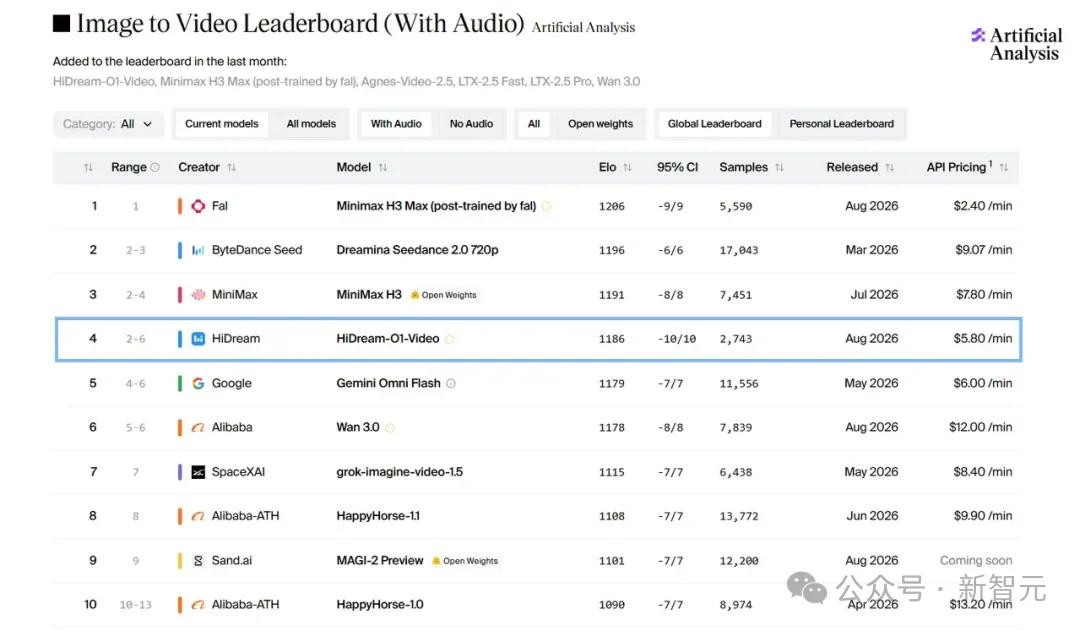
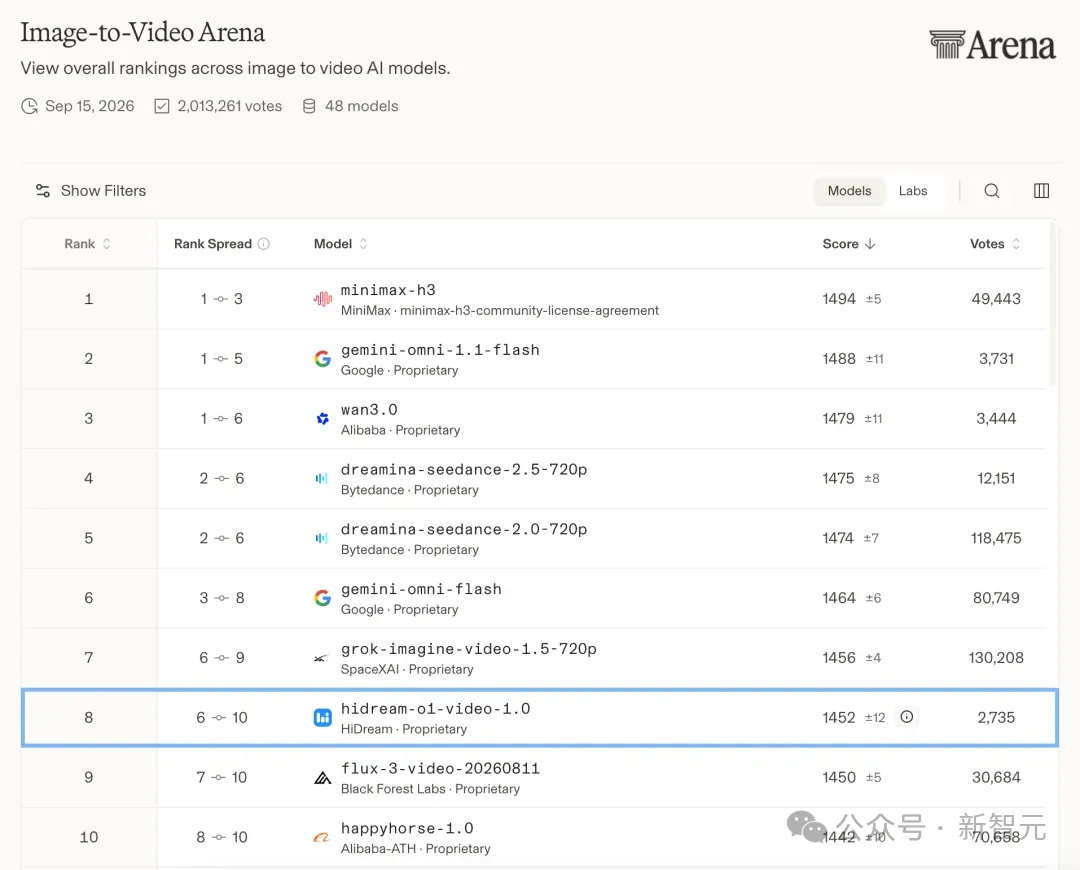
With HiDream V1’s entry, China’s AI video “Four Dragons” are now complete:
– MiniMax
– ByteDance Seedance
– Alibaba Wanxiang
– HiDream.ai
Engineering Reality: Physics-Aware Generation
HiDream V1 embeds physical principles—gravity, inertia, collision dynamics, light attenuation—directly into its generative narrative logic. The result? Dramatically higher usable asset rates.
🔍 Comparative Benchmark: Real-World Scenarios
🏎️ Doppler Effect in Racing
- A Model: Car flips orientation mid-motion; engine pitch doesn’t match spatial position.
- HiDream V1: Consistent forward motion + realistic Doppler shift—pitch rises as car approaches, falls as it passes.


Caption: Top — HiDream V1; Bottom — A Model
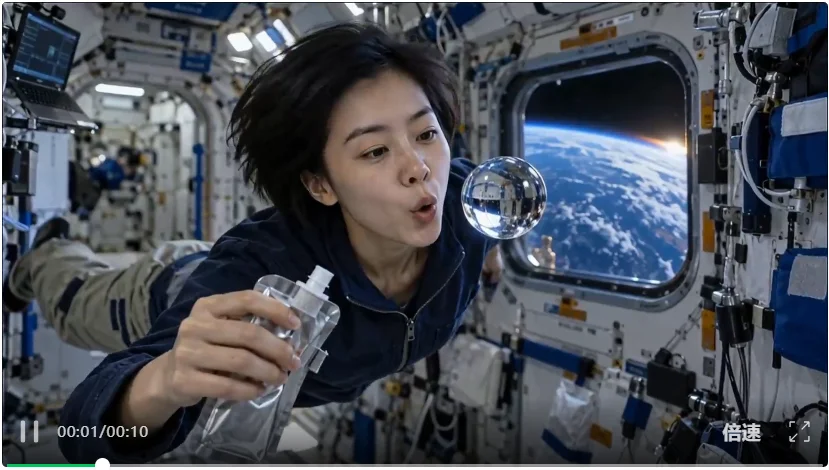
🚀 Microgravity Hydration in Space
HiDream V1 renders astronaut blowing gently on a floating water sphere—causing realistic deformation, slow recovery to spherical shape, and precise retraction into mouth upon finger contact. Every frame obeys Newtonian fluid dynamics and zero-G constraints.
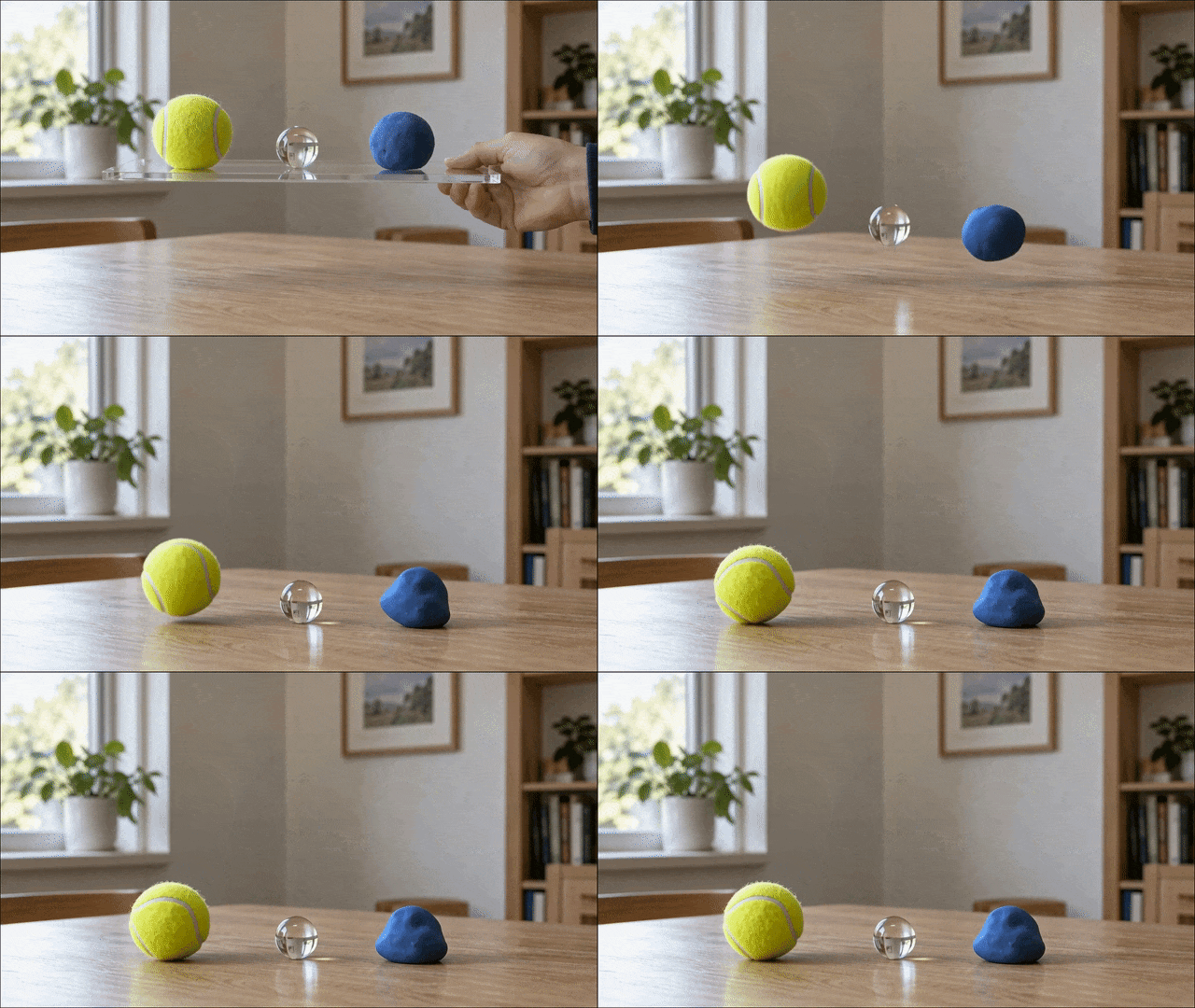
🎾 Material-Specific Impact Physics
Three objects dropped simultaneously:
– Tennis ball → high rebound
– Glass marble → low-amplitude oscillation
– Blue putty → plastic deformation & adhesion
Each reflects accurate elasticity, density, and energy dissipation.
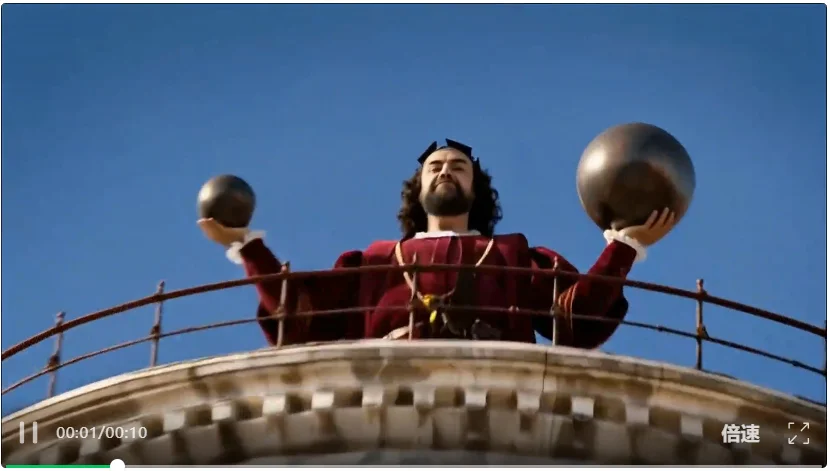
⚖️ Free-Fall Validation
Two iron balls—large and small—released from equal height. HiDream V1 maintains identical acceleration, proportional scaling, simultaneous impact, and physically grounded aftermath (crack + dust burst + acoustic thud).
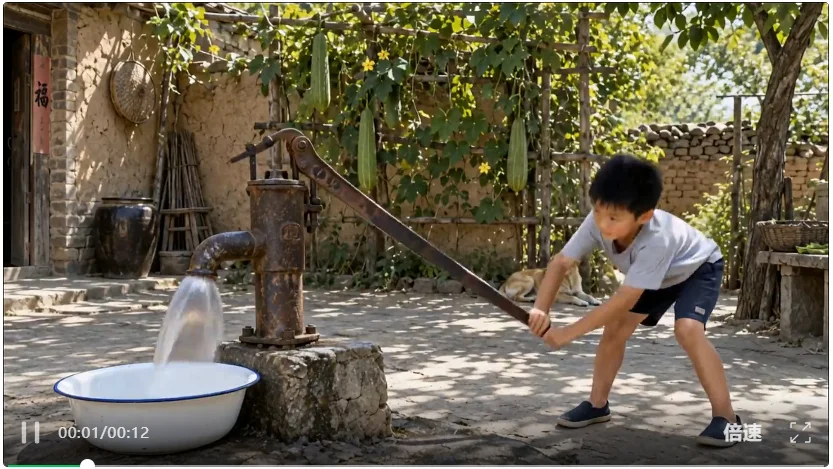
🚿 Mechanical Causality in Rural Pumping
Boy pumps water manually: body posture, lever rotation, and water flow volume all synchronize rhythmically—no temporal misalignment or mechanical impossibility.
🚪 Torque-Aware Door Opening
Slow push on ancient wooden door: HiDream V1 aligns hand force vector, hinge rotation axis, friction sound frequency, and creak timing—unlike competing models showing inverted torque or warped geometry.


Caption: Left — HiDream V1; Center — A Model; Right — B Model
These demos prove one thing: continuity isn’t just about smooth frames—it’s about causal integrity across time.
Understanding Intent, Not Just Keywords
Most prompts are fragmented, ambiguous, or context-dependent (“Make it tense”, “Suddenly quiet”). Traditional models parse keywords only—leading to visual clutter and emotional mismatch.
HiDream V1 introduces a pre-generation multimodal intent understanding module, transforming natural language into executable cinematic blueprints—including:
– Shot duration & pacing
– Scene geography & lighting design
– Character emotion & micro-expression timing
– Sound layering (dialogue, ambient, SFX)
– Camera movement & focal depth
– Narrative arc segmentation
🌧️ Example: “Rain, café window, passing red umbrella, slower, nostalgic”
Result: A red umbrella glides past rain-streaked glass; steam curls from untouched coffee; silence lingers after it exits—evoking quiet longing without exposition.

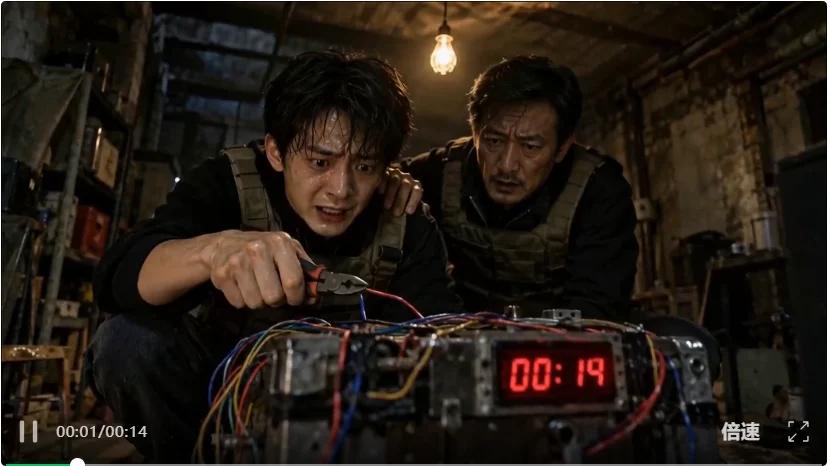
💣 Example: “Bomb defusal—red wire vs. blue wire—then birthday confetti”
HiDream V1 captures escalating tension, split-second hesitation, and comedic whiplash—from clenched jaws to wide-eyed shock post-confetti blast.
Adaptive Duration: Story Dictates Time, Not Clock
HiDream V1 supports native 5–20 second generation—with duration emerging from narrative necessity, not fixed constraints.
Example: “Pour three cups of tea slowly, one after another, in 3 seconds.”
– Legacy models rush or truncate motion.
– HiDream V1 preserves natural fluid dynamics—water level rise, cup exchange timing, and pour continuity—even under tight duration.

Prompting has shifted: no more repetitive guardrails (“avoid disfigurement,” “maintain gravity”). Those are now defaults—writers focus solely on storytelling.
🔄 Seamless Identity & Motion Continuity
- A woman spins fully—revealing “07” on her back, then “NEW 2026” on front—hair, bag, and expression preserved throughout.
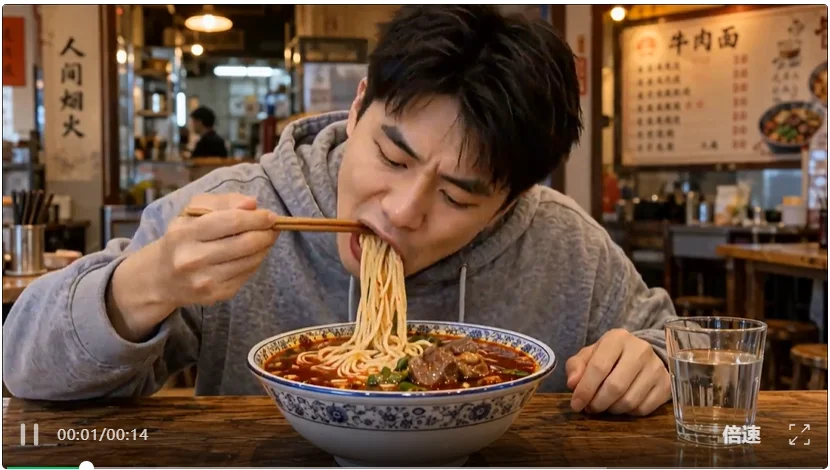
- A man slurps noodles, drinks water, raises thumb, and says “Bashi!” (Sichuanese for “Perfect!”)—with authentic phoneme lip-sync and regional accent.

Audio-Visual Symbiosis: No Post-Production Needed
HiDream V1 abandons sequential pipelines (generate → dub → sync). Instead, it employs joint multimodal modeling, where:
– Visual motion drives audio rhythm
– Dialogue and SFX modulate shot emotion
– Textual intent governs both streams end-to-end
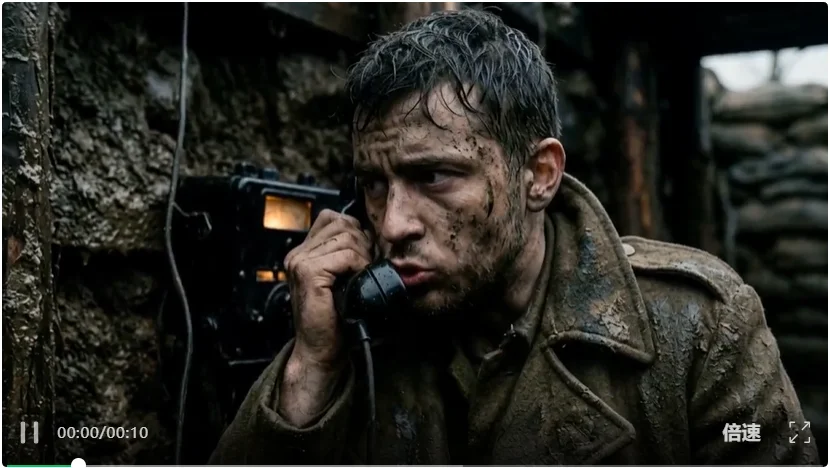
🎖️ Military Radio Transmission
From whispered “We need support” → explosive shout “Watch out for artillery!”—voice timbre, breath control, and panic-level distortion perfectly aligned with facial tension and camera shake.
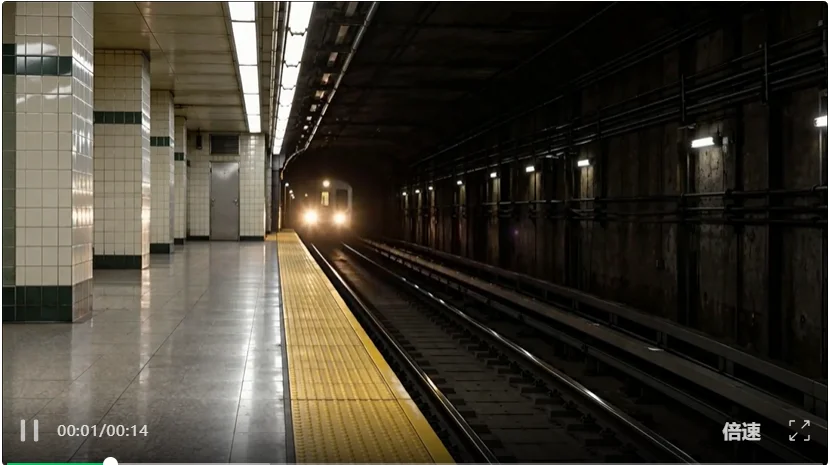
🚂 Doppler-Driven Train Passage
Train approaches → rising pitch → peak at closest point → falling pitch → wind pressure visibly lifts hair/skirt → paper debris fluttering in sync with sonic wavefront.

🚇 Tunnel Entrance & Exit
Pitch modulation precisely tracks distance; wind-induced paper flutter matches train speed and proximity—proving cross-modal causality.
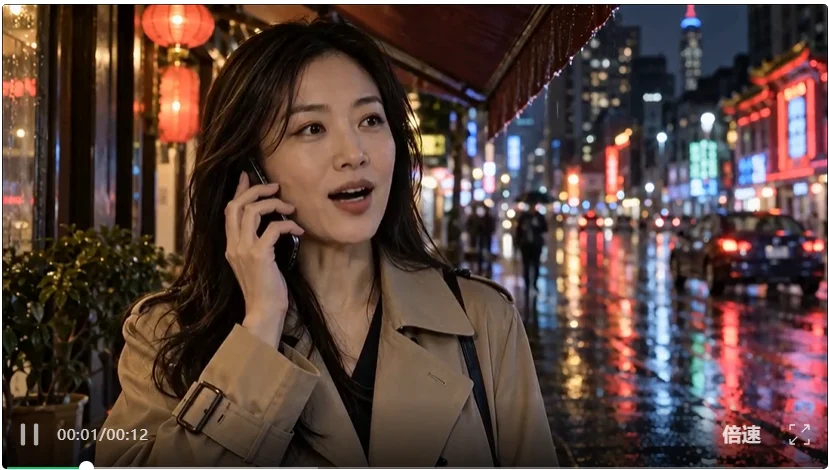
🗣️ Mandarin Lip-Sync & Emotional Shift
Calm delivery of “I’ll be there soon—order first”, followed by instant facial freeze upon hearing bad news—every syllable perfectly matched to mouth shape, jaw tension, and eye widening.
Three Foundational Papers Powering HiDream V1
| Paper | Conference | Core Contribution |
|---|---|---|
| DMSampler | ICML 2026 | Efficient distillation-based sampling for RL training—reducing compute cost per iteration |
| DiffusionCompass | ECCV 2026 | External high-quality reference anchoring to prevent reward hacking and quality collapse |
| EvoID | CVPR 2026 | Identity-consistent generation across pose, expression, and occlusion |
Together, they form a triad: Efficiency (Save), Fidelity (Accurate), Stability (Steady)—all converging on lower effective cost per usable frame.
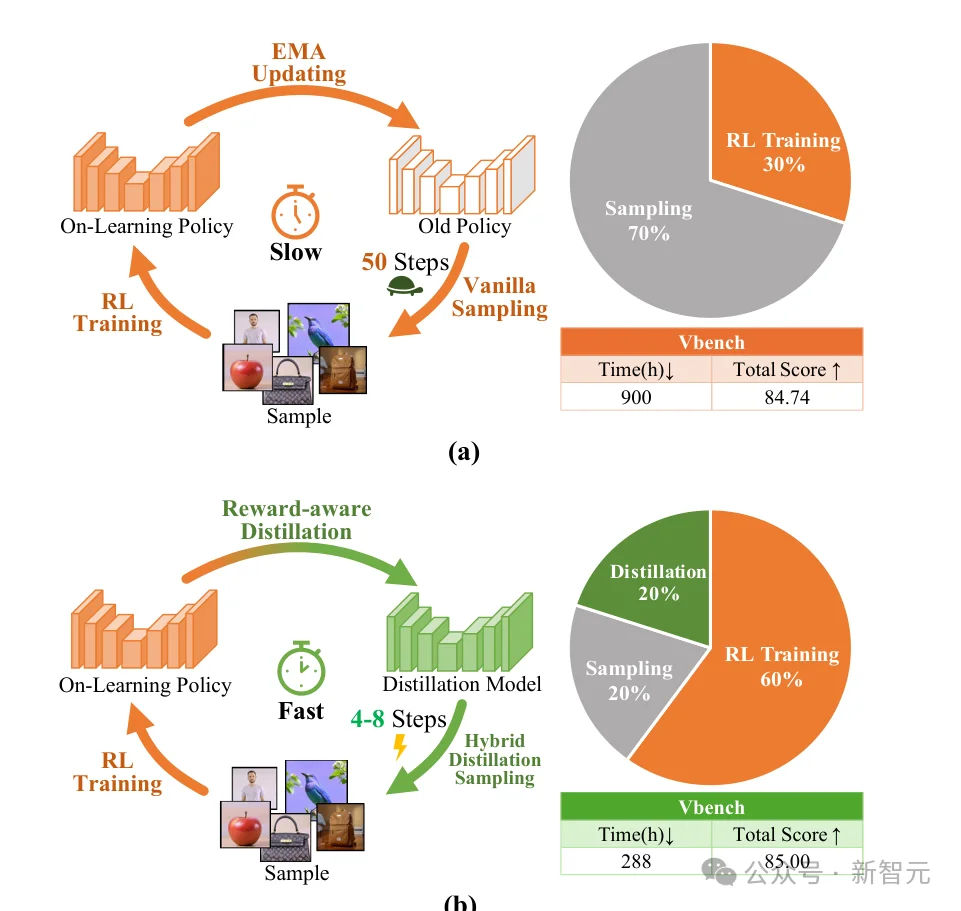
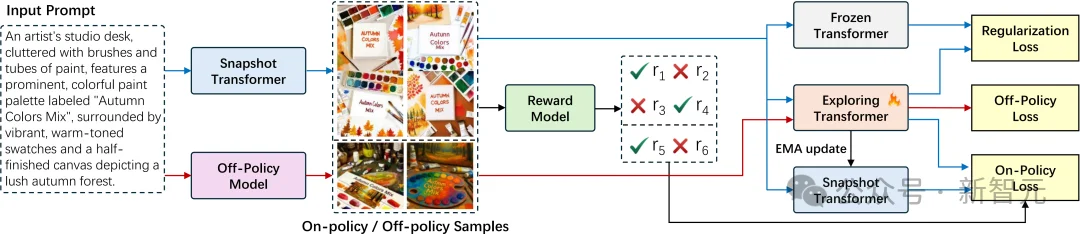
Caption: DiffusionCompass architecture
UiT: The Unified Multimodal Foundation
HiDream V1 isn’t an isolated model—it’s the latest evolution of UiT, HiDream’s unified multimodal world model architecture (launched April 2026).
From one base, four specialized models emerge:
– HiDream-O1-Image: Spatial understanding → #1 in China, #2 globally (Artificial Analysis)
– HiDream-O1-World: Interactive world model → #1 on WBench benchmark
– HiDream-O1-Embodied: Embodied reasoning → #1 on RoboColiseum sub-benchmarks
– HiDream-O1-Video: Temporal coherence + physics → #4 & #8 globally
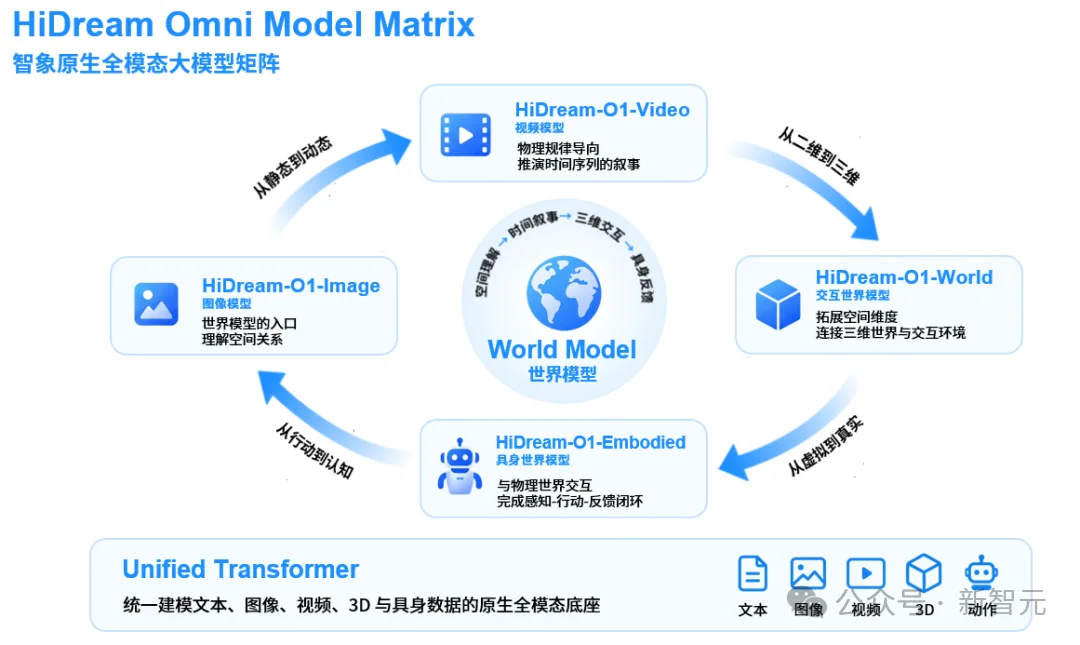
As CEO Meitao stated: “One native multimodal foundation—four co-evolving models.”
From Simulated to Understood Worlds
The next frontier isn’t just higher resolution or longer clips—it’s causal credibility.
- Push a door → it opens along its hinge axis with matching friction sound.
- Toss an apple → trajectory, catch point, and hand motion obey momentum conservation.
- Knock over dominoes → chain reaction propagates sequentially, not randomly.
HiDream V1 signals a pivot: from “looks real” → “would happen this way.”
That shift—from perceptual fidelity to physical and narrative reasoning—is what transforms AI video from a novelty into a production-grade tool.
🌍 Final thought: A frame may dazzle for one second—but only a physically grounded sequence earns trust for the next.
Article adapted from Xin Zhī Yuán (New Intelligence Era), by authors Taozi & Moses.