The World’s Top AI Cloud Tenant Turns Chipmaker
In a strategic pivot that signals deepening infrastructure sovereignty, Anthropic has quietly initiated development of its own custom AI chip — marking a decisive move from cloud-based compute reliance to silicon-level control.
Breaking news from The Information: Anthropic is in early-stage design talks with Samsung Electronics for potential manufacturing of a proprietary AI accelerator, targeting Samsung’s cutting-edge 2nm process node and advanced packaging technologies.
🔍 Why 2nm? Why Now?
The 2nm node represents the bleeding edge of semiconductor fabrication:
– Density & Efficiency: Enables ~15–20% more transistors per mm² than 3nm, translating to higher throughput and lower power-per-inference.
– Advanced Packaging: Options like 2.5D interposer integration allow tight coupling between compute dies and HBM stacks — slashing memory latency by up to 40% compared to conventional PCIe-based architectures.
This combination mirrors the solution Samsung delivered to Japanese AI firm Preferred Networks in mid-2024 — a full turnkey package Anthropic is now evaluating.
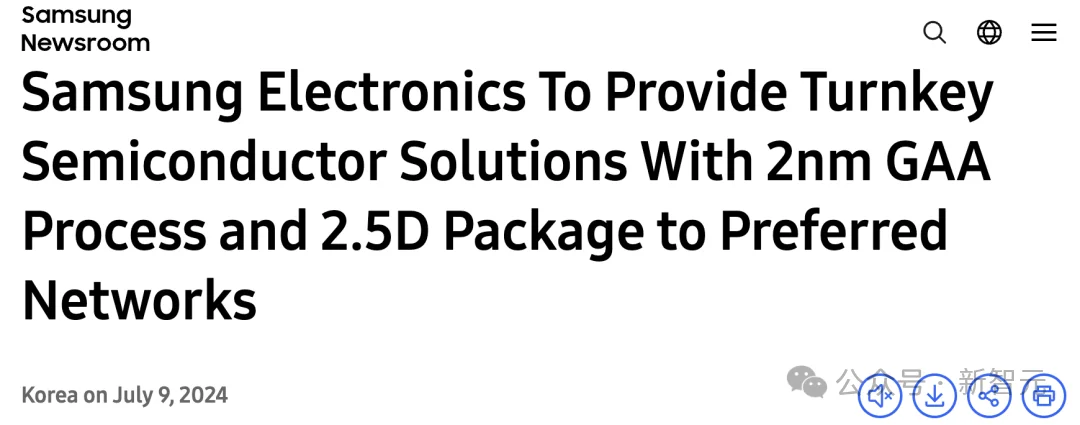
Samsung’s 2nm GAA transistor + 2.5D packaging stack — a blueprint Anthropic is exploring (Source: Samsung)
🧩 Strategic Shift: From Multi-Cloud to Multi-Chip
Until recently, Anthropic championed a hardware-agnostic strategy:
– Primary reliance on AWS Trainium, Google TPU v5e/v6, and NVIDIA GPUs
– Explicit avoidance of vendor lock-in — unlike OpenAI (NVIDIA) or xAI (NVIDIA + custom)
Yet explosive growth forced recalibration:
| Metric | 2025 (Year-end) | Apr 2026 | May 2026 |
|——–|——————|———–|———–|
| Annualized Revenue | $9B | >$30B | >$47B |
With revenue surging 5× in five months, infrastructure costs skyrocketed — prompting urgent efficiency optimization. As Anthropic admitted in April: “This growth places unavoidable pressure on our infrastructure.”
🛠️ Execution: People, Partners, and Pipeline
✅ Key Talent Acquisition
- Clive Chan, OpenAI’s second hardware engineer and former Tesla Dojo contributor, joined Anthropic in June 2026.
- Multiple senior ASIC design roles are actively posted — focusing on high-bandwidth interconnects and inference-optimized microarchitecture.

Clive Chan (left), formerly at OpenAI and Tesla, now leading Anthropic’s chip initiative (Source: Anthropic internal)
✅ Supply Chain Expansion
Anthropic’s current chip supplier list now spans five vendors: AWS, Google, NVIDIA, Microsoft, and UK startup Fractile — yet none offer full-stack cost control or differentiated IP.
✅ Parallel Investments
- Signed multi-gigawatt TPU capacity with Google/Broadcom (starting 2027)
- Secured up to 5GW of new AWS GPU capacity via Project Rainier
- Acquired Colossus 1 & 2 GPU clusters from SpaceX
- Raised $65B Series H round (post-money valuation: $965B)
⚖️ The Economics of Scale
At tens of thousands of accelerators deployed:
– A 3% improvement in energy efficiency saves ~$1.2B annually in electricity and cooling.
– A 5% reduction in inference latency directly improves API response SLAs and customer retention.
– Owning the chip grants negotiation leverage — turning Anthropic from tenant to peer in supplier discussions.
As one insider put it: “This isn’t about replacing NVIDIA — it’s about owning the margin, the roadmap, and the rhythm of innovation.”
🔄 Lessons from OpenAI’s Jalapeño Playbook
OpenAI’s path offers both precedent and caution:
– Timeline: 3 years from team formation → first silicon (Jalapeño, launched June 2026)
– Speed: 9-month design-to-tapeout cycle — accelerated using AI-assisted physical verification
– Performance: Early benchmarks show 2.8× better TOPS/W vs. NVIDIA H200
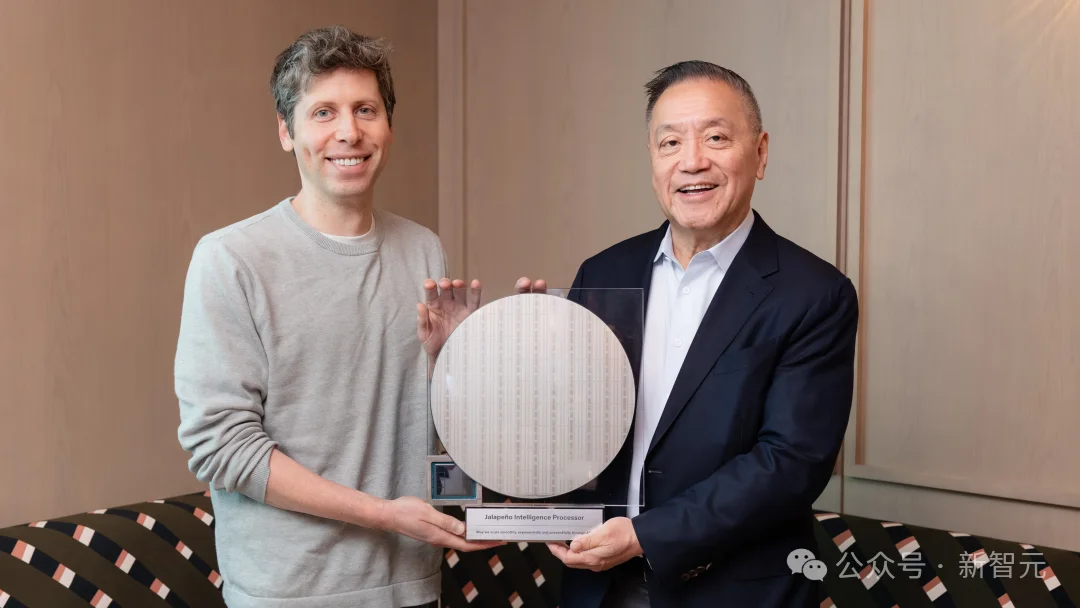
OpenAI CEO Sam Altman & Broadcom CEO Hock Tan with Jalapeño wafer — symbolizing AGI-scale infrastructure (Source: OpenAI)
Anthropic stands today where OpenAI stood in mid-2024: talent assembled, architecture undefined, foundry talks underway.
🌐 Who’s Really Competing?
Despite the hype, NVIDIA remains dominant:
– Holds ~74% share of AI inference accelerator market (per The Information)
– Rubin GPUs deliver unmatched memory bandwidth (22 TB/s) and software maturity
But competition isn’t zero-sum — it’s structural:
“Self-built chips aren’t stealing NVIDIA’s today — they’re building their own tomorrows.”
Anthropic’s entry into the 26% non-NVIDIA space brings $47B annual revenue and $965B valuation — arguably the most formidable new entrant since Meta’s MTIA.
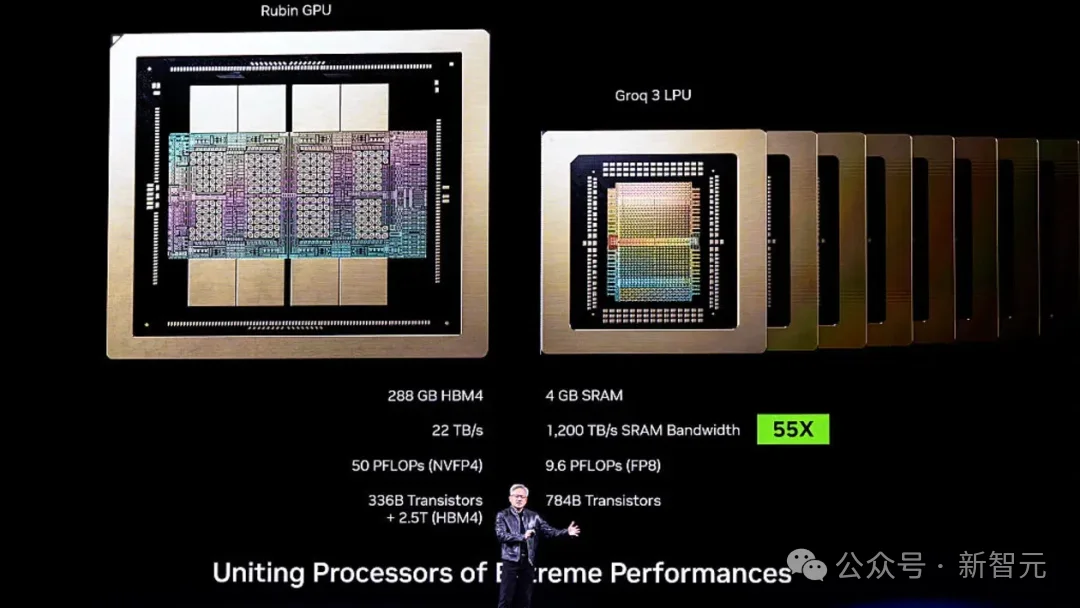
GTC 2026: NVIDIA Rubin (22 TB/s) vs. Groq LPU (1200 TB/s SRAM bandwidth) — inference remains NVIDIA’s strongest moat (Source: NVIDIA)
📜 Final Takeaway
Anthropic’s chip initiative reflects a broader industry inflection:
– Power shift: Model companies now define silicon requirements — not vice versa.
– Infrastructure sovereignty: Control over cost, latency, and roadmap trumps short-term convenience.
– Long game: This is less about near-term replacement and more about long-term optionality — ensuring AGI-scale deployment remains economically sustainable.
Whether Samsung ultimately wins the fab contract — or whether Anthropic ships silicon before 2028 — remains unknown. But one thing is certain: the race for AI-native silicon just gained its most credible challenger yet.
Sources:
– The Information: Anthropic Talks With Samsung to Manufacture Custom AI Chip
– Anthropic Blog: Google & Broadcom Partnership Announcement
– Clive Chan on X (formerly Twitter)