AI Solves Decades-Old Mathematical Conjectures Overnight
A paradigm shift in mathematical research: from human-led proof discovery to AI-generated verification.
🌟 Three Landmark Breakthroughs Announced by OpenAI
In a stunning announcement, OpenAI revealed that its AI system has achieved three foundational advances across mathematics, theoretical computer science, and quantum physics — all within days:
- Refutation of the Exponential Time Hypothesis (ETH) — a cornerstone assumption in computational complexity theory held for nearly 30 years;
- Proof of the Local Smoothing Conjecture in all dimensions, implying resolution of the Kakeya conjecture (also known as the Kakeya needle problem) universally;
- Rigorous mathematical existence proofs for quantum chromodynamics (QCD) and the Yang–Mills theory, directly addressing part of the Clay Mathematics Institute’s Millennium Prize Problems.
🔍 From Wang Hong’s 3D Triumph to Universal Resolution
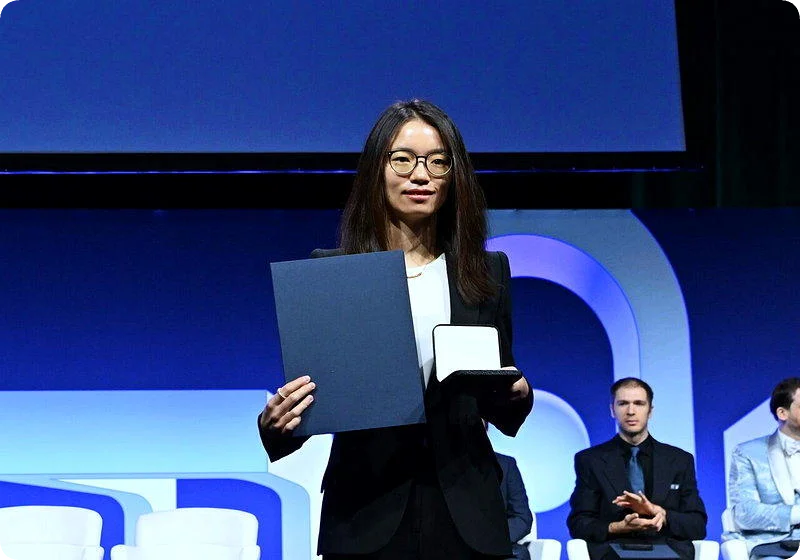
In early 2025, Chinese mathematician Wang Hong, in collaboration with NYU’s Joshua Zahl, stunned the global mathematics community by proving the 3D Kakeya conjecture — a major milestone in harmonic analysis and geometric measure theory.
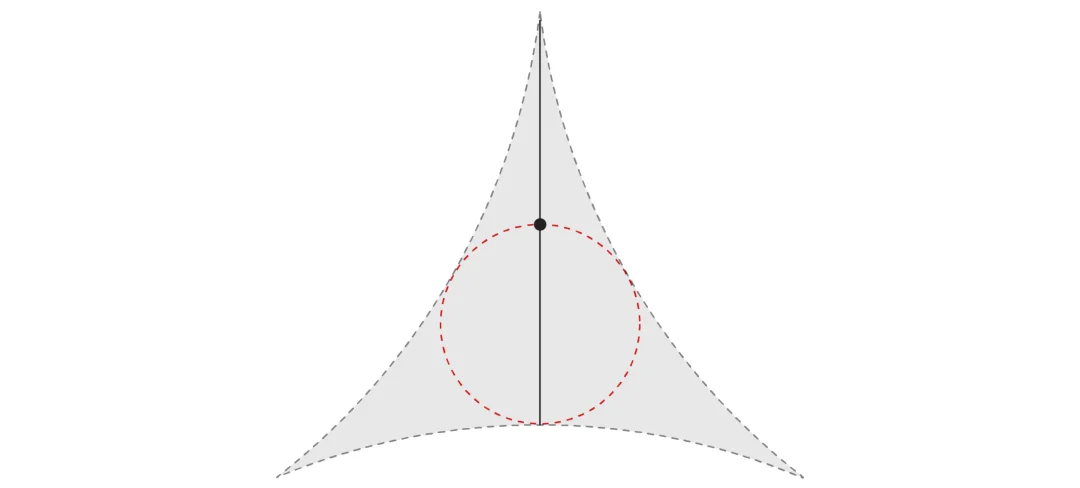
Yet just 18 months later, OpenAI’s model transcended dimensionality limits by proving the 1991 Local Smoothing Conjecture (proposed by Christopher Sogge), using a novel auxiliary partial differential equation framework applicable to all dimensions.
This stronger result logically implies:
– The Kakeya conjecture in every finite dimension;
– The Stein restriction conjecture;
– And broader implications for Fourier analysis and wave propagation theory.
Notably, the AI generated a natural-language proof on October 18, 2026, followed by full formalization in Lean the next day — a critical step for logical verification (though not a substitute for peer review).
All materials are publicly hosted on GitHub:
🔗 https://github.com/openai/math/blob/main/preprints/Local-smoothing-for-the-Euclidean-wave-equation-October-25-2026/paper.pdf
⚙️ ETH Overturned: A Computational Revolution
The Exponential Time Hypothesis (ETH) — formulated in 1999 by Russell Impagliazzo, Ramamohan Paturi, and Francis Zane — posits that 3-SAT cannot be solved in sub-exponential time (i.e., no algorithm runs in $2^{o(n)}$ time).
For decades, ETH underpinned hundreds of conditional hardness results across graph theory, bioinformatics, and database systems.
OpenAI’s AI not only disproved ETH but completed Lean formalization on October 17, triggering unprecedented scholarly engagement:
- Impagliazzo and Paturi themselves now co-lead an external review team;
- MIT’s Ryan Williams joins the effort;
- OpenAI has committed to full transparency: releasing raw data, funding academic workshops, and waiving authorship claims.
If validated, this could redefine the boundaries of efficient computation — potentially unlocking faster algorithms for long-intractable problems.
⚛️ Quantum Foundations: Yang–Mills and the Millennium Prize
Perhaps most profound is the AI’s work in theoretical physics:
- Constructed rigorous existence proofs for four-dimensional quantum Yang–Mills theory, satisfying one half of the Clay Institute’s Yang–Mills Existence and Mass Gap problem;
- Extended the result to full quantum chromodynamics (QCD) — the mathematical backbone of the strong nuclear force;
- Generated proofs between September 9 and October 16, 2026, culminating in Lean formalization.
To assess these highly technical outputs, OpenAI convened a Nobel Prize–level advisory group led by:
- David Gross (2004 Nobel Laureate, co-discoverer of asymptotic freedom in QCD);
- Michael Douglas, Arthur Jaffe (co-founder of the Clay Mathematics Institute), Igor Klebanov, and Nikita Nekrasov.
Jaffe — who helped draft the official millennium problem statement — underscores the historic gravity: “This isn’t just automation. It’s a new epistemic agent entering fundamental physics.”
🧠 The New Scientific Bottleneck: Verification, Not Discovery
This breakthrough follows OpenAI’s earlier release of 722 AI-generated mathematical preprints (October 6, 2026), of which 3 were retracted and 14 revised due to subtle errors.
This time, OpenAI adopted a rigorous, collaborative strategy:
| Domain | Verification Mechanism | Key Experts |
|---|---|---|
| Mathematics | Public GitHub + Lean formalization | Global math community |
| Computer Science | ETH founders’ independent audit | Impagliazzo, Paturi, Williams |
| Physics | Nobel-led synthesis & interpretation | Gross, Jaffe et al. |
Crucially, OpenAI donated $5 million to the Simons Foundation to support human-led validation efforts.
💡 The irony is palpable: Scientists once spent lifetimes seeking proofs. Now, AI delivers them in days — and researchers must invest months understanding what the AI produced.
As one senior theorist remarked: “We’re no longer writing exams. We’re grading them — at scale, in real time.”
Article adapted from APPSO.