How Top Business Schools Are Training AI-Era Leaders
When AI delivers answers, who decides which ones to act on?
AI can now write code, conduct financial analysis, generate strategic proposals—and even execute complex operational tasks autonomously. Yet a critical question remains unresolved:
Who judges whether an AI-generated answer is truly worth implementing?
For example: An enterprise seeks procurement optimization. AI can compute supplier quotes, delivery timelines, inventory costs, and projected ROI—identifying the mathematically optimal combination among dozens of options.
But what if the lowest-cost option increases supply-chain risk? Or if boosting one department’s efficiency undermines overall corporate performance? Ultimately—how do we choose?
This very challenge was placed at the center of a July 2026 AI Strategy Practicum hosted by SJTU Antai MBA—bringing real-world ambiguity into the classroom.
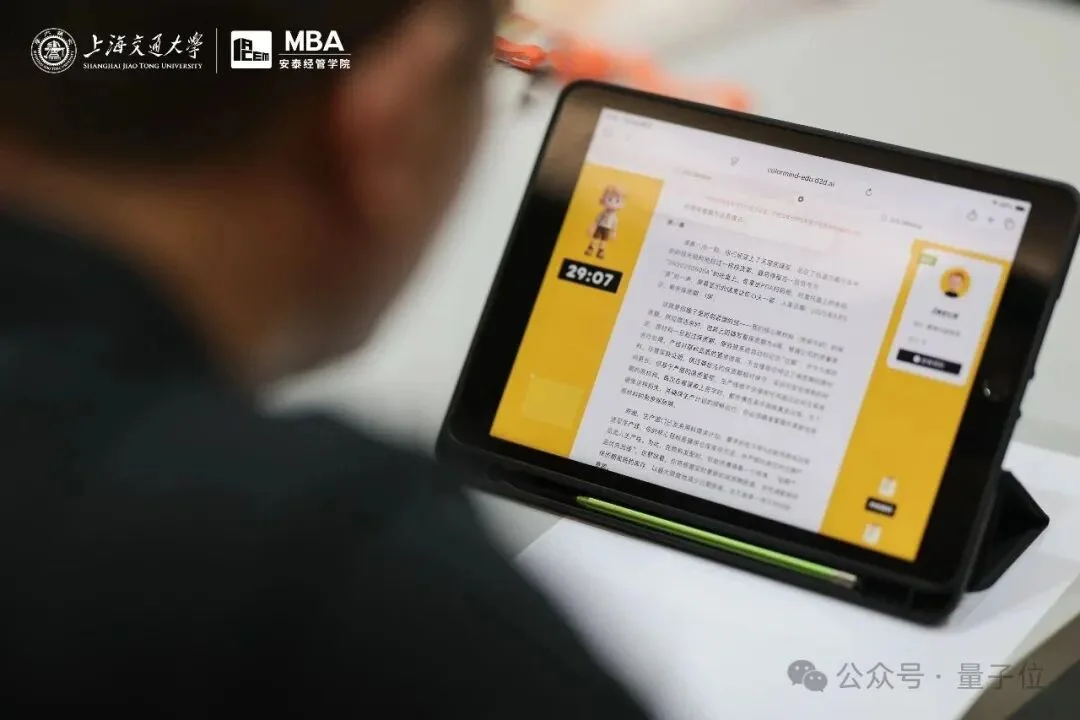
Participants assumed diverse functional roles and leveraged large language models (LLMs) and optimization algorithms to make three iterative decisions—balancing cost, speed, risk, and value across rounds.
Here’s the paradox: The more powerful the tools became, the sharper the managerial questions emerged.
Computing the optimal solution is one thing. Turning it into an executable, accountable, organization-wide decision is entirely another.
This shift signals a deeper talent transformation underway—as AI moves from pilot experiments into core business operations.
As AI Grows Stronger, Companies Pay Premiums for a New Kind of Competency
Consider the data:
- According to McKinsey’s 2025 Global AI Survey, 88% of organizations now use AI in at least one business function.
- Yet only 7% have achieved enterprise-wide, scalable AI deployment.
There’s a widening gap between using AI and mastering AI.
Historically, AI conversations centered on model parameters, inference latency, or cloud costs. Today, executives ask fundamentally different questions:
- Can this Agent integrate seamlessly into our existing workflows?
- Will this intelligent system improve measurable business KPIs?
- Does this technically impressive AI solution deliver sustainable commercial return?
That pivot is redefining technical talent value.
A telling trend is the rise of the FDE — Forward Deployed Engineer.
Unlike traditional engineers who build in isolation, FDEs embed directly with clients—translating business constraints into deployable AI solutions. They must speak both “engineering” and “operations,” understand regulatory nuance, and navigate organizational politics.
In short: Enterprises no longer just need people who build technology—they need people who deploy, adapt, and own outcomes.
FDEs represent only the first wave. Looking ahead, AI’s integration into business systems demands leadership capable of:
– Restructuring teams and reporting lines,
– Reallocating capital and talent,
– Rethinking strategy and competitive positioning,
– And ultimately—reimagining entire business models.
Who determines whether an AI initiative merits investment? How do we reskill displaced roles? What governance ensures human-AI collaboration is ethical and effective? Where do we balance short-term efficiency against long-term resilience?
These aren’t algorithmic problems. They’re judgment-intensive, context-rich, multi-stakeholder challenges—requiring synthesis across technology, economics, ethics, and human behavior.
Hence, the new premium isn’t raw coding skill—it’s the ability to frame the right problem, orchestrate cross-disciplinary resources, and create durable business value.
Rethinking the Business School’s Role in the AI Age
A paradigm shift is unfolding at Shanghai Jiao Tong University (SJTU) Antai College of Economics & Management.
On July 29, 2026, Antai launched its “Antai Declaration on AI-Era Business Education”—a systemic response to AI’s disruption of management learning.
A cornerstone principle stands out: “Humans remain the ultimate agents of judgment and accountability.”
This is far more than a philosophical stance. When AI rapidly synthesizes market reports, financial forecasts, or strategic alternatives—traditional pedagogies built around knowledge acquisition and case-based problem-solving face existential pressure.
If AI delivers polished analyses in seconds, what unique value does a business school offer?
Antai’s answer: Shift from teaching what to know and how to solve, to cultivating how to think:
– Problem definition — Identifying what truly matters amid noise,
– Independent reasoning — Challenging assumptions and probing causality,
– Cross-domain integration — Bridging tech, finance, policy, and culture,
– Value-based judgment — Weighing trade-offs where data alone is insufficient.
This aligns with Dean Fangruo Chen’s vision: Professors are no longer just knowledge transmitters—but coaches in complexity, guiding students through unscripted, high-stakes dilemmas.
Antai didn’t start here in 2026. Its AI-focused MBA track launched in 2020. But today’s evolution transcends adding elective courses.
On August 16, 2026, Antai unveiled its “Five-Chain Talent Development Framework”, designed to interconnect five critical dimensions:
| Chain | Purpose |
|---|---|
| Link Intelligence | Equip leaders with AI literacy—understanding architecture, limits, and ethical boundaries |
| Link Innovation & Entrepreneurship | Bridge frontier research with startup execution and venture building |
| Link Industry | Embed learning within live corporate environments—not abstract theory |
| Link Global | Foster cross-border strategic fluency and cultural agility |
| Link SJTU | Leverage Shanghai Jiao Tong’s strengths in engineering, AI, and interdisciplinary research |
The underlying logic is clear: Future business leaders cannot be trained solely inside classrooms. Real-world problems defy disciplinary silos.
- Smart manufacturing requires expertise in robotics and supply-chain design and change management.
- AI startups demand alignment of product development, GTM strategy, funding mechanics, and regulatory compliance.
- Global expansion involves geopolitical risk assessment, localization engineering, and multinational team leadership.
To solve such problems, Antai must dissolve its own walls—collaborating with labs, factories, incubators, and global partners.
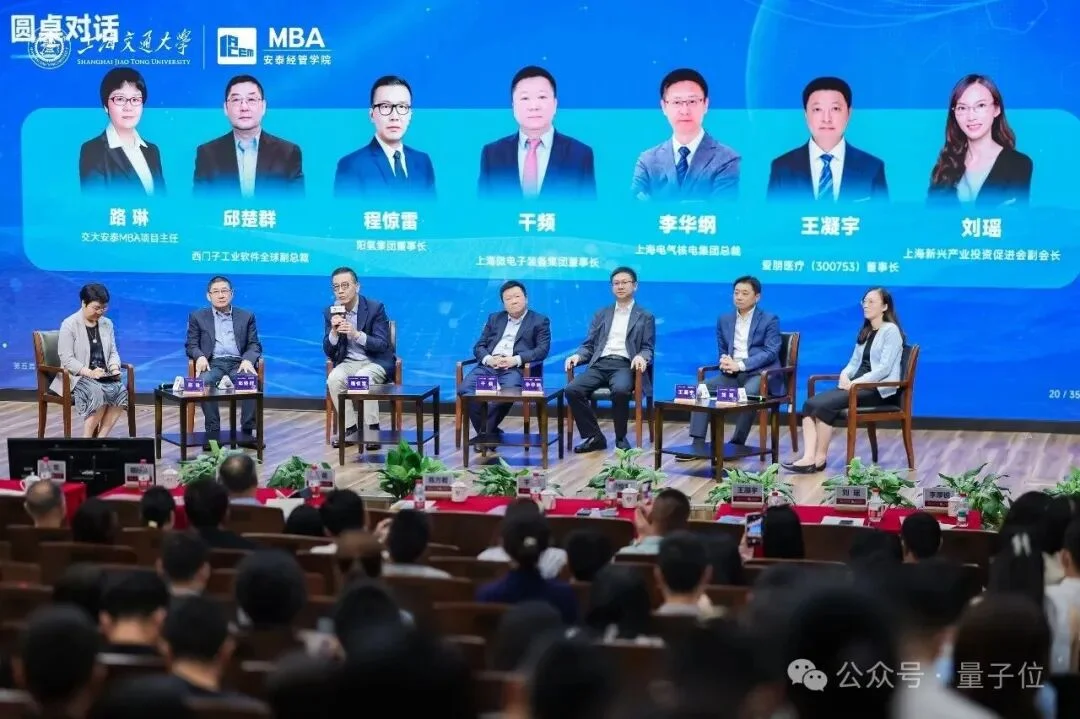
1,000 Real-World AI Scenarios: From Theory to Tangible Impact
Ideas require implementation. In 2026, Antai announced its “10×100 AI Scenario Co-Creation Initiative”: A decade-long commitment to develop 1,000 industry-specific, production-grade AI use cases—jointly with enterprises across sectors.
This isn’t about hypothetical exercises. It’s about making live business challenges the starting point for learning.
Traditional case studies analyze past decisions. In fast-moving AI domains, many questions have no precedent:
- How should a manufacturer redesign its AI-powered production line?
- Which customer service processes should an Agent automate—and which require human empathy?
- How does a deep-tech startup transition from prototype to revenue-generating product?
If these unsolved problems enter the curriculum, students evolve from passive analysts into active co-creators.
To enable this, SJTU launched the AI-Era Business Education Alliance, uniting industry associations, research institutes, and academic departments to align curricula, data access, mentorship, and evaluation standards.
Early progress includes:
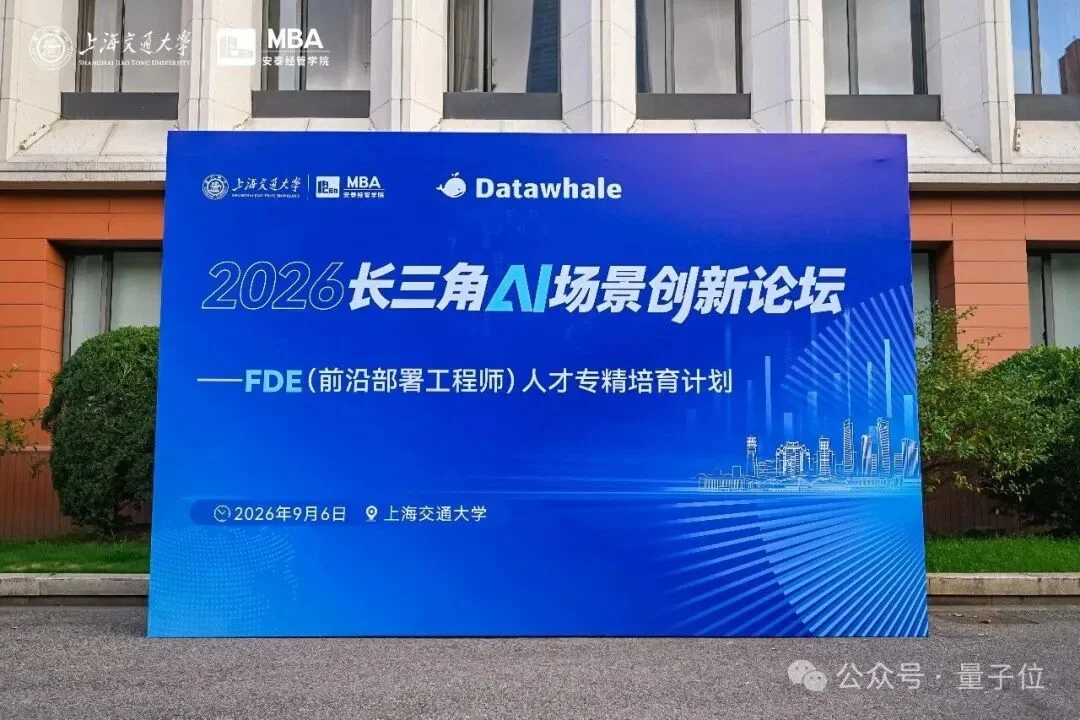
– September 6, 2026: Release of the inaugural “100 AI Scenario Blueprint” and ecosystem partners,
– Strategic partnership with open-source AI community Datawhale,
– Launch of the FDE Specialization Program, including hands-on “AI+X” labs and certification pathways.
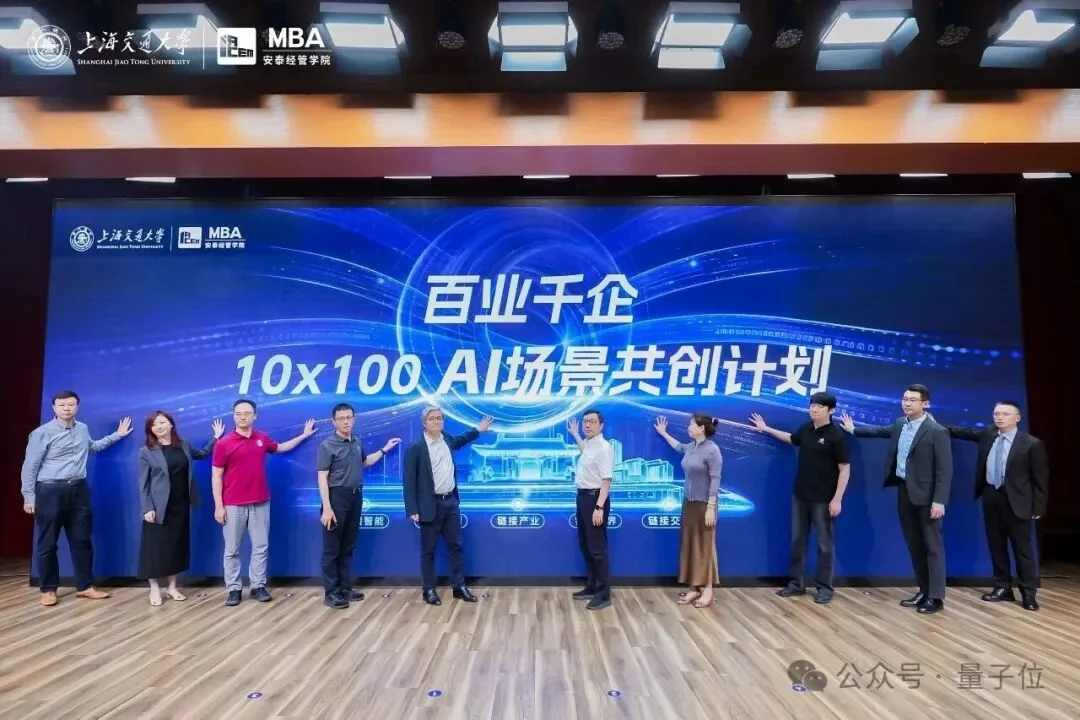
Crucially, Antai identifies three core capability pillars:
🔹 AI4O — AI for Operations
Focus: Using AI to understand, simulate, and optimize end-to-end business operations—turning insights into measurable efficiency and value.
🔹 FDE — Forward Deployed Engineering
Focus: Translating business needs into robust, validated, field-deployable AI systems—working shoulder-to-shoulder with stakeholders.
🔹 OPC — One-Person Company
Focus: Empowering individuals to launch and scale AI-native ventures—owning product, go-to-market, monetization, and operations end-to-end.
All three converge on one mission: How does AI create real business value—not just technical novelty?
From factory floors to boardrooms to founder journeys—the new leader must operate across all three layers.
A Systemic Upgrade: From Curriculum to Capability Architecture
True adaptation demands more than new course titles.
For the Class of 2027, Antai implemented foundational reforms:
- Standardized 2-year program, with 40–50 flexible credit hours,
- Minimum 25% of total instruction dedicated to experiential learning (client projects, simulations, field labs),
- Modular delivery: Weekend classes for part-time MBAs; intensive monthly blocks for full-time CLGO students.
These changes reflect a deeper insight: Professionals don’t need to pause careers for static knowledge dumps. They need just-in-time, context-aware capability building—where classroom insights immediately inform real work—and workplace challenges feed back into learning.
Specialized tracks further tailor development:
– AI MBA: Deep integration of AI strategy, governance, and product thinking,
– Tech Finance MBA: Linking innovation cycles with capital allocation and valuation,
– CLGO: Cross-disciplinary training in engineering + operations + leadership,
– IMBA: Global strategy, international law, and multicultural leadership.
Underpinning all tracks: Antai’s expanding ecosystem of intelligence, innovation, industry, and global partnerships.
Ultimately, these structural shifts signify a philosophical turn:
MBA education is evolving—from knowledge transfer toward continuous, context-anchored capability formation.
Success won’t be measured by exam scores—but by whether graduates can:
– Spot high-impact business problems others overlook,
– Mobilize diverse talent to co-develop solutions,
– And convert technical prototypes into tangible commercial results.
That kind of mastery isn’t taught. It’s forged—through repeated practice, reflection, iteration, and real-world accountability.
The Most稀缺 Resource in the AI Era? People Who Define Problems
Return to the opening question:
As AI grows stronger—what do future business leaders actually do?
Perhaps the answer lies in that July practicum.
When models process terabytes and output dozens of options—human leadership centers on:
– Identifying the true objective,
– Interpreting hidden costs and second-order effects,
– Making deliberate choices amid uncertainty,
– And securing organizational buy-in and execution.
Technology defines what’s possible. Judgment defines what’s desirable—and why.
Today, AI lowers barriers to coding, content creation, design, and even entrepreneurship.
But low barriers ≠ low complexity.
As AI democratizes production, the premium rises on:
– Understanding nuanced human needs,
– Building trust across functions and cultures,
– Navigating ethical gray zones,
– And accepting ownership of outcomes.
For technologists: Career growth may mean shifting from solving technical puzzles → defining business problems → orchestrating entire industry ecosystems.
For managers: AI is no longer an “IT topic.” It’s the new grammar of business—essential for interpreting competition, allocating resources, and leading transformation.
This is the mission Antai’s reforms confront head-on.
From its AI Declaration to Five-Chain Framework, from 1,000 scenario co-creation to AI+X labs, and from credit-hour redesign to cohort-specific delivery—the goal is singular:
To cultivate leaders who are equally fluent in silicon and strategy—who ground innovation in real human needs, and who take unambiguous responsibility for consequences.
AI generates ever-more answers.
But the enduring human role remains unchanged:
✅ Asking the right questions,
✅ Choosing the right direction,
✅ And standing accountable for the result.
That isn’t just the core value of business education in the AI era.
It’s the irreplaceable essence of leadership itself.
Source: QuantumBit, author Yun Zhong