AI Billing Scandal: $1.7M Overcharged, Anthropic Refunds Without Admission
AI boosts productivity — but its invoices are becoming increasingly opaque, prompting a new wave of third-party auditing.
📉 $1.7 Million in Questionable Charges Uncovered
Michael Hahn — former Oracle Director and founder of Vaudit, an AI billing audit firm — has exposed systemic overcharging across enterprise AI usage. His team audited 60 companies and $34 million in AI invoices, primarily for Claude Code services, identifying approximately $1.7 million in erroneous charges.
Major enterprises implicated include Panasonic, HP, and Honda — all reporting unexpected spikes in AI-related spend despite no corresponding increase in usage or headcount.
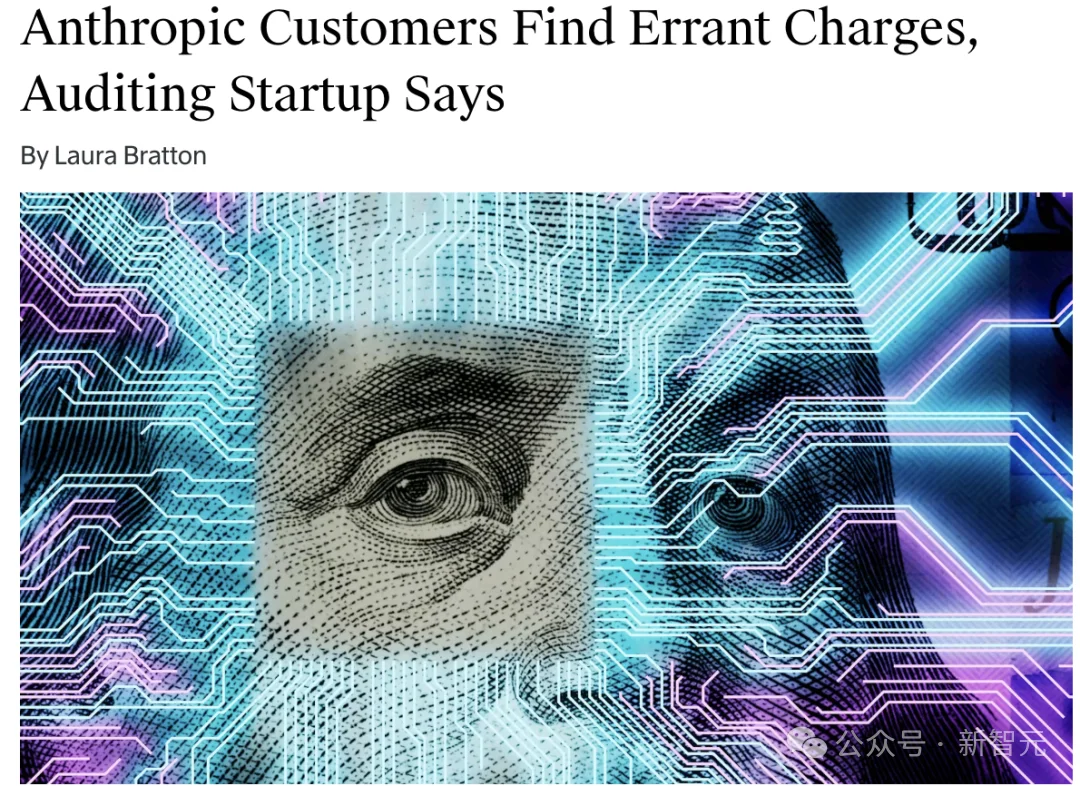
The Information reports Vaudit’s discovery of ~$1.7M in disputed Claude-related charges.
⚖️ The “Refund Without Admission” Dilemma
When confronted, major AI providers responded with notable defensiveness:
- Anthropic stated it does not charge for failed requests or model routing errors, calling overbilling “not a widespread phenomenon.”
- OpenAI asserted: “No evidence suggests these issues occurred on our platform.”
Yet — critically — ~80% of contested charges were refunded by Anthropic, OpenAI, Amazon, Google, and Microsoft after joint customer-Vaudit appeals.
Hahn observed a paradox: “They refund quickly — but refuse to acknowledge systemic flaws.”
This creates a troubling precedent: financial correction without transparency or accountability.
🔍 How the $1.7M Was “Overcharged”: Three Hidden Patterns
Vaudit identified three recurring, non-obvious billing anomalies — all buried deep in token-level logs and rarely reviewed manually:
1. Model Misattribution
Customers used cheaper, legacy models (e.g., claude-3-haiku), but were billed at premium-tier rates (claude-3-sonnet or opus).
Like booking economy class — and being charged first-class.
2. Charging for Failures
API timeouts, parsing errors, and outright model failures — all triggered billing, despite zero successful output.
3. Retry Storms (Most Dangerous)
Autonomous AI agents silently re-attempt failed tasks — sometimes hundreds of times — burning tokens invisibly in the background. Users remain unaware until month-end invoices arrive.

Unmonitored agent retries compound costs exponentially — with no user intervention.
💡 Unlike traditional SaaS, where users control each action, AI agents operate outside human supervision — turning cost visibility into a critical blind spot.
🧩 Why AI Invoices Are Fundamentally Opaque
AI billing is inherently volatile and hard to predict because:
- It’s token-based, not request- or time-based — and tokens vary wildly based on prompt length, model choice, and agent orchestration.
- No unified dashboard exists across cloud infra, SDKs, and model APIs to trace token origin or allocation.
- As AI shifts toward agentic workflows, one user-initiated task may trigger dozens of internal LLM calls — each billed separately.
- Billing layers stack: Model provider → Cloud vendor → Middleware SDK → Enterprise abstraction layer. Each adds opacity.

Multi-layered billing chains obscure cost attribution — even for technical teams.
⚖️ Legal Fallout: Anthropic Faces Class-Action Suit
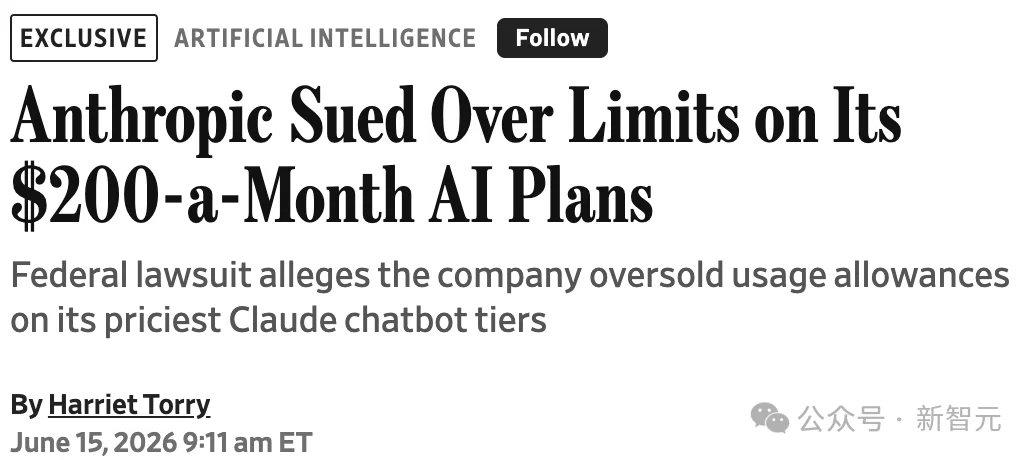
Just weeks before Vaudit’s report, Karl Kahn filed a federal lawsuit against Anthropic (June 15, 2026), alleging misrepresentation of subscription tiers:
- Claude Pro Max 20x ($200/month) promised 20× usage quota vs. base Pro.
- In practice, Kahn exhausted 15% of his weekly limit in just 5 hours, forcing him to choose between halting work, rationing usage, or paying extra.
The suit cites internal Anthropic emails (July 2025) that quantified tiered quotas — contradicting actual delivery. It seeks class-action status for all purchasers since April 2025.
🛠️ Vaudit: A New Profession Emerges — The AI “Bill Auditor”
Founded in 2023, Vaudit employs ~30 experts in infrastructure cost auditing — now pivoted to AI. Its workflow:
✅ Install lightweight SDK into client’s AI environment
✅ Capture raw token, model, and request metadata in real time
✅ Cross-check against invoices line-by-line
✅ File disputes — with 1% audit fee + 30% success fee on recovered funds

Vaudit states it has audited >$1B in AI spend — recovering millions for clients.
This isn’t just accounting — it’s AI financial governance. And as Anthropic and OpenAI race toward IPOs, regulatory scrutiny on pricing integrity is inevitable.
🌐 The Bigger Picture: Transparency Is the Next AI Battleground
As AI moves from novelty to mission-critical infrastructure, billing clarity is no longer optional — it’s foundational to trust, compliance, and ROI.
Enterprises now face a stark question:
Who’s watching your AI spend — when even the vendors won’t explain it?
With AI costs projected to grow 300% by 2027 (McKinsey), third-party bill auditors like Vaudit may soon be as standard as SOC 2 assessors — marking the rise of the AI-era “Tax Accountant.”
Source: The Information – Applied AI Newsletter
Originally published by Xin Zhixuan (New Intelligence Era)