🌐 a16z Deep Dive: Consumer AI in 2025 — Winners, Gaps, and the 2026 Inflection Point
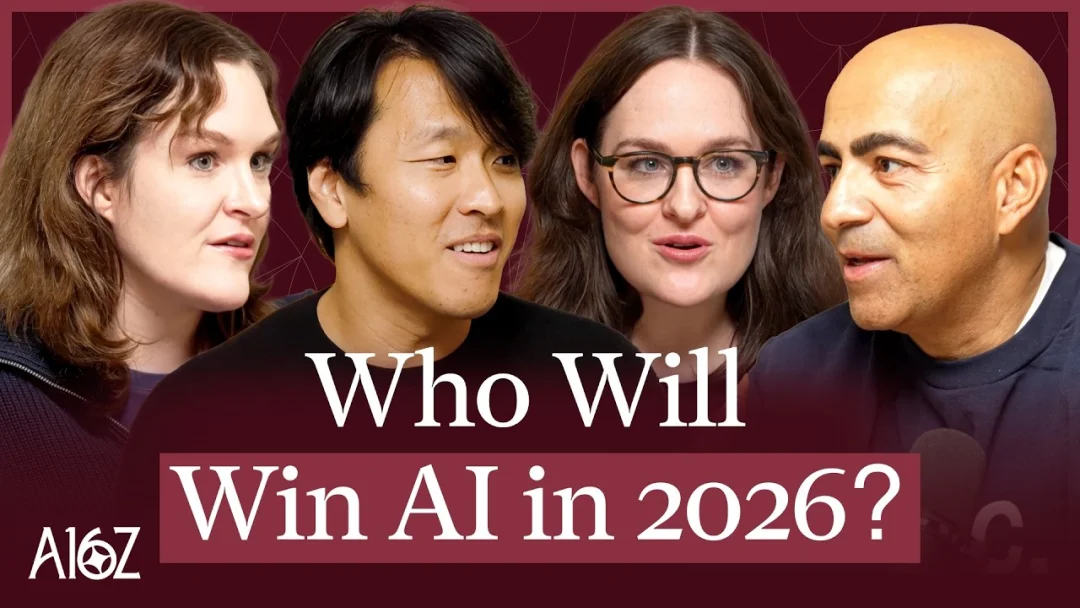
Source: a16z
🔑 Executive Highlights
-
Winner-Takes-Most Trend: In the general-purpose LLM assistant market (ChatGPT, Gemini, Claude 3, Cursor), only 9% of users pay for more than one product — signaling strong consolidation toward dominant players.
-
Multimodal Leap: Image and video generation models achieved breakthroughs in both realism (physically coherent details) and reasoning (multi-input synthesis, e.g., text + reference images → consistent design).
-
The Social Gap: True AI-native social apps remain elusive — not due to tech limits, but because core user motivations (self-expression vs. status anxiety) are undermined when content is AI-generated and lacks authentic personal identity.
-
Product Truth: A successful social platform must deliver irreplaceable native content — like TikTok’s short-form video or YouTube’s long-form — not just repackaged outputs from elsewhere.
-
2026 Catalysts: Multimodal foundation models (“any input → any output”) and application-generation tooling will empower startups to build differentiated, scalable consumer AI apps — bypassing the “winner-takes-all” bottleneck.
📈 Market Landscape: Consolidation & Competition
“ChatGPT is the Kleenex of AI — it’s become synonymous with the category.” — Olivia Moore, a16z
- Leadership Metrics:
- ChatGPT: ~850M weekly active users; Gemini desktop reach ≈ 35% of ChatGPT’s web traffic, mobile ≈ 40%.
-
Growth divergence: Gemini’s desktop users surged +155% YoY, while ChatGPT grew +23% — highlighting rapid competitive momentum.
-
Emerging Forces:
- Nano Banana Pro (Google): Integrates real-time web search into image generation — pulling accurate company logos, branding, and contextual visuals directly into outputs.
- VO3/VO3.1 (Google): Pioneered audio-video fusion, sparking viral AI video trends before Sora’s mainstream launch.
-
Sora 2 (OpenAI): TikTok-style feed of AI videos with “friend cameo” effects — strong creator traction externally, but weak in-app engagement.
-
Strategic Divide:
- OpenAI: Embeds features into ChatGPT (Pulse, shopping, research); Sora remains standalone.
- Google: Launches independent, purpose-built tools (Stitch, Gems, Opal, Doppel) — enabling tailored UX beyond text-in/image-out.
🧠 Product Design: Where Details Decide Adoption
✅ Winning Patterns
- TikTok-style onboarding: ChatGPT’s image UI surfaces trending styles (“hand-drawn”, “cyberpunk”) and offers one-click remix — lowering entry friction.
- Consistency as superpower: ChatGPT’s image model preserves character appearance and art style across generations — fueling storyboarding and iterative creation.
- Agent-augmented workflows: Perplexity’s Comet browser supports custom triggers (e.g., auto-summarize pages visited on Tuesdays) — blending automation with user intent.
⚠️ Persistent Gaps
- Pulse & Connectors: OpenAI’s calendar/email integration promises proactive life assistance — but reliability remains low. High-frequency usage (24x/week) provides fertile ground for future “push-first” utility.
- Claude’s Hidden Gems: File analysis, slide generation, and
artifacts/skillsexist — but buried in nested menus. Tech-savvy users love them; mass adoption awaits intuitive UX.
🤝 Social AI: Why It’s Harder Than It Looks
❌ Why ChatGPT’s Group Chats Fall Short
- Motivational mismatch: ChatGPT fulfills “help me be better” (productivity). Social apps fulfill “make me feel seen” (status, belonging, humor).
- Collaborative ≠ Social: Planning a trip with friends is functional — not inherently social. Real social value emerges from shared identity, inside jokes, and cultural resonance — not task coordination.
✅ What Could Work
- Sora 2’s “humor-first” angle: Prompt engineering + cultural literacy → viral memes → new status economy (“Who wrote the funniest prompt?”).
- CapCut analogy: Sora isn’t competing with TikTok — it’s competing with creative tooling. Its strength lies in accelerating production, not sustaining feeds.
“A successful social product must balance creation and consumption — with content that can’t live anywhere else.”
🚀 2026 Outlook: Opportunity Windows for Startups
| Trend | Why It Matters | Startup Edge |
|---|---|---|
| Application Generation | Headlabs focus on SDKs & app directories — but lack risk appetite for bold UX bets. | Founders can build vertical-first tools (e.g., legal doc generator with embedded e-signature + compliance checks) — impossible for generalist platforms. |
| Multimodal Fusion | “Any input → any output”: Video + text → edited video; audio + image → animated explainer. | Enables domain-specific interfaces: medical imaging annotation, architectural walkthroughs, education simulations. |
| Prosumer Focus | 99% of users won’t use calendars daily — but professionals will adopt AI co-pilots for complex, high-stakes workflows. | Tools like Gamma (slides), Granola (context-aware notes), and Krea (model-agnostic multimodal canvas) thrive here. |
| Revenue Innovation | >100% revenue retention via hybrid pricing (subscription + token top-ups) proves monetization viability. | Startups can prioritize value over virality — targeting niche buyers willing to pay for precision, not scale. |
💡 Recommended Tools (Q4 2025)
- For Creators: Krea — Unified interface for Nano Banana Pro, Flux, and more — with element saving for style/character consistency.
- For Professionals: Comet Browser — AI-native work OS with customizable agent triggers and context-aware summarization.
- For Developers: Wabby — Application generator enforcing functional constraints — avoiding “demo-ware” pitfalls.
- For Audio Consumers: 11 Labs Reader — Converts articles/PDFs to natural-sounding audio — perfect for learning on-the-go.
“The model race is over. The product race has just begun.”
— Justine Moore, a16z
Original source: Where does consumer AI stand at the end of 2025? | Translation: Yihan Bi | Published by Z Potentials