SK Hynix IPO Breaks Records Amid AI Memory Boom
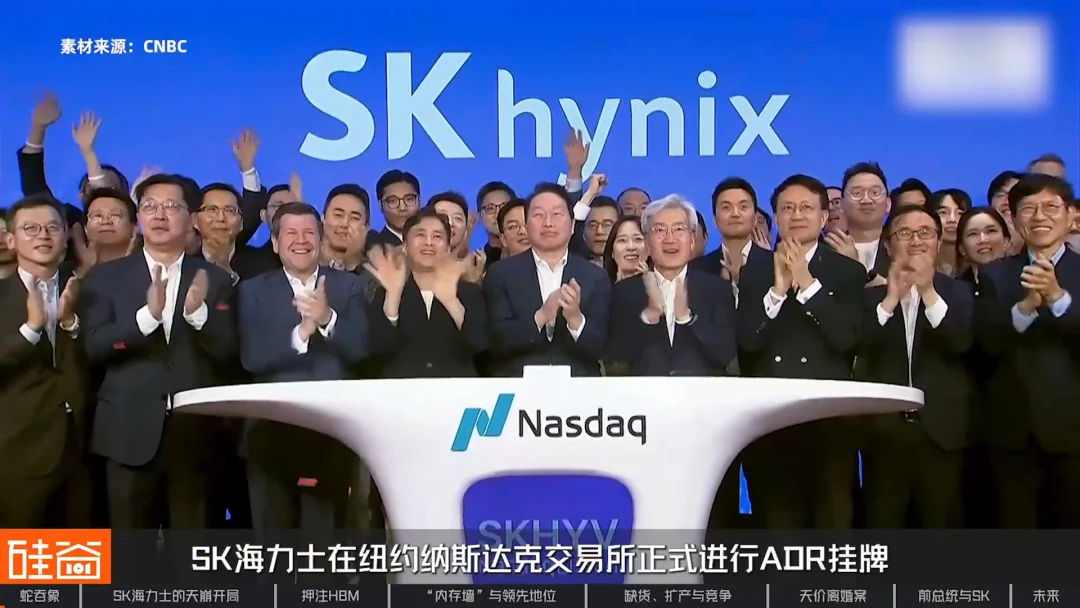
On July 10, South Korean memory giant SK Hynix officially listed its American Depositary Receipts (ADRs) on the NASDAQ — marking a historic milestone. The offering raised $26.5 billion, shattering Alibaba’s decade-old record for overseas fundraising by a non-U.S. company and ranking as the second-largest stock issuance in U.S. history. Its market capitalization surged past $1 trillion, cementing its status as a cornerstone of global AI infrastructure.
💡 When you control the bottleneck — you control the future.
In Korea, wearing an SK Hynix uniform now grants VIP treatment at luxury boutiques and even matchmaking events.
📈 Market Impact & Supply Chain Ripples
HBM-driven price surges have rippled across consumer electronics: smartphones, tablets, laptops, and gaming consoles are all facing sharp price hikes — prompting class-action lawsuits from frustrated consumers.
Meanwhile, NVIDIA CEO Jensen Huang visited Seoul four times in six months — meeting SK Hynix Chairman Chey Tae-won repeatedly — underscoring the strategic symbiosis between GPU architecture and memory innovation.
🧱 From Textiles to Tech Titan: The SK Group Origin Story

- 1953: Founded as Sunkyong Textile, operating with just a handful of war-salvaged looms.
- 1980: Acquired Korean National Oil Corporation — a state monopoly — catapulting SK into energy dominance.
- 1994: Bought Korea Mobile Telecom, gaining sole nationwide cellular network rights.
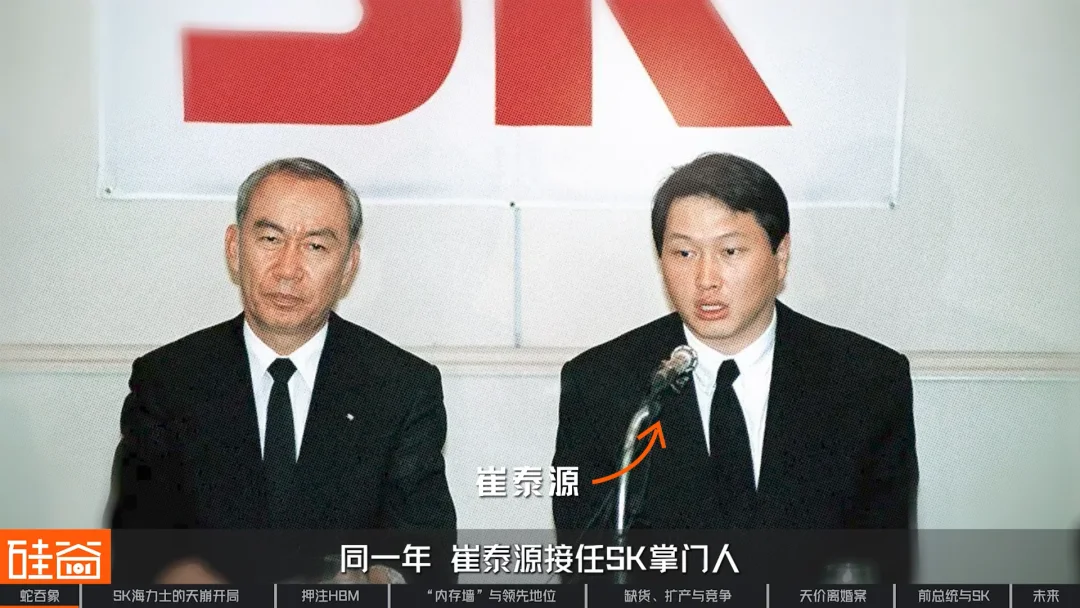
- 1998: Rebranded as SK Group, with Chey Tae-won assuming leadership — a role he holds today.
🔍 Analogy: This is akin to a Chinese textile firm acquiring both PetroChina and China Mobile — enabled by unparalleled political alignment.
⚙️ The Birth of HBM: How Two “Second Place” Players Changed Everything
In 2013, SK Hynix — perennially behind Samsung — partnered with AMD (also second-tier in GPUs) to co-develop HBM1, the world’s first High Bandwidth Memory. Though initially unprofitable in consumer graphics, HBM proved transformative in data centers.
- 2016: NVIDIA’s Tesla P100 confirmed HBM’s superiority for parallel compute workloads.
- 2022: SK Hynix mass-produced HBM3, powering NVIDIA’s H100 — becoming the de facto exclusive supplier during peak AI training demand.
- 2024: Launched HBM3E, shipping to H200 and B200 platforms — with deep joint engineering ties to NVIDIA across Vera Rubin and Jetson Thor.
✅ Why HBM dominates: It solves the “memory wall” — the decades-old bottleneck where data transfer speed lags far behind compute growth (per seminal 1994 UVA paper “Hitting the Memory Wall”).
🔬 HBM Technology Deep Dive: Three Pillars of Performance
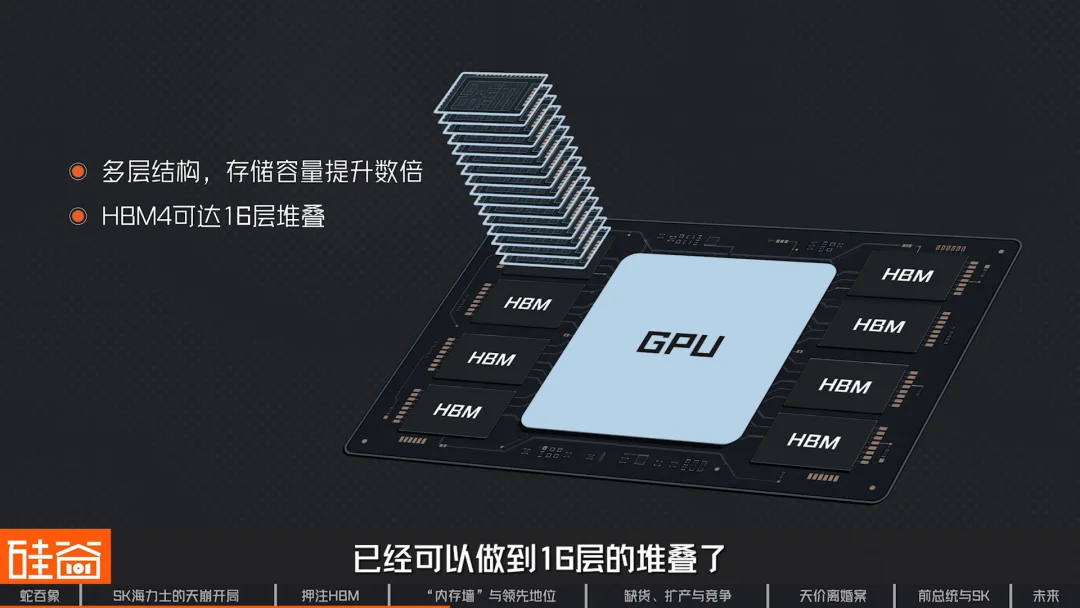
1. 3D Stacking
Vertical layering — up to 16 layers in HBM4 — multiplies bandwidth without expanding footprint.
2. Through-Silicon Vias (TSV)
Thousands of microscopic copper “elevators” drilled through silicon wafers — enabling direct vertical interconnects.
3. Mass Reflow Molded Underfill (MR-MUF)
SK Hynix’s proprietary process: simultaneous bonding + epoxy encapsulation for superior thermal dissipation and mechanical stability.
| Feature | SK Hynix (MR-MUF) | Samsung (TC-NCF) |
|---|---|---|
| Thermal Conductivity | ✅ 4× more heat-dissipating bumps | ❌ Limited by polymer film |
| Scalability to 16L+ | ✅ Proven in HBM4/HBM4E | ⚠️ Yield drops sharply |
| Time-to-Market | ✅ Single-step formation | ⚠️ Layer-by-layer pressure tuning |
This manufacturing edge enabled SK Hynix to outpace rivals in certification, volume ramp, and reliability — locking in NVIDIA’s primary supply chain.
📊 Business Breakdown: DRAM Dominance, HBM Ascendancy
- Q1 2026 Revenue: ₩52.58 trillion KRW — first time exceeding ₩50T.
- Product Mix:
- DRAM: ~78% — includes both legacy DDR/LPDDR and HBM.
- NAND: ~21% — rapidly shifting toward enterprise SSDs (+70% ASP growth).
- HBM-specific revenue: Now >40% of total — nearing half of DRAM segment.
Dual-Track HBM Strategy
- Standard HBM: Generational roadmap (HBM4 → HBM4E → HBM5), targeting NVIDIA/AMD.
- Custom HBM: Base die re-engineering for cloud AI chips (Google TPU, AWS Trainium, Broadcom ASICs) — launching 2027.
🏭 Capacity Crunch & Global Expansion
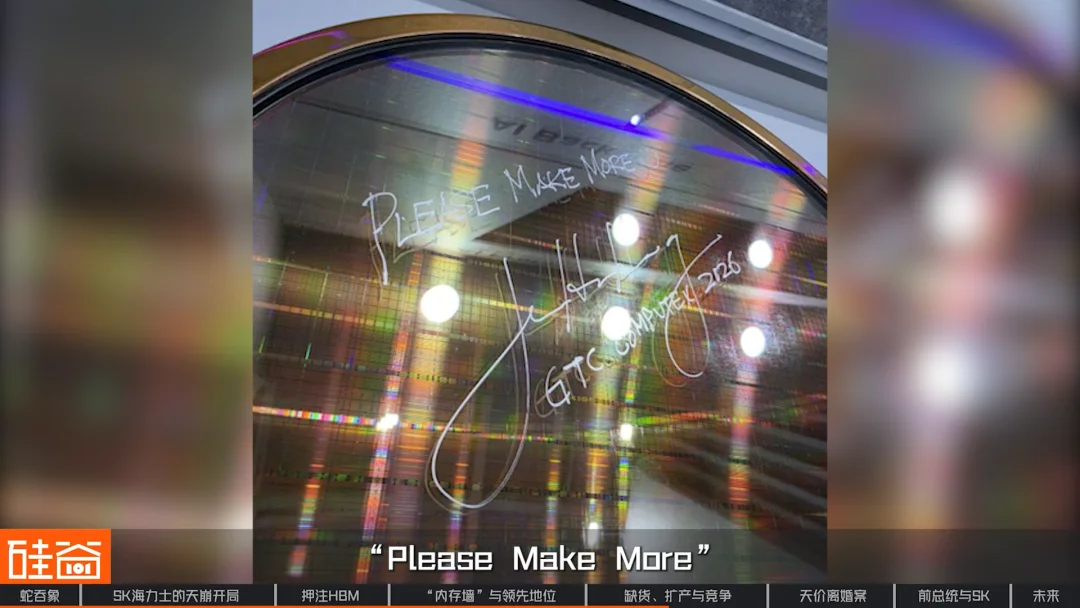
- 2026 HBM capacity: Fully booked — orders extend into 2027+.
- Production sacrifice: Each HBM wafer displaces three standard DRAM wafers, worsening overall memory shortages.
- Expansion Plan:
- 🇰🇷 Cheongju M15X: Full production late 2026; P&T7 advanced packaging plant by end-2027.
- 🇰🇷 Yongin Cluster: Four massive fabs — future hub for HBM4E/HBM5.
- 🇺🇸 Indiana Advanced Packaging: Operational mid-2028 — supporting U.S.-centric AI supply chains.
⏳ Timeline reality: New fab output won’t meaningfully ease bottlenecks until 2028.
🥊 Competitive Landscape: The HBM Triopoly
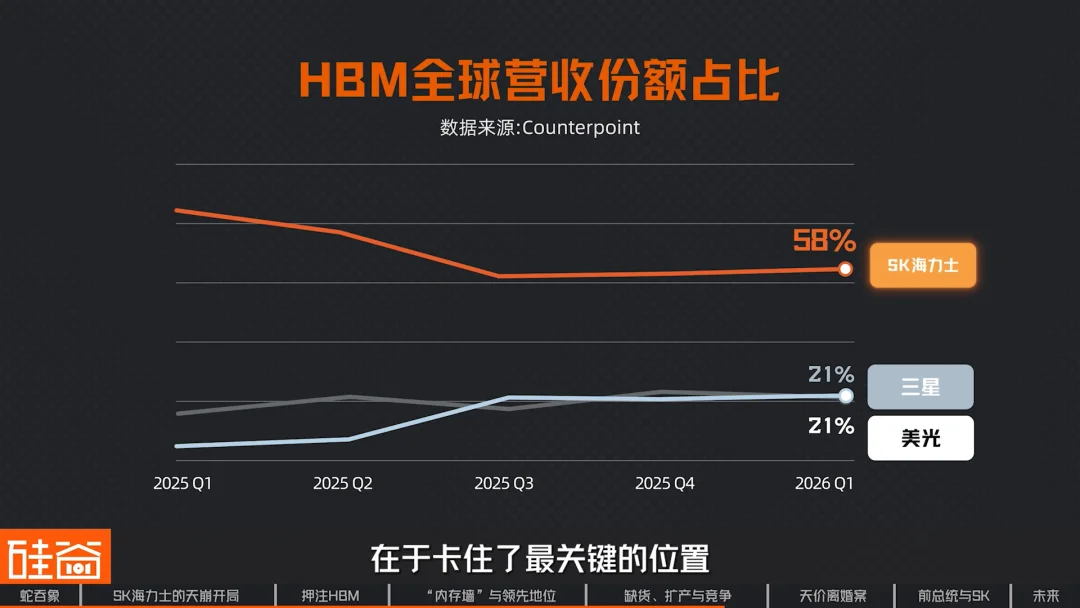
| Player | 2024 Q1 Share | Strengths | Challenges |
|---|---|---|---|
| SK Hynix | 58% | Best yield, fastest certification, NVIDIA integration | Narrowing lead; legal overhang (divorce case) |
| Samsung | 21% | Largest capacity, full vertical stack, HBM5 prototype | Delayed NVIDIA validation; TC-NCF scalability limits |
| Micron | 21% | U.S. policy tailwind (CHIPS Act), EUV-first HBM4E | Smallest scale; slower ramp; geopolitical risk diversification |
The race has evolved from “who can make it?” to “who sets the next spec?” — with pricing power now central.
🎭 Behind the Chip: The Chaotic Legacy of Power & Politics
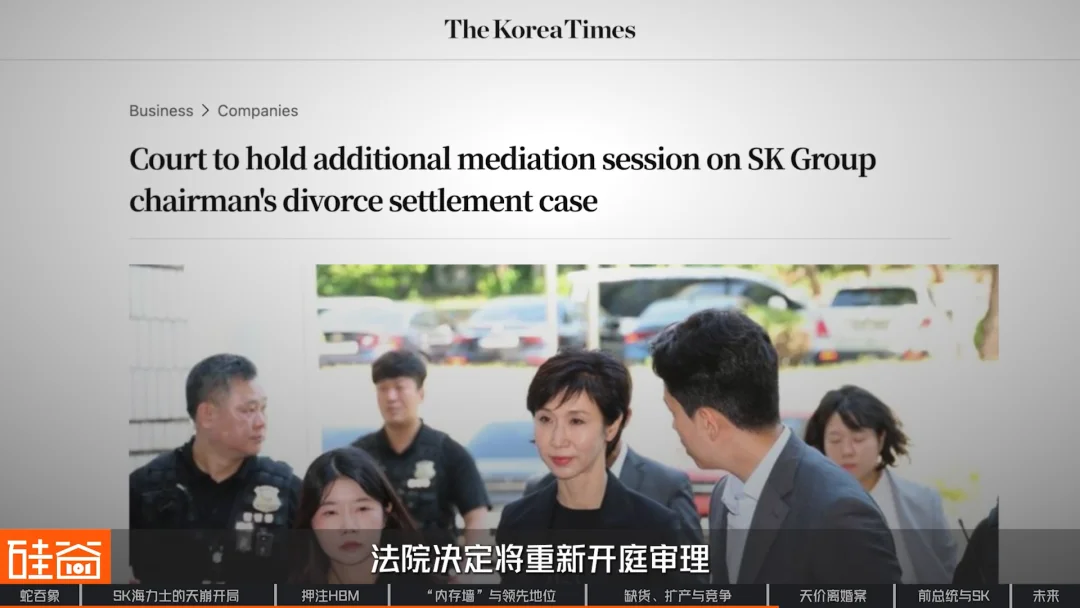
The rise of SK Hynix is inseparable from Korea’s intertwined business-political ecosystem:
- Chey Tae-won (Chairman) married Roh Soo-young, daughter of former President Roh Tae-woo — whose influence allegedly facilitated SK’s acquisitions of Korea’s national oil and telecom monopolies in the 1980s–90s.
- 2015: Chey publicly admitted extramarital affair — sparking an 8-year divorce battle now reaching Korea’s Supreme Court.
- 2024 Ruling: Court awarded Roh ₩1.3808 trillion (~$630M) — citing her father’s “political capital” as co-contributor to SK’s valuation.
- 2025 Reversal: Supreme Court voided asset split — declaring alleged secret funds illegal, thus non-divisible.
🌐 The irony: Today’s AI bottleneck — HBM — traces back to decisions made under military rule, brokered by intelligence chiefs and presidential families.
🔮 Final Perspective: Is This Cycle Different?
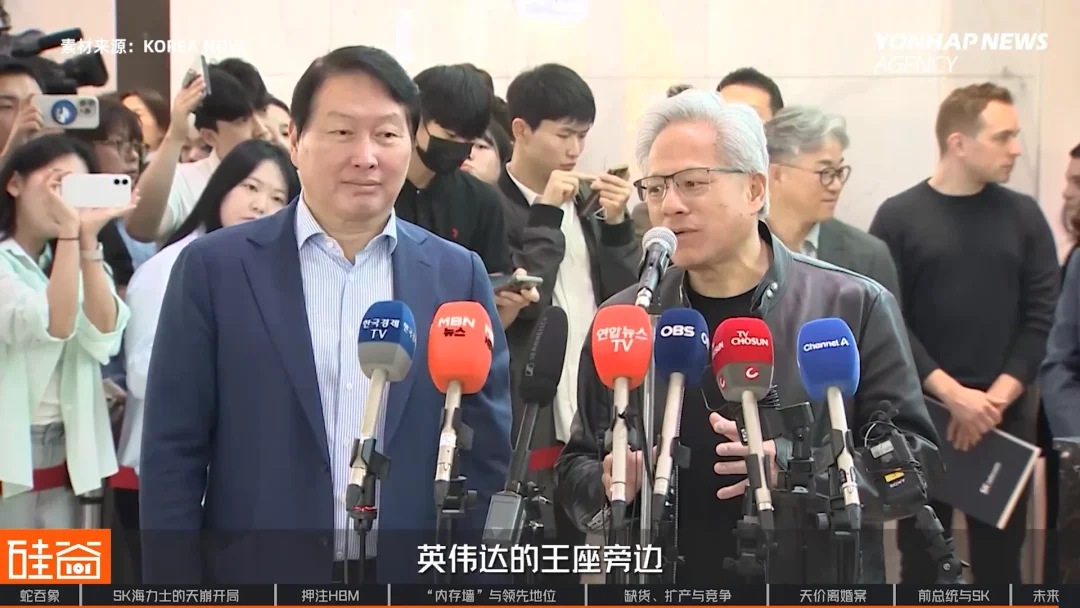
Investors treat SK Hynix as the monopolistic gateway to AI infrastructure. But history warns: memory markets are cyclical. Past “this time is different” narratives followed internet bubbles, financial crises, and smartphone saturation.
Yet AI introduces unprecedented variables:
– Demand elasticity: Every LLM inference consumes memory relentlessly.
– Architecture lock-in: Switching HBM suppliers requires full GPU redesign + packaging revalidation.
– Geopolitical urgency: U.S., Korea, and EU all prioritize domestic HBM sovereignty.
Whether SK Hynix sustains its dominance depends not just on technology — but on execution, diplomacy, and how long “AI demand” truly outpaces Moore’s Law’s diminishing returns.
Article sourced from “Silicon Valley 101” — adapted for global AI infrastructure reporting.