Paperboy Redefines Human-AI Collaboration
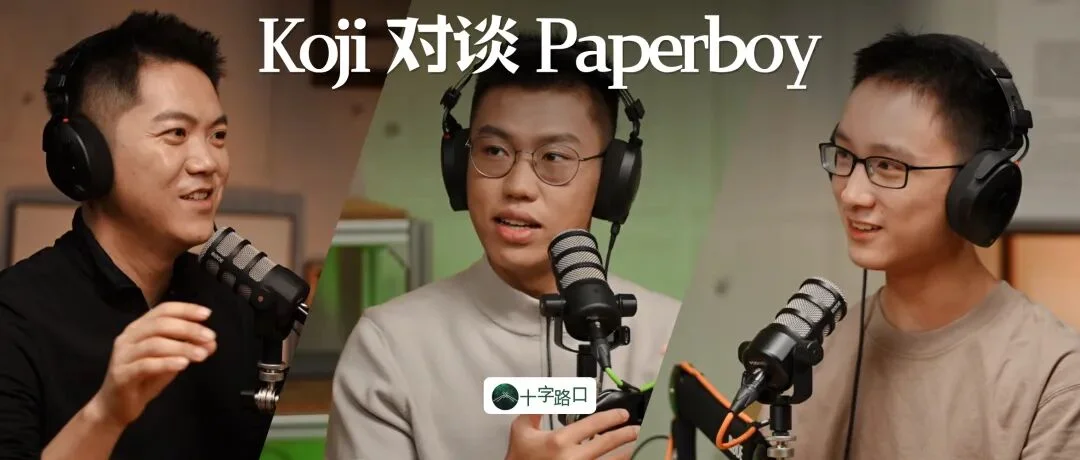
🚦 This week’s guest: Paperboy Team (paperboy.com) — John Yang (21, CEO) and Jett Chen (19, CMU freshman & founding engineer). 12-person team, 10 engineers, $4.7M seed funding.
The Uninvented Paradigm
John Yang asserts a bold thesis: “The optimal way for humans and AI agents to collaborate hasn’t been invented yet.” While tools like Claude Code, Codex, Manus, and OpenClaw exist, they remain fundamentally session-based and prompt-dependent: users open a window, input a prompt, wait, and close — restarting from zero each time.
Paperboy is pioneering a radically different paradigm:
✅ Natural & continuous interaction — no new sessions, no repetitive prompting
✅ IM-native architecture — conversations live in persistent, searchable chat threads (like iMessage or WeChat), not ephemeral tabs
✅ Proactive learning — the agent observes your OS activity (screenshots, keystrokes, mouse movement, calendar, email, browser history, iMessage) — with explicit permission — to build deep, contextual memory
✅ Self-organizing context — not just storing chats, but modeling identity, workflow patterns, and cross-app behavior over time
Why Current Agents Fall Short
| Problem | Paperboy’s Solution |
|---|---|
| Passive interaction — Requires precise, verbose prompts; hard to encode personal judgment, taste, or tacit knowledge | → Learns implicitly through observation; adapts to how you work, not just what you say |
| Fragmented context — Hundreds of disjointed sessions make insights irretrievable unless manually saved | → Unified, searchable, long-term memory graph anchored to real-time OS events |
| Static interface — Chat UI forces linear, low-bandwidth communication | → IM-style inbox: organized by topic, person, or project — supports active notifications, group collaboration, and contextual nudges |
Real-World Impact: MiniVivian & AutoJohn
Inside Paperboy’s Slack, two personalized agents demonstrate tangible value:
🔹 MiniVivian: A recruiting assistant trained on Vivian’s hiring preferences (from meetings, Slack, GitHub comments). It autonomously scouts candidates on GitHub, Xiaohongshu, and Twitter — without re-prompting. Vivian hasn’t used Claude for recruitment since February.
🔹 AutoJohn: John’s digital twin. Team members query it directly for product guidance, design rationale, or engineering trade-offs — because it retains his full context, decision logic, and communication style.
💡 “I hate prompting. Humans don’t communicate in prompts — we send messages and expect shared understanding. We want high-bandwidth, low-friction collaboration.” — John Yang
The Five-Speed Memory Framework
Inspired by Stewart Brand’s Pace Layers theory, Paperboy structures memory across five temporal layers:
| Speed | Example Task | Agent Behavior |
|---|---|---|
| ⏱️ Instant (seconds) | Typing a WeChat reply | Real-time text completion (@pb) |
| 🕒 Short (minutes–hours) | Writing a PR description | Aggregates code changes + Slack discussions + browser research |
| 📅 Medium (days–weeks) | Preparing for a client meeting | Synthesizes calendar invites, past emails, doc edits, and meeting notes |
| 📆 Long (months) | Evaluating go-to-market strategy | Recalls historical experiments, competitor analysis, and internal debates |
| 🌍 Foundational (years) | Defining company values & culture | Embeds founder principles, leadership decisions, and team evolution |
This layered approach enables agents to operate meaningfully across all timescales — not just micro-tasks.
Strategic Differentiation
- Not an AI Slack replacement — Paperboy complements existing tools (Slack, Notion, VS Code) via OS-level integration, avoiding costly platform-switching barriers.
- Beyond chat-history memory — Competitors rely on imported messages or docs; Paperboy ingests raw behavioral data (keystrokes, app switches, screen content), achieving far denser signal.
- Design-first philosophy — Inspired by messaging apps’ intuitive grouping, hiding, and prioritization — turning “inbox overload” into structured attention.
What Users Experience First
Within minutes of installation:
- Permission-guided onboarding: Grants access to calendar, email, and browser (optional).
- Context-aware greeting: “Hey, I see you have a 3 p.m. meeting with Acme Corp — need help prepping slides or reviewing their last contract?”
- Seamless activation: Type
@pbin any input field (Terminal, WeChat, GitHub PR box) → instant, context-rich suggestions.
✨ “It’s like working with a colleague who already knows your habits — no briefing required.”
Vision & Competitive Landscape
Paperboy sees OpenAI and Anthropic as its primary benchmarks — not competitors. Their edge lies in taste, speed of interface innovation, and human-centered memory design. While giants scale models, Paperboy focuses on the last mile: how intelligence becomes intuitive, trusted, and embedded in daily life.
As John puts it: “The goal isn’t to build another chatbot. It’s to build the last interface — one so natural, you forget it’s there.”
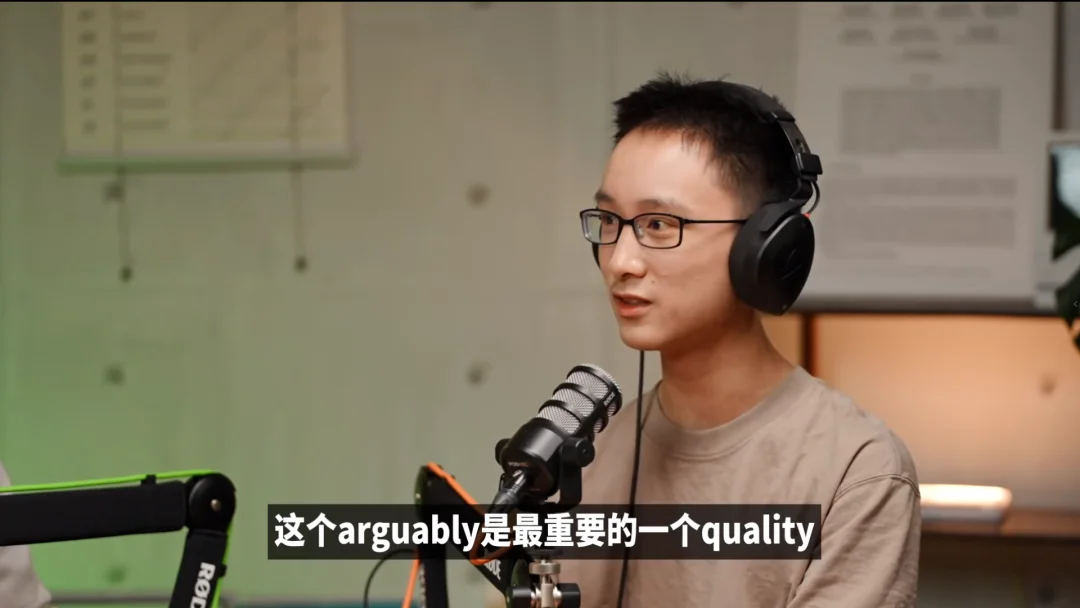
Source: Crossroads Podcast — “Human and AI Agent’s Best Collaboration Hasn’t Been Invented Yet”