MiniMax H3 IP Edition Powers Japan’s AI Content Revolution
In a landmark move bridging East Asian creativity and cutting-edge generative AI, Chinese AI company MiniMax has launched the H3 IP Edition in collaboration with Japanese partners—including KAGAMIAI, the Japan IP·AI Co-Creation Association, and multiple rights holders—to reimagine how intellectual property is licensed, adapted, and monetized in the age of AI video generation.
🌐 A Strategic Response to Japan’s Dual Crisis
Japan faces two converging structural challenges:
- Demographic decline: Population down by ~530,000 year-on-year (Oct 2026), accelerating labor shortages across legacy industries.
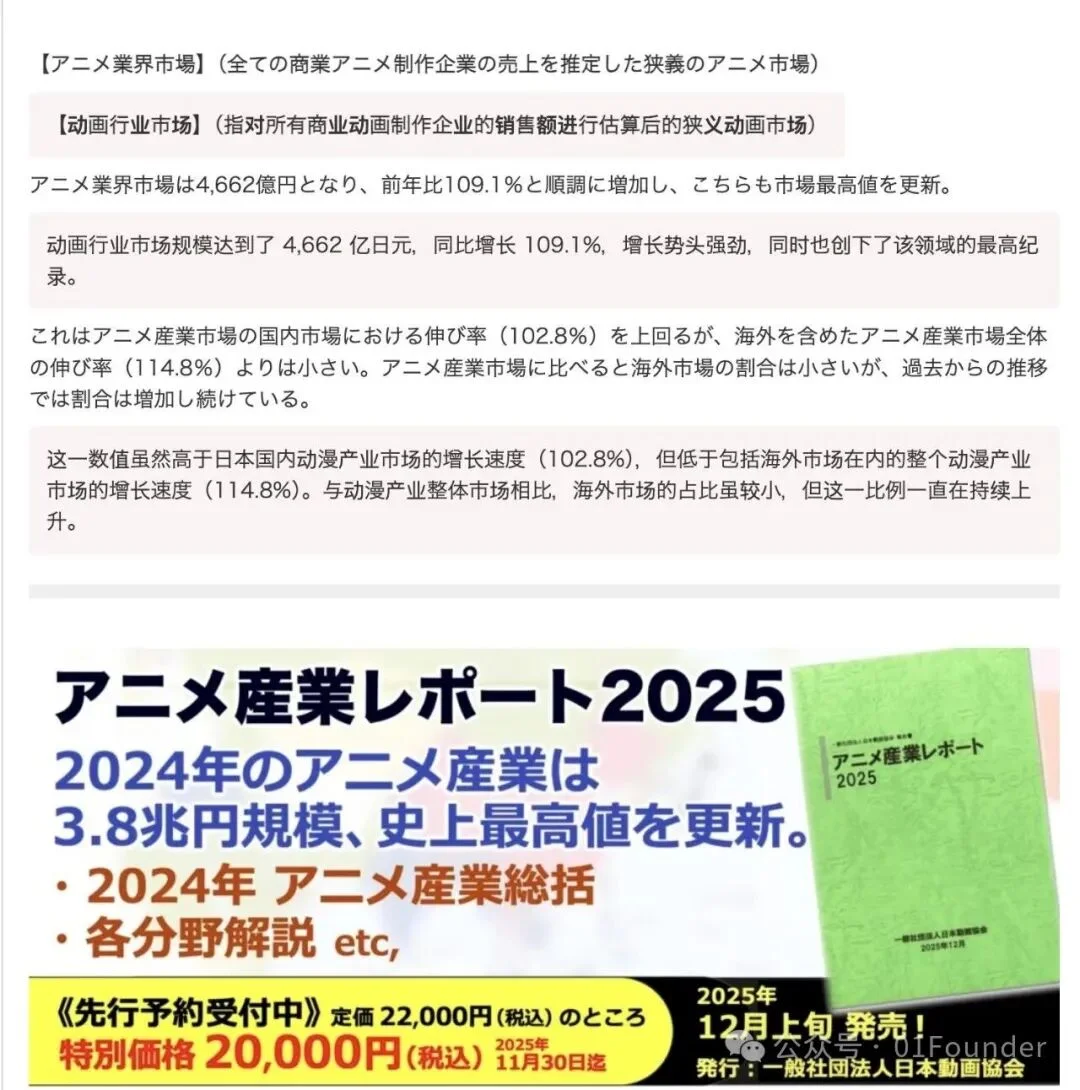
- IP commercialization gap: Despite record overseas animation revenue (¥2.17 trillion in 2024, +26% YoY), 34.6% of animation studios reported losses in 2025, with specialized subcontractors suffering 41.3% loss rates—driven by rising production costs and fragmented revenue sharing.
Meanwhile, global AI models like OpenAI’s Sora 2 sparked alarm: unlicensed use of iconic Japanese characters (e.g., Captain Tsubasa, Studio Ghibli) in user-generated videos threatened decades-old licensing frameworks.
💡 Japan’s core demand emerged clearly: “Lower content creation costs — while retaining full control over IP usage and revenue.”
🧠 Why H3? Technical Foundations for Trusted IP Generation
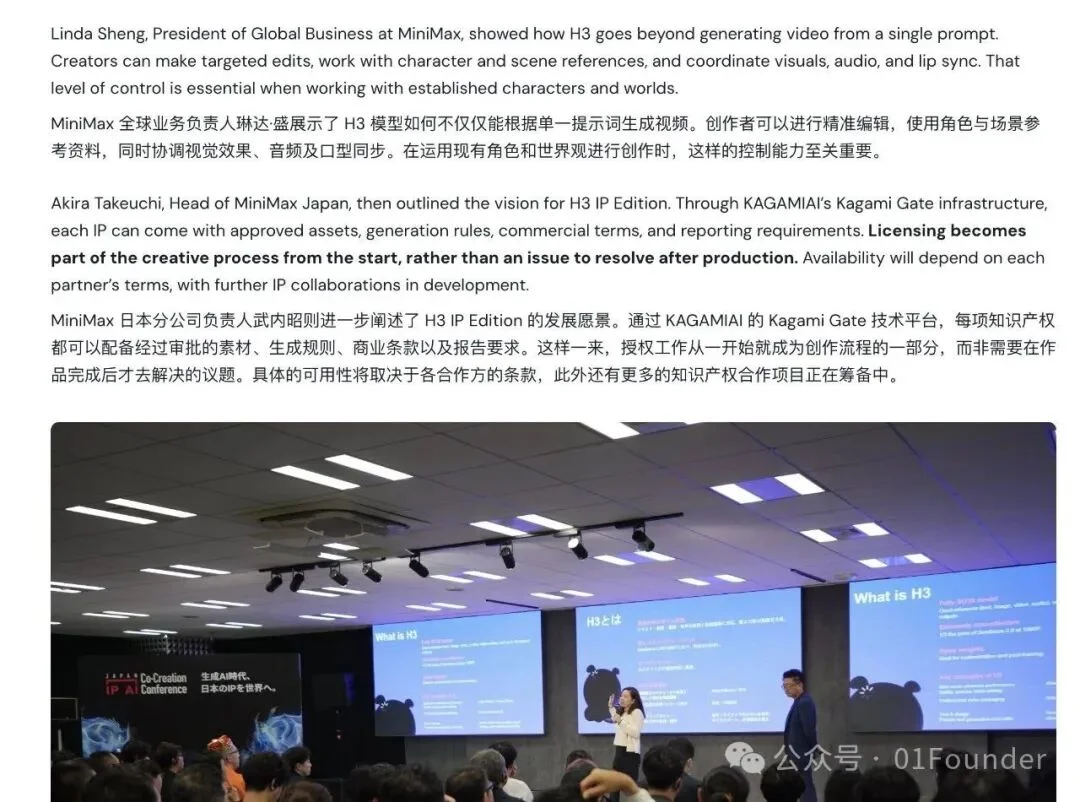
MiniMax’s H3 video foundation model delivers three critical capabilities tailored for IP fidelity:
| Feature | Benefit for IP Holders |
|---|---|
| Multi-modal reference support | Upload official character sheets, voice samples, or scene templates as strict generation constraints |
| Targeted video editing & consistency controls | Maintain facial structure, costume details, and motion signatures across frames—critical for brand-safe derivatives |
| Open base model weights (released Aug 2026) | Enables Japanese studios to fine-tune H3 on proprietary assets on-premises, preserving data sovereignty and workflow integration |
Unlike black-box APIs, this openness allows rights holders to embed compliance directly into the model layer—not just at the application level.
🔐 H3 IP Edition: The Infrastructure Layer for AI Licensing
The true innovation lies beyond the model—it’s the end-to-end IP governance stack:
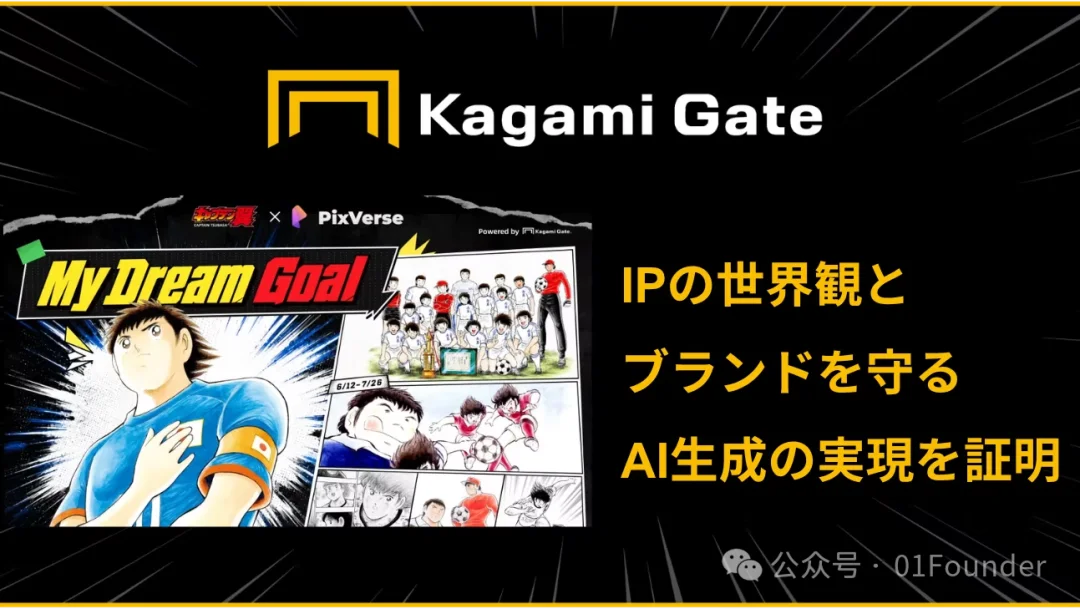
- Kagami Gate (by KAGAMIAI): A blockchain-audited platform managing:
- ✅ Real-time authorization scopes (e.g., “Captain Tsubasa can be used in non-commercial shorts, but only with approved background assets”)
- ✅ Immutable usage logging per generation request
-
✅ Automated revenue distribution per pre-negotiated terms (e.g., ¥X per 1,000 views, % share based on IP tier)
-
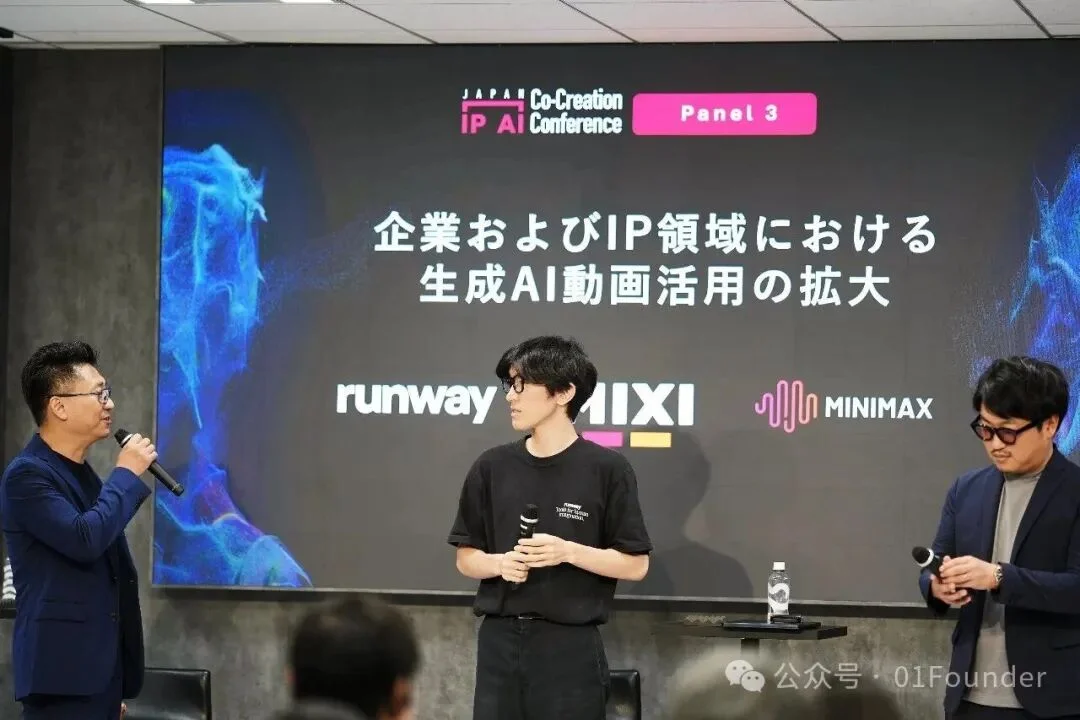
Japan IP·AI Co-Creation Association: Sets cross-industry standards for training data provenance, opt-in consent, and ethical synthetic media labeling.
This transforms traditional one-off licensing deals into scalable, transparent, and globally accessible infrastructure.
🌍 Global Demand, Japanese IP, Chinese Tech
A pilot with Captain Tsubasa revealed explosive international appetite:
- 📈 126,000+ creators participated in 45 days
- 📸 330,000+ AI-generated videos produced
- 🌐 >99% of activity originated outside Japan—proving global fandom is ready to co-create, if given legal, easy access
This positions Japan not just as an exporter of stories—but as an operator of a global IP-as-a-Service platform, where MiniMax provides the engine, and Japanese stakeholders retain governance.
🚀 Market Validation & Forward Momentum
- ✅ 60+ Japanese companies have expressed formal interest in adopting H3 IP Edition (MiniMax, Oct 2026 disclosure)
- ✅ Precedent set: Disney’s Dec 2025 Sora partnership confirms major IP owners see generative AI as revenue expansion—not just risk
- ⏳ Next frontier: Integrating Kagami Gate with global platforms (YouTube Shorts, TikTok Creative Center) for real-time royalty tracking
As one Japanese producer noted: “We no longer ask ‘How do we stop AI?’ We ask ‘How do we own the pipeline?’”
This article reflects developments as of October 2026. All image links preserved per original source.