Isomorphic Labs Unveils IsoDDE: AlphaFold 4-Level Breakthrough, Closed-Source
A paradigm shift in AI-driven drug discovery — unprecedented performance, unprecedented opacity.
🚀 Technical Leap: Beyond AlphaFold 3
Isomorphic Labs — the DeepMind spin-off co-founded by Demis Hassabis and led by him as CEO — has released IsoDDE, a next-generation AI drug design engine hailed by Nature and computational biologists as the de facto “AlphaFold 4“.
Unlike its predecessors, IsoDDE is not an incremental upgrade — it’s a unified architecture integrating:
- Protein structure prediction
- Binding affinity estimation (ΔG)
- Hidden cryptic binding site discovery
- Antibody–antigen interaction modeling
⚡ Benchmark Dominance
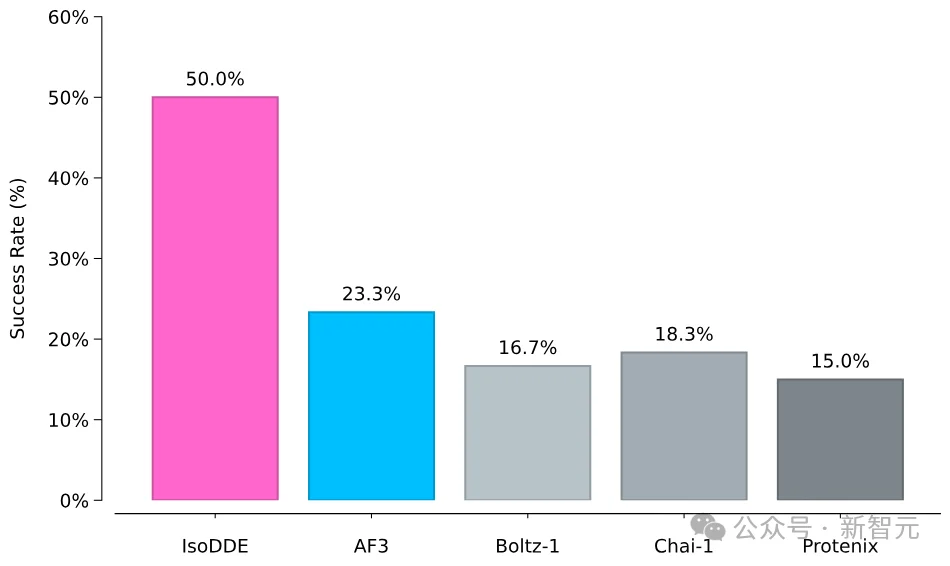
In the rigorous Runs N’ Poses benchmark — designed to test generalization on unseen protein folds — IsoDDE outperforms AlphaFold 3 (AF3) by over 2× when sequence similarity to training data drops below 20% (the hardest regime).
| Metric | IsoDDE | AlphaFold 3 | Boltz-2 |
|---|---|---|---|
| Antibody Target Recognition (High-Accuracy) | ✅ 2.3× AF3 | — | ✅ ~20× |
| Cryptic Site Detection (Cereblon) | ✅ Both sites (incl. 15-yr-hidden) | ❌ Missed second site | — |
| Binding Affinity Prediction | ✅ Surpasses FEP simulations | ❌ Lags behind physics-based methods | ❌ Sub-FEP accuracy |
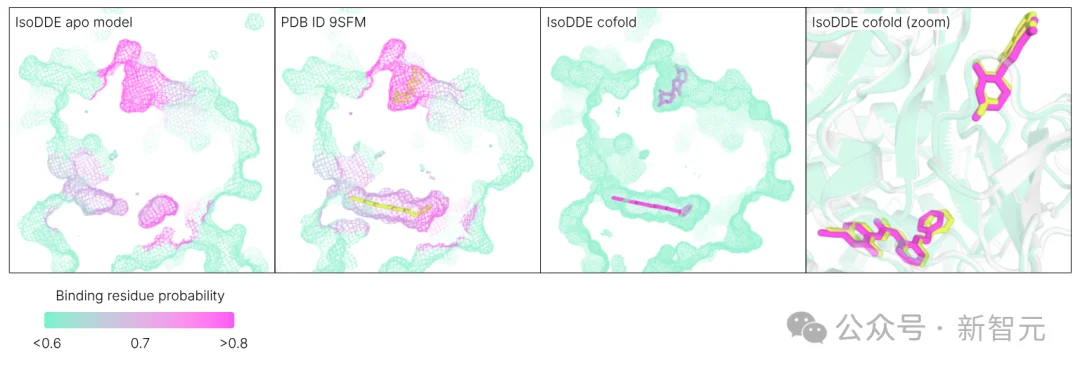
IsoDDE identifies both known and cryptic binding pockets in cereblon — including one hidden for 15 years. AlphaFold 3 fails on the second.
⏱️ Speed & Accessibility
- Discovers cryptic binding sites in seconds, versus weeks/months of crystallographic soaking experiments.
- Requires only amino acid sequence input — no experimental structural data needed.
- Outperforms Free Energy Perturbation (FEP), the gold-standard physical simulation method — without any lab-derived starting structures.
🔒 The Closed-Source Turn: A Strategic Pivot
Despite its scientific magnitude, IsoDDE breaks from AlphaFold’s open ethos:
- ❌ No source code release
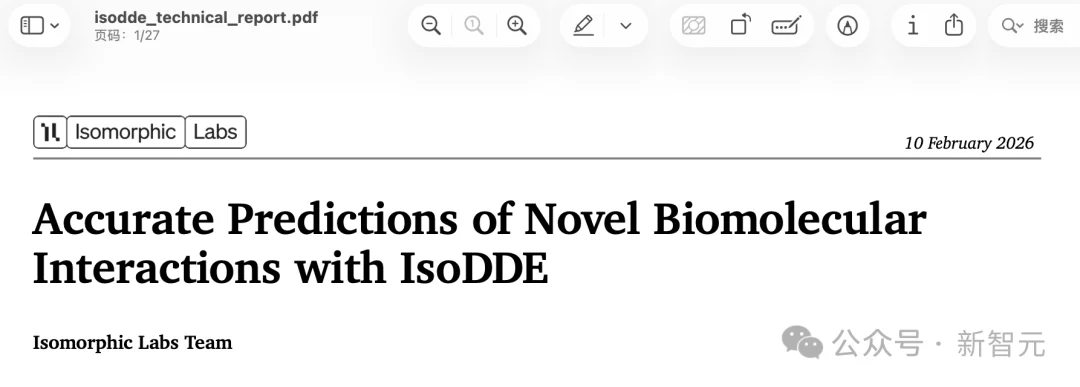
- ❌ No peer-reviewed publication (only a 27-page technical report)
- ❌ No model architecture or training methodology disclosed
- ❌ No public API or academic access pathway
“We do not intend to disclose the ‘secret sauce.'”
— Max Jaderberg, President of Isomorphic Labs (Nature, Feb 2026)
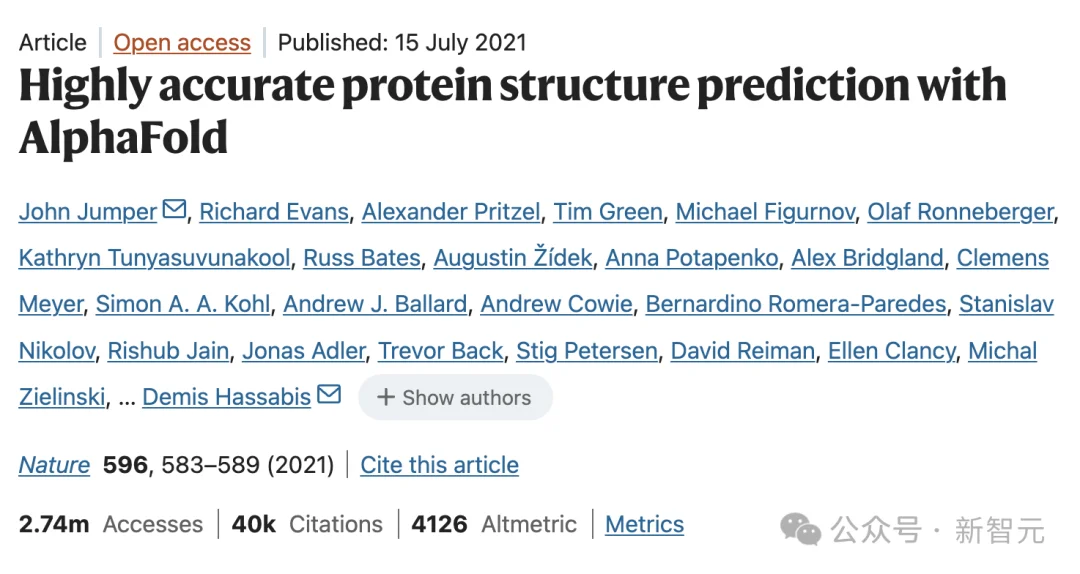
This marks a decisive departure from AlphaFold’s legacy: over 3 million researchers globally used the open models to accelerate discoveries — from malaria vaccine design to neurodegenerative disease targets.
🧪 Why Does Closure Matter? Data, Not Just Code
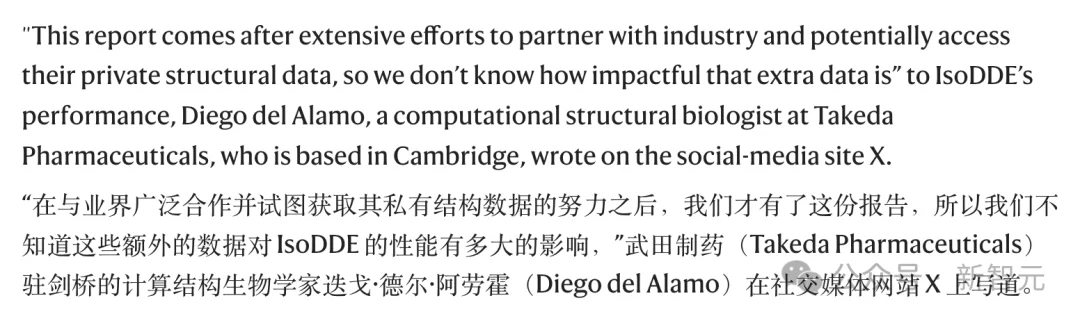
Critics highlight a deeper concern: IsoDDE’s edge may stem less from algorithmic novelty and more from exclusive private datasets — proprietary protein–ligand complexes obtained via partnerships with Eli Lilly ($1.7B) and Novartis ($11.5B), and internal pipelines across 17 drug development programs.
As Diego del Alamo (Computational Structural Biologist, Takeda) notes:
“The advantage isn’t necessarily architectural — it’s data moat depth. And that moat isn’t replicable by academia.”
🌐 Open Ecosystem Response: Acceleration, Not Surrender
The closed release has galvanized open-source innovation:
-
Boltz-2 (nonprofit Boltz): Claims “full transparency + competitive accuracy” — trained exclusively on public data (PDBbind, BindingDB). Founder Gabriele Corso asserts: “The ceiling is higher than we thought — and it’s reachable without private vaults.”
-
Deep Origin’s DODock: Announced same-week performance parity on Runs N’ Poses using a novel diffusion-based docking framework — entirely open methodology.
-
Community momentum: AlphaFold 3-inspired models like Chai-1, Protenix, and RoseTTAFold All-Atom now match or exceed AF3 on key subtasks — proving rapid open iteration remains viable.

🚪 The Bigger Question: Who Controls Scientific AI?
AlphaFold symbolized AI as global public infrastructure. IsoDDE signals a pivot toward IP-locked commercial infrastructure.
This raises foundational questions:
- Can science advance equitably when the most powerful tools are gated by licensing and capital?
- Does reproducibility survive when methods are undisclosed and data is siloed?
- Is the Nobel-caliber ideal — “knowledge for all” — giving way to “advantage for those who pay”?
As Mohammed AlQuraishi (Columbia University) puts it:
“We see the output. We admire it. But we’re left guessing how — and that’s not science. That’s spectacle.”
🔗 Key Resources
- IsoDDE Technical Report (PDF)
- Nature Coverage: “Scientists Can Only Guess How IsoDDE Works”
- Isomorphic Labs: The Drug Design Engine Unlocks a New Frontier
- Deep Origin Press Release: “Congratulates Isomorphic Labs on Catching Up”
Article originally published by Xin Zhī Yuán (New Intelligence Era). Translated and reformatted for global scientific audience.