Cursor Unveils OpenClaw-Inspired Automations — Fully Autonomous Code Review, Monitoring & Fixing
AI-powered “software development factories” are now live in the IDE — with cloud-native agents running 24/7.
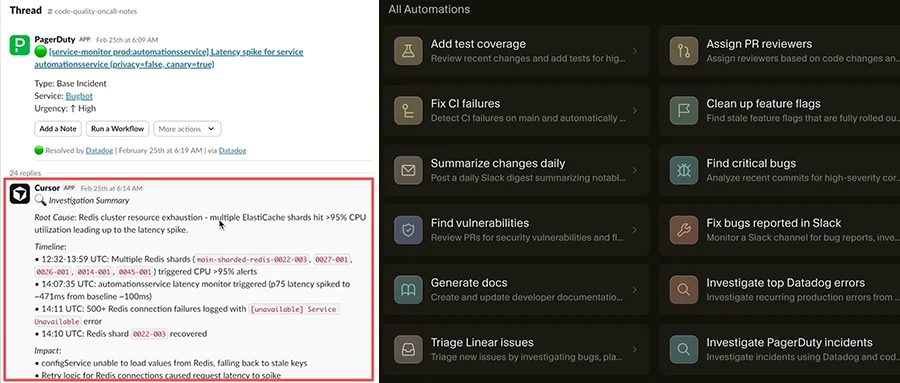
In a landmark release early March 6, Cursor announced Cursor Automations — a powerful new capability modeled after OpenClaw’s autonomous agent paradigm. This feature enables AI to review code, detect vulnerabilities, monitor infrastructure, and auto-generate fixes — all without human intervention.
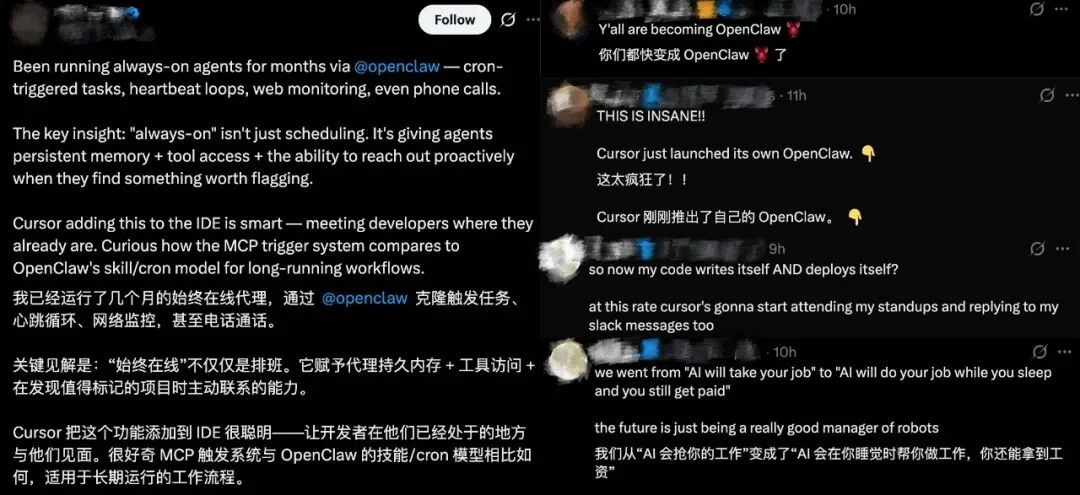
🦞 From “Lobster Farming” to Production-Ready Automation
The playful term “raising lobsters” (a nod to OpenClaw’s crustacean branding) reflects how developers now configure persistent, event-driven AI agents — dubbed “lobsters” — to continuously optimize their codebases. These agents operate independently in the cloud, leveraging dedicated compute to:
- ✅ Build and test changes
- ✅ Generate demos and documentation
- ✅ Self-validate outputs using MCP (Model Control Protocol)
- ✅ Learn from past executions via memory tools
As Atlasis, creator of AI learning tool RRecallAI, put it: “Soon, our role shifts from coder to robot administrator.”
🔧 How It Works: Event-Driven, Cloud-Native Agents
Agents trigger on diverse events — not just code pushes:
| Trigger Type | Example Use Case |
|---|---|
| GitHub PR merge | Run security audit & auto-fix style violations |
| Slack message | Triaging bug reports → create Linear ticket → locate root cause → submit PR |

| PagerDuty alert | Diagnose outage via Datadog logs → propose fix → open PR + notify on-call engineer |
| Custom Webhook | Integrate with Jira, Confluence, Loom, or internal tools |
🚀 Real-World Agent Examples Deployed by Cursor
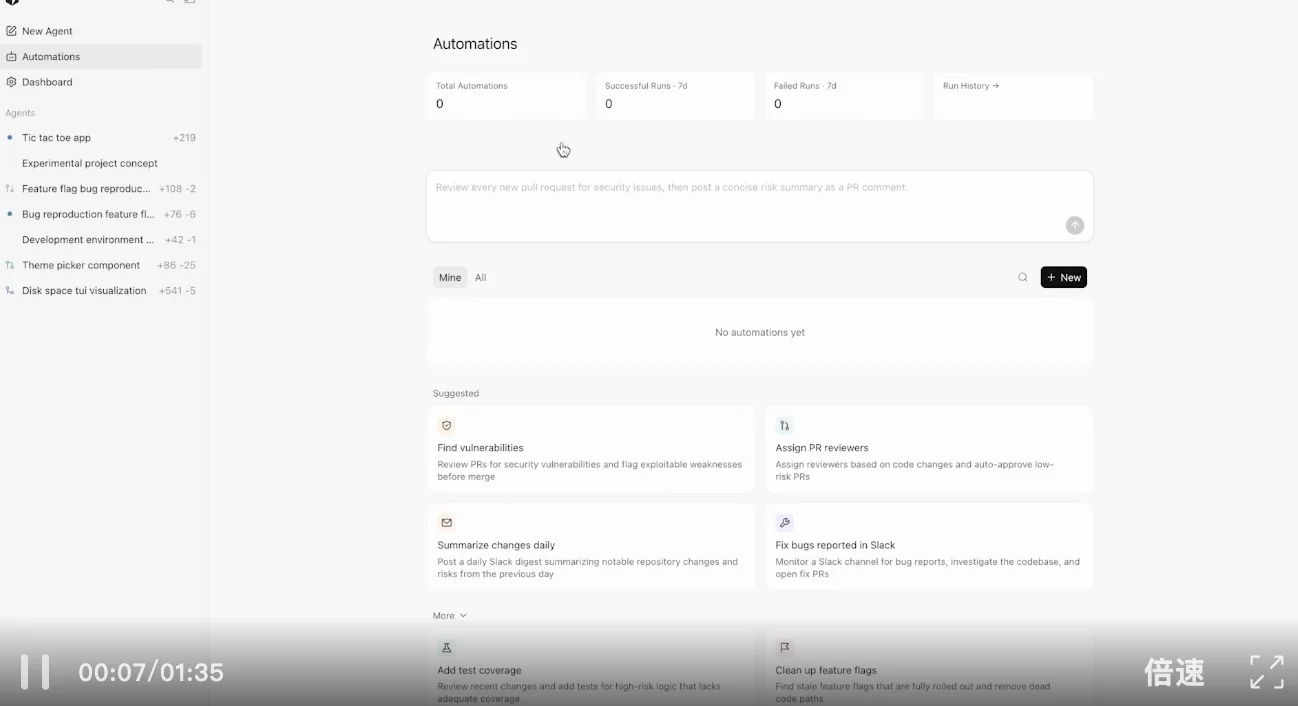
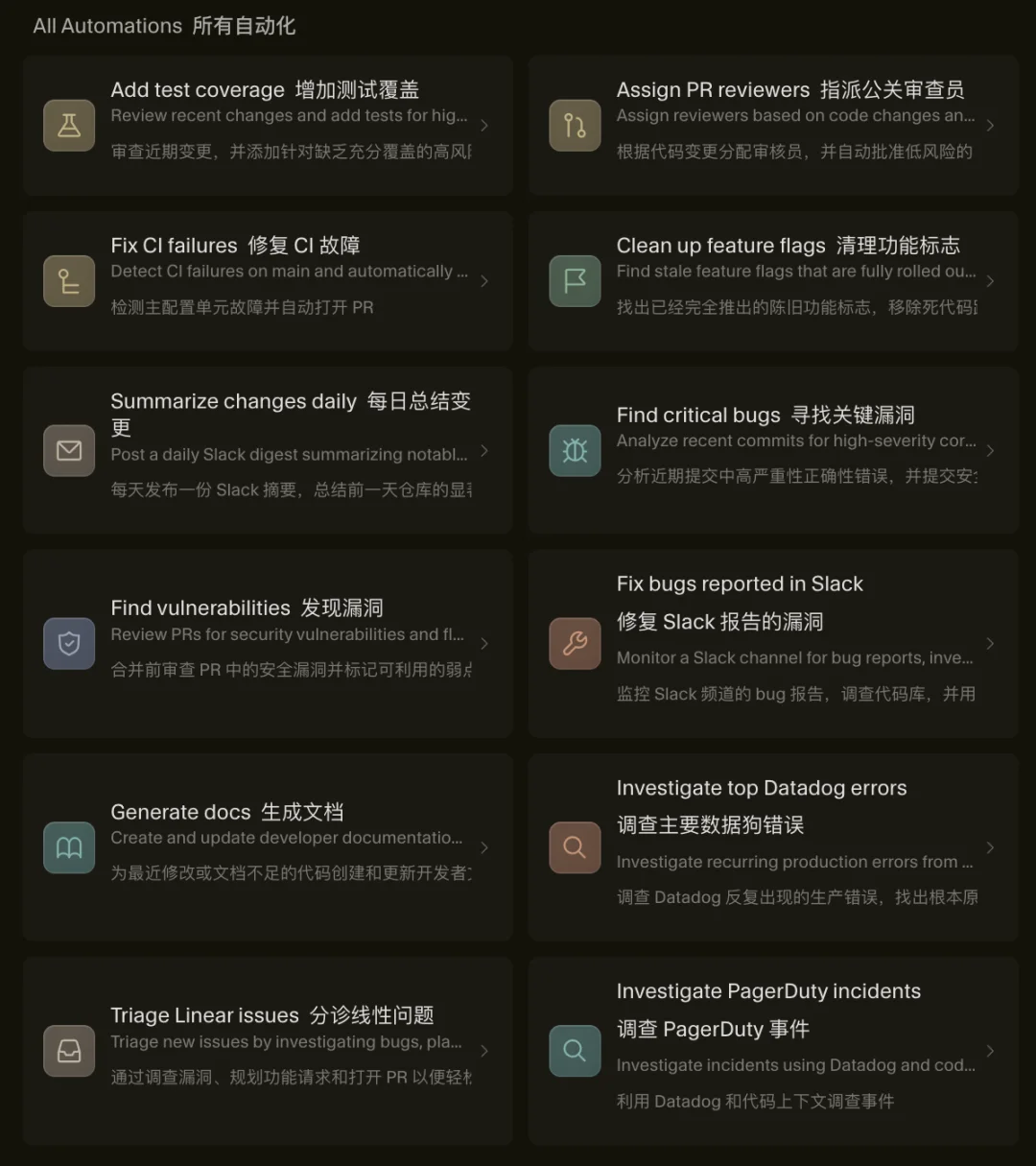

Cursor has already open-sourced 12 production-grade automation templates, including:
- Bugbot: Scans every PR for security flaws, performance regressions, and stylistic inconsistencies — triggering thousands of times daily, having identified millions of vulnerabilities.

- Weekly Summary Agent: Posts Slack digests highlighting merged PRs, critical bug fixes, tech debt reduction, and dependency updates.
- Test Coverage Agent: Runs each morning to identify untested logic; writes idiomatic tests and submits PRs — only modifying production code when strictly necessary.
- CI Failure Resolver: Automatically diagnoses and patches failing CI pipelines.
⚙️ Technical Foundation: Sandboxed, Auditable, Scalable
- All agents execute inside isolated cloud sandboxes, ensuring safety and reproducibility.
- Every decision is logged via MCP to Notion, enabling full behavioral auditing and prompt refinement.
- Risk-aware PR triage: Low-risk changes auto-approve; high-risk ones route to 2 reviewers based on contributor history.
💰 Pricing & Access
Cursor confirms that Automations share the same token quota as the editor — meaning Ultra subscribers get full access at no extra cost.

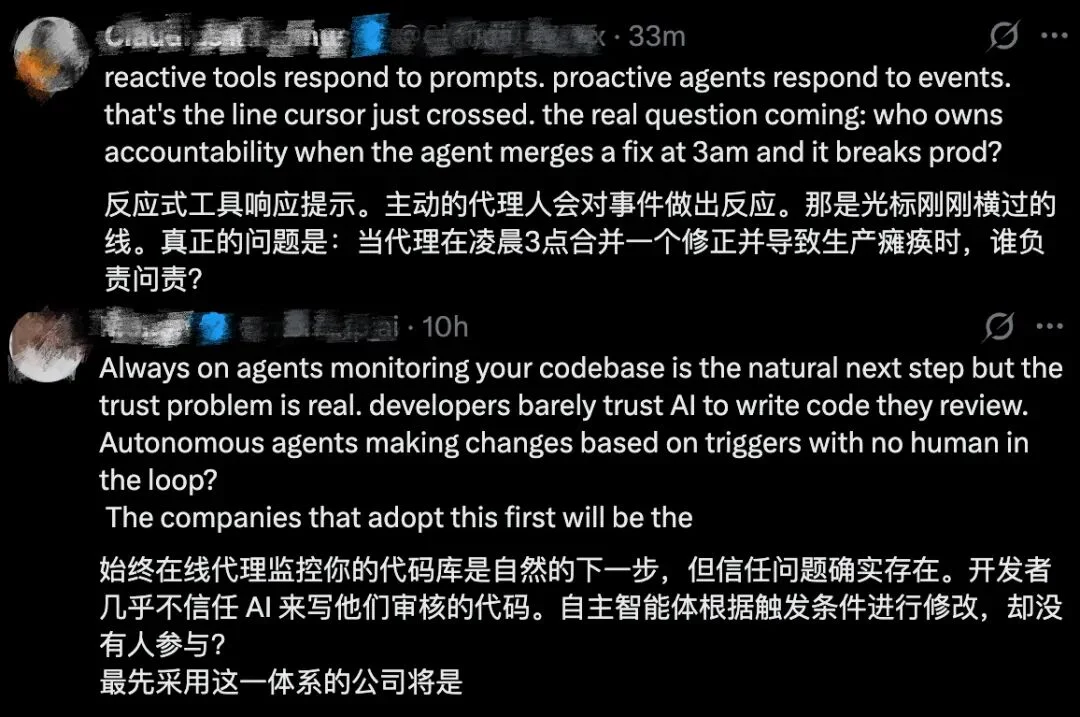
⚠️ Critical Considerations: Accountability & Safety
While transformative, autonomy raises urgent questions:
- Who bears responsibility when an agent merges a faulty patch that breaks production?
- How do teams govern permissions, enforce approval gates, and maintain human-in-the-loop safeguards?
Developers caution: “Unsupervised merge rights demand rigorous guardrails — especially for deployments and infra changes.”
🌐 Industry Implication: Full-Stack Automation Arrives
With OpenAI’s GPT-5.4 enabling native computer use and Cursor delivering always-on coding agents, AI programming has crossed into full-lifecycle automation. Small teams now achieve enterprise-scale velocity — while engineers evolve into AI orchestrators, defining goals, validating outcomes, and refining system behavior.
Yet as one developer aptly summarized:
“The bigger the lobster, the sharper its claws — and the more we need clear ownership, observability, and rollback.”
Source: Zhixi Dong (智东西), March 6, 2026.